Tales from the Archives: Building the Hartlepool Monkey
From prototype to performance: clay sculpture, pattern-cut Plastazote and the mechanics behind one of our favourite theatre puppets.
This one takes us back to 2017 and The Hartlepool Monkey, created by Carl Grose, Finn Caldwell and Toby Olie and produced by Fuel in association with Stratford Circus Arts Centre.
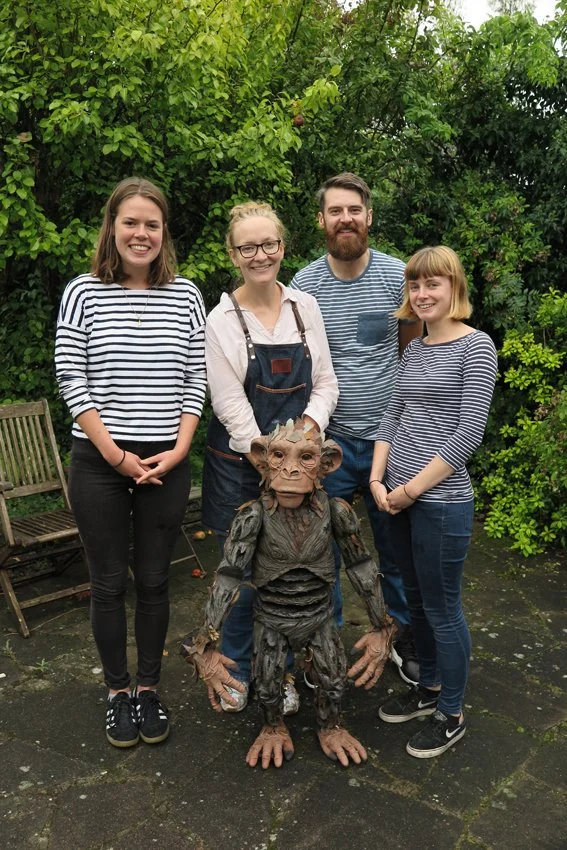
At the centre of the production was Napoleon, a shipwrecked chimpanzee who finds himself on the wrong side of a rather extraordinary misunderstanding. The puppet was designed by Gyre & Gimble's Finn Caldwell and Toby Olie, with Stitches & Glue brought in to fabricate and develop the production puppet.
We have a lot of photographs from the build. Looking through them again nearly a decade later, they provide a surprisingly complete record of how Napoleon travelled from an early prototype to the finished character on stage.

Starting with a prototype
Gyre & Gimble had already made an initial prototype of the Monkey before the production build began. The prototype established the character, proportions and some of the fundamentals of how the puppet would be performed. From there, our job was to translate those ideas into the fully realised puppet needed for the production.
That's an important part of the process.
A prototype doesn't necessarily need to answer every question. It can explore scale, character, manipulation and how an idea might work in performance.
Moving towards a production puppet brings another set of considerations: materials, weight, articulation, mechanisms, durability and how everything will behave night after night.
For Napoleon, one of the first challenges was working out how to construct the head.
From clay to foam
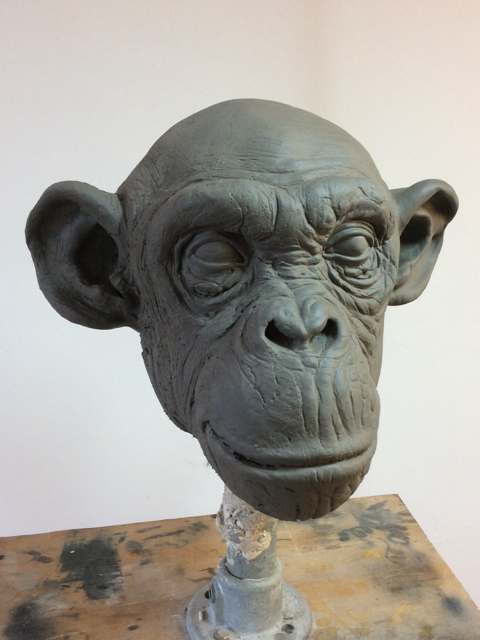
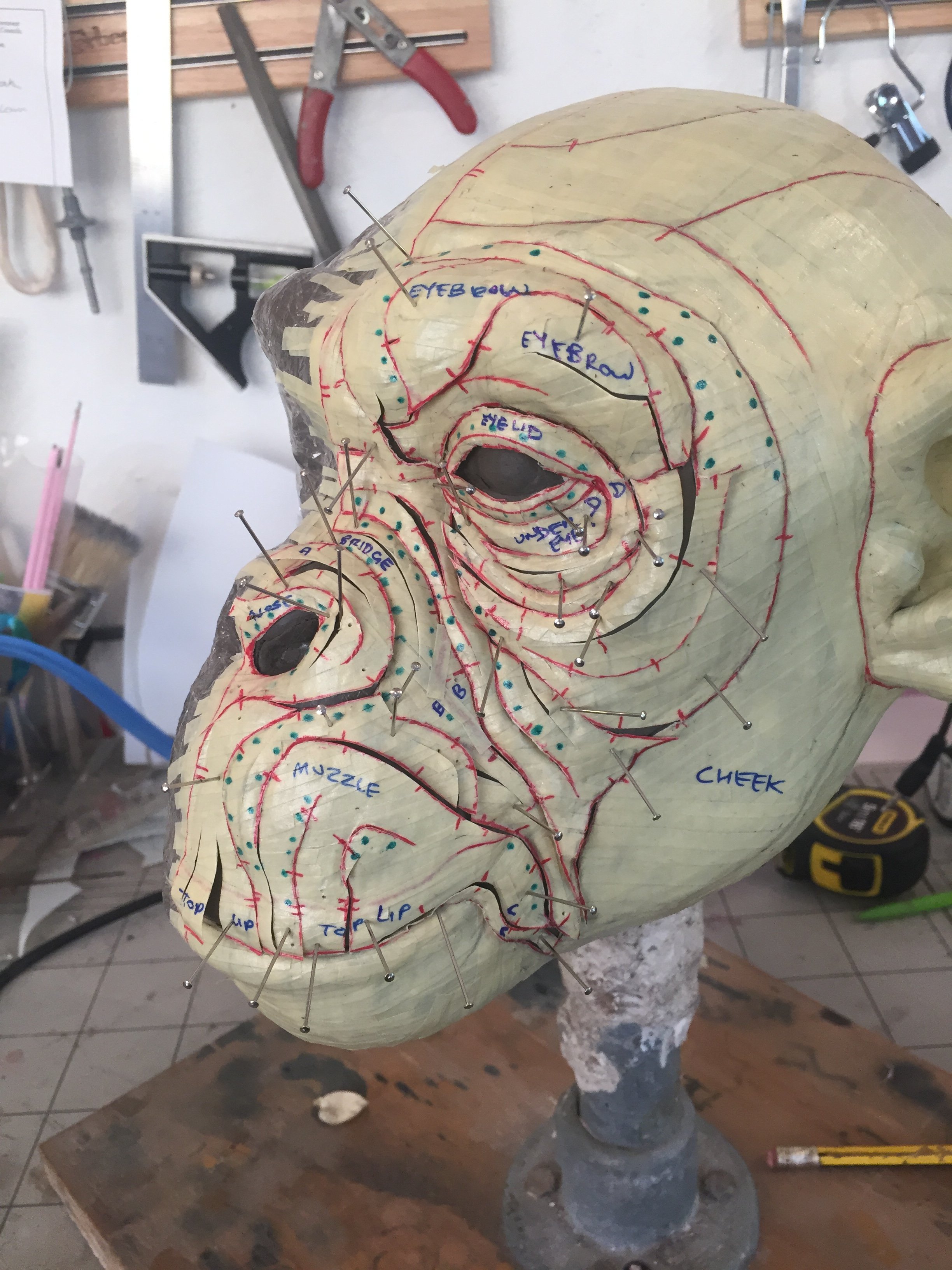
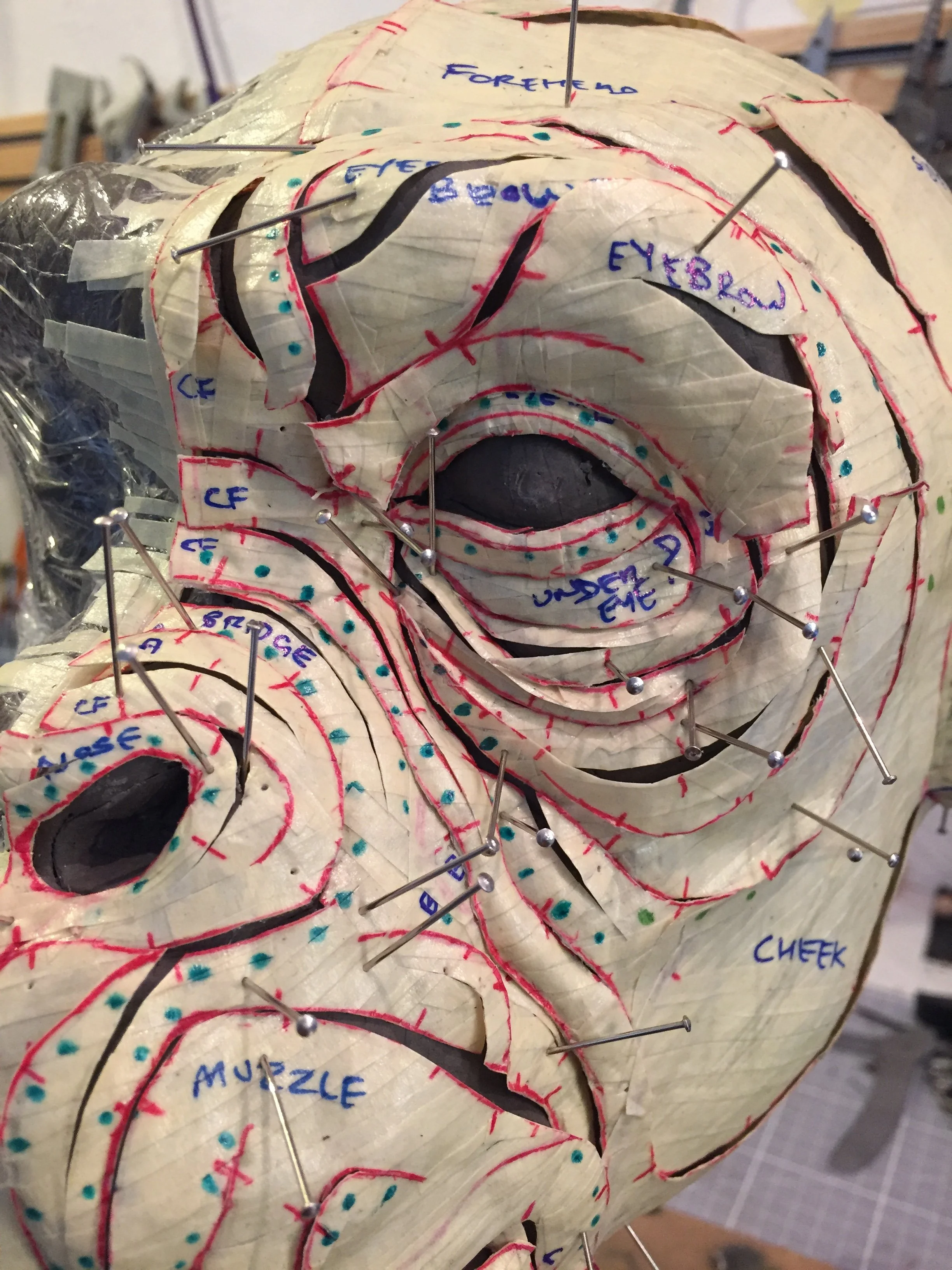
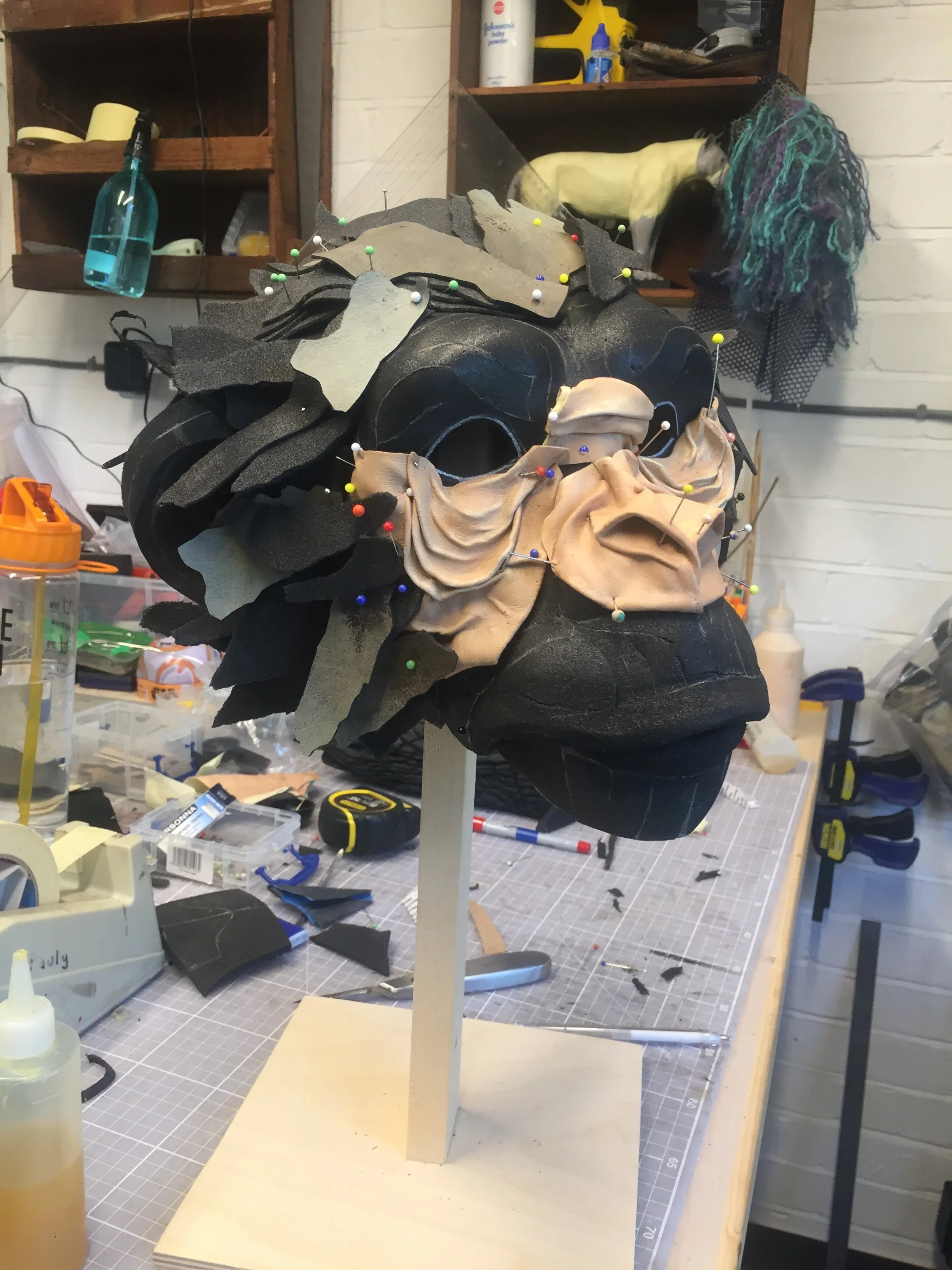
The production head was first sculpted in clay by Justin Pitkethly. The sculpture established the volumes of the face in three dimensions: the brow, eye sockets, cheeks, muzzle, ears and all those wonderful wrinkles and folds that give a chimpanzee's face so much character. But rather than moulding and casting the sculpture as a rigid shell, we wanted to reproduce those forms in Plastazote foam.
That meant turning a sculpture into a pattern.
Working directly over the clay, we divided the surface into individual sections that could be flattened out and transferred onto sheets of Plastazote. It's a slightly strange process when you see it halfway through. The sculpt gradually disappears beneath a network of pattern pieces, registration marks and pins. But those apparently abstract shapes contain the information needed to rebuild the three-dimensional form.
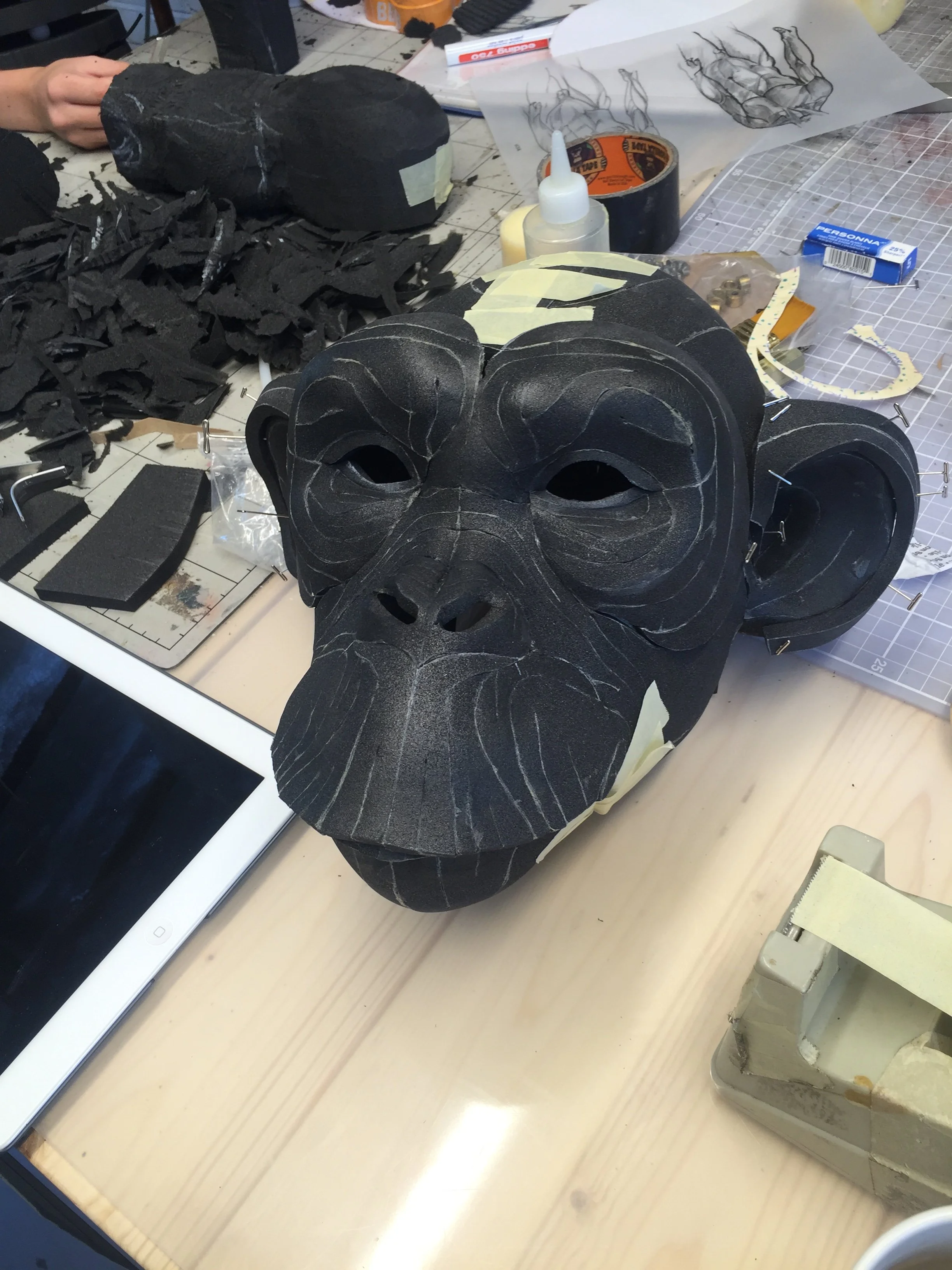
Once cut and assembled in foam, the face reappears.
Clay > pattern > Plastazote.
Three very different stages, but recognisably the same character.
What's going on inside?
The original prototype didn't have an articulated mouth, so this was an area we developed specifically for the production puppet.
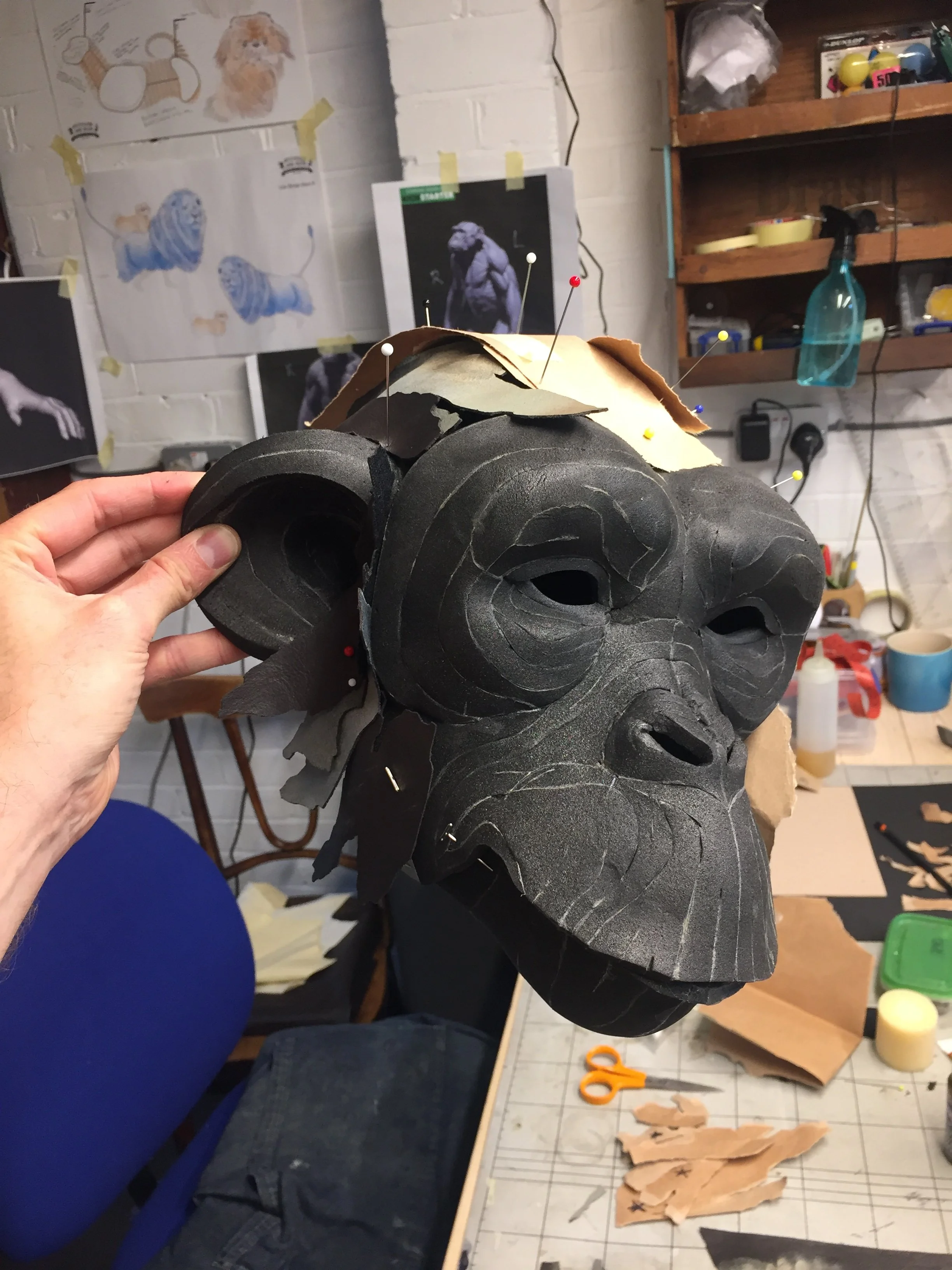
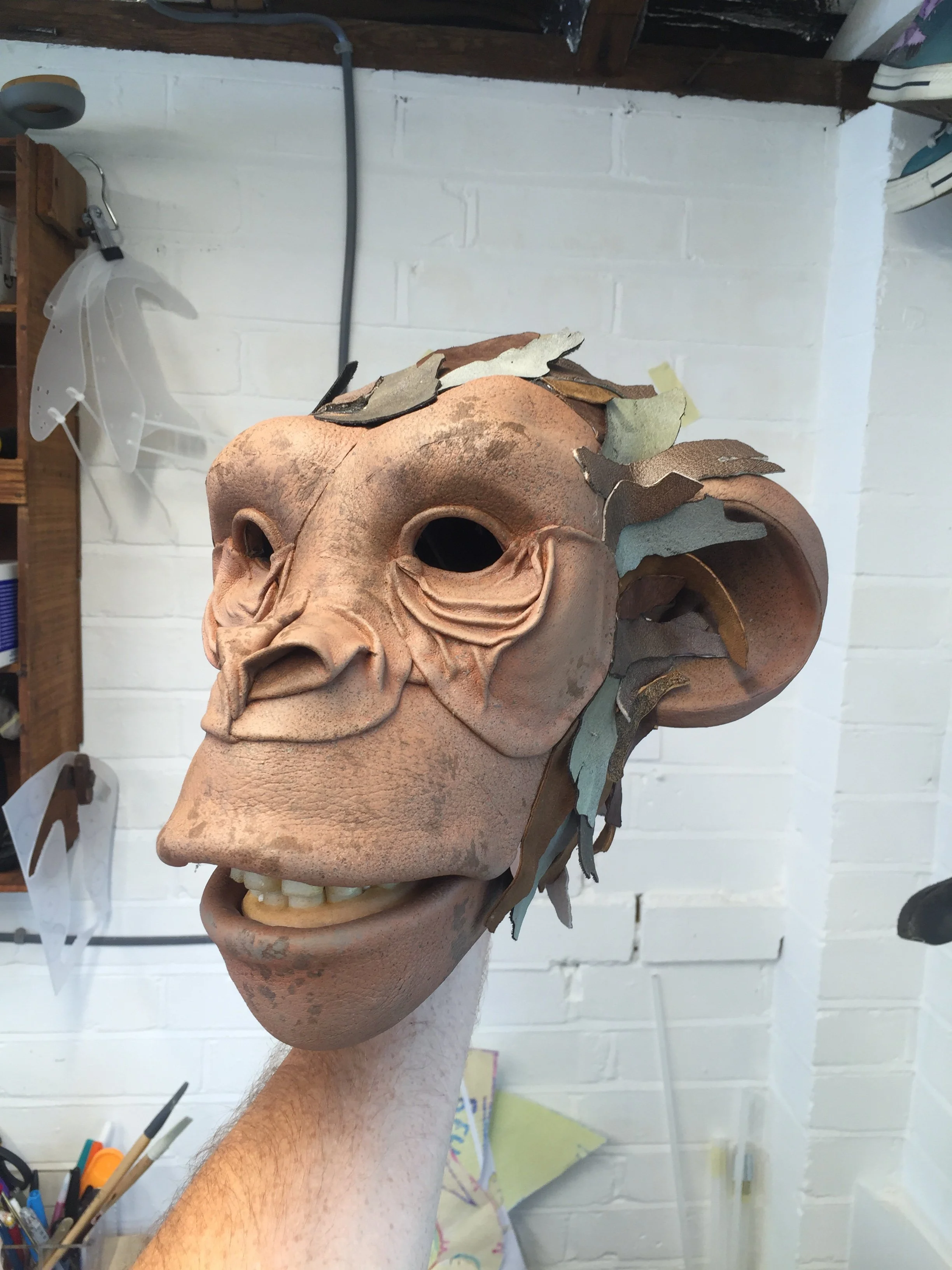
Inside the Plastazote head we designed and fabricated a mechanism incorporating a trigger-operated lower jaw. Opening the lower jaw alone, however, didn't give us quite the movement we wanted. So the mechanism also incorporated a drop-down upper palate. As the mouth opened, the palate could move with it, dramatically increasing the apparent size and shape of the open mouth.
The result was quite a transformation.
With the mouth closed, Napoleon could have the quiet, vulnerable expression the character needed. Open it fully and suddenly the puppeteers had a completely different expression available to them. All of that engineering would eventually disappear beneath the finished surface. Which is exactly where we wanted it.

The mechanics of the head were only part of the challenge.
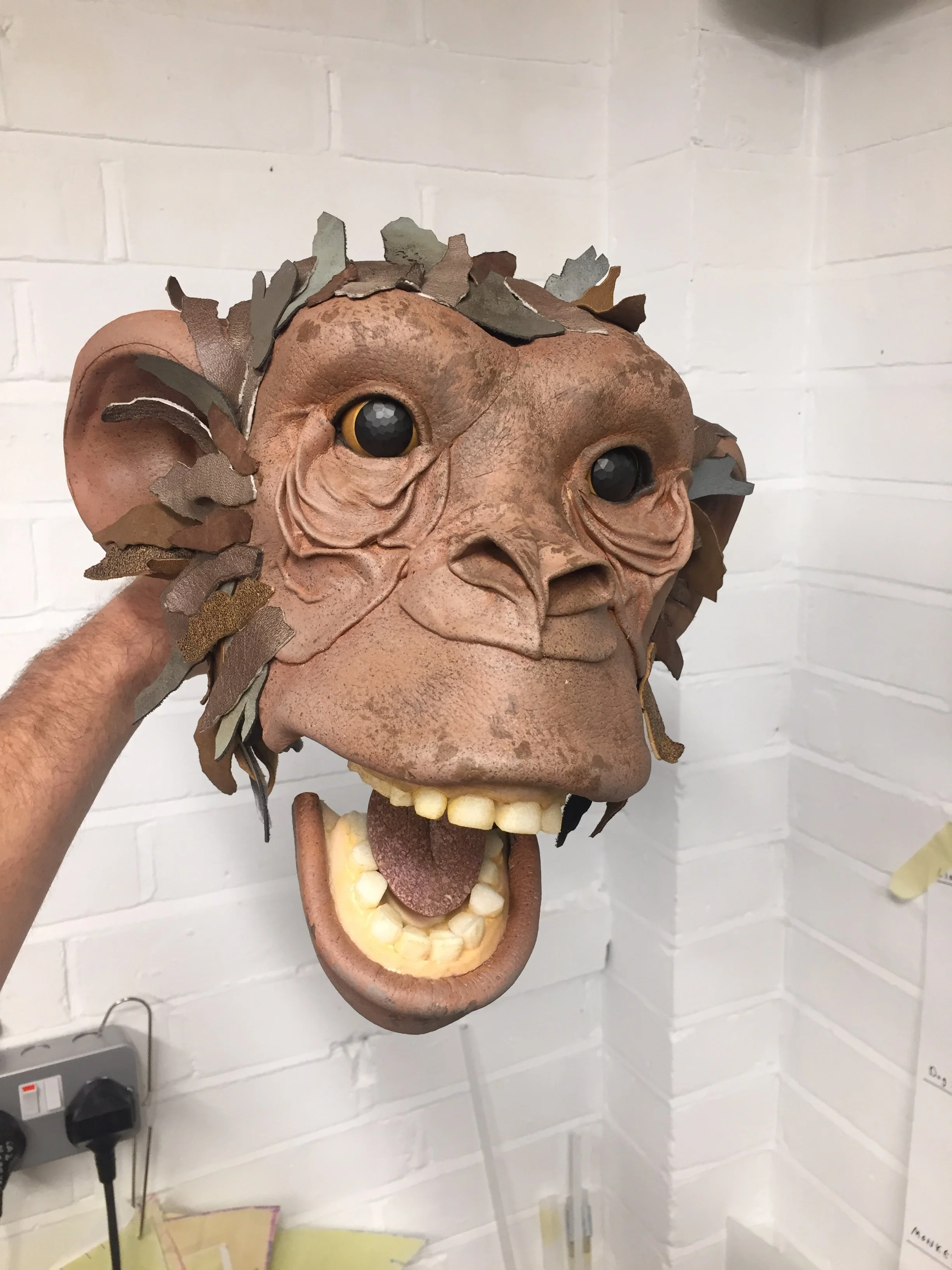
The face itself changed considerably during the build. We found one of our old Instagram posts from January 2018 where we described the process at the time:
"The Hartlepool Monkey changed a lot over the course of the make to ensure we achieved the right expression, giving him a nice earnest vulnerability."
Nearly nine years later, "earnest vulnerability" still feels like a pretty good description of what we were looking for.
Finding Napoleon
Napoleon needed to read as a chimpanzee, but we weren't building a natural-history model. He was a theatrical character. The audience needed to understand him from across an auditorium and, more importantly, form an emotional relationship with him.
So we kept working on the face. The eyes, brow, muzzle and surrounding forms developed during fabrication until we began to find the character underneath.
It's particularly lovely looking back at contemporary reviews of the production, because reviewers repeatedly picked up on that relationship between animal movement and emotional vulnerability. What's On Stage, for example, described Napoleon swinging from the rigging and bounding between platforms while still possessing enough humanity to elicit the audience's sympathy.
Other reviewers commented on just how emotionally invested audiences became in him. That's rather satisfying when you're looking at photographs of the puppet sitting unfinished on a workshop bench.
Building the body
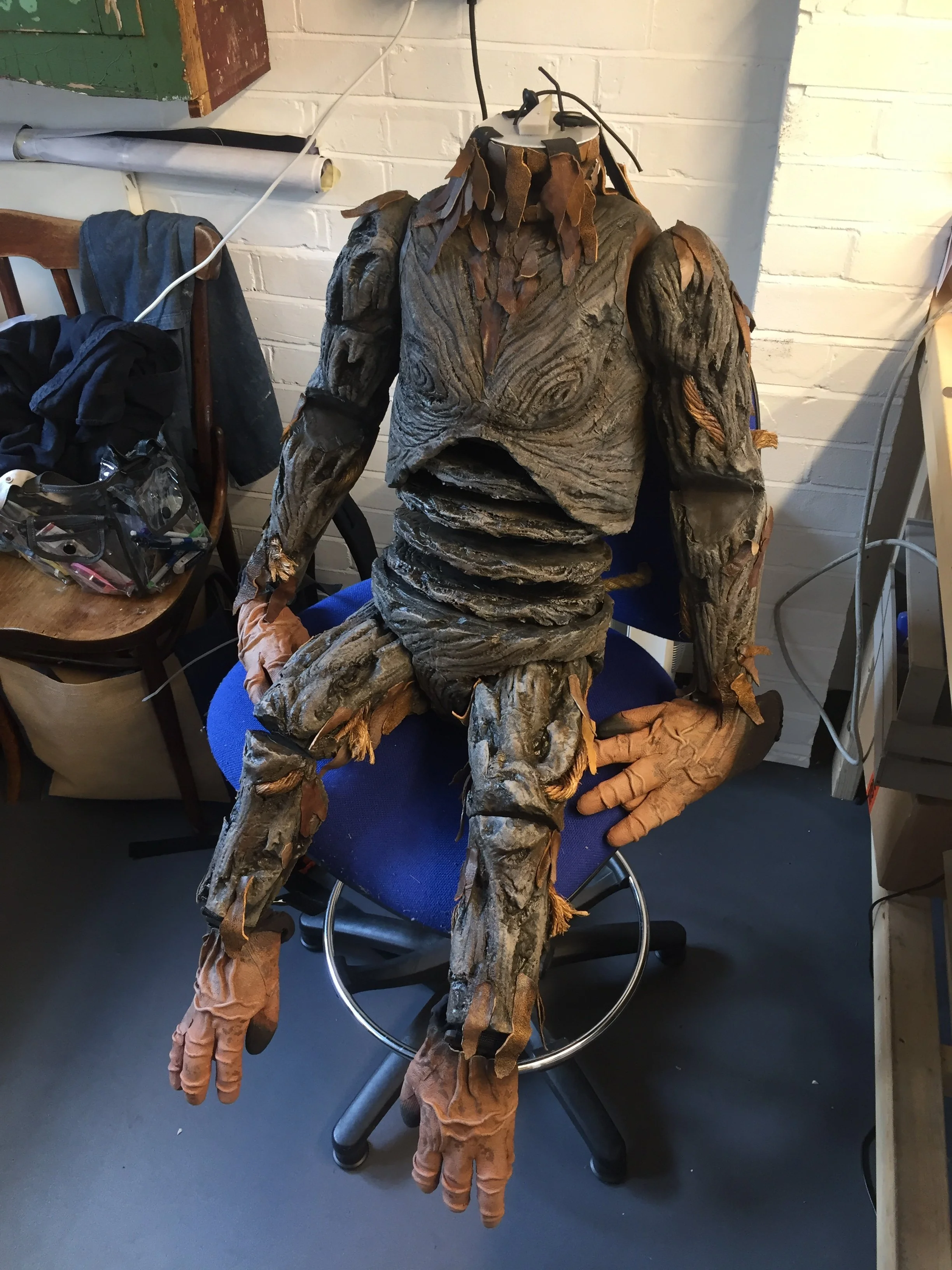
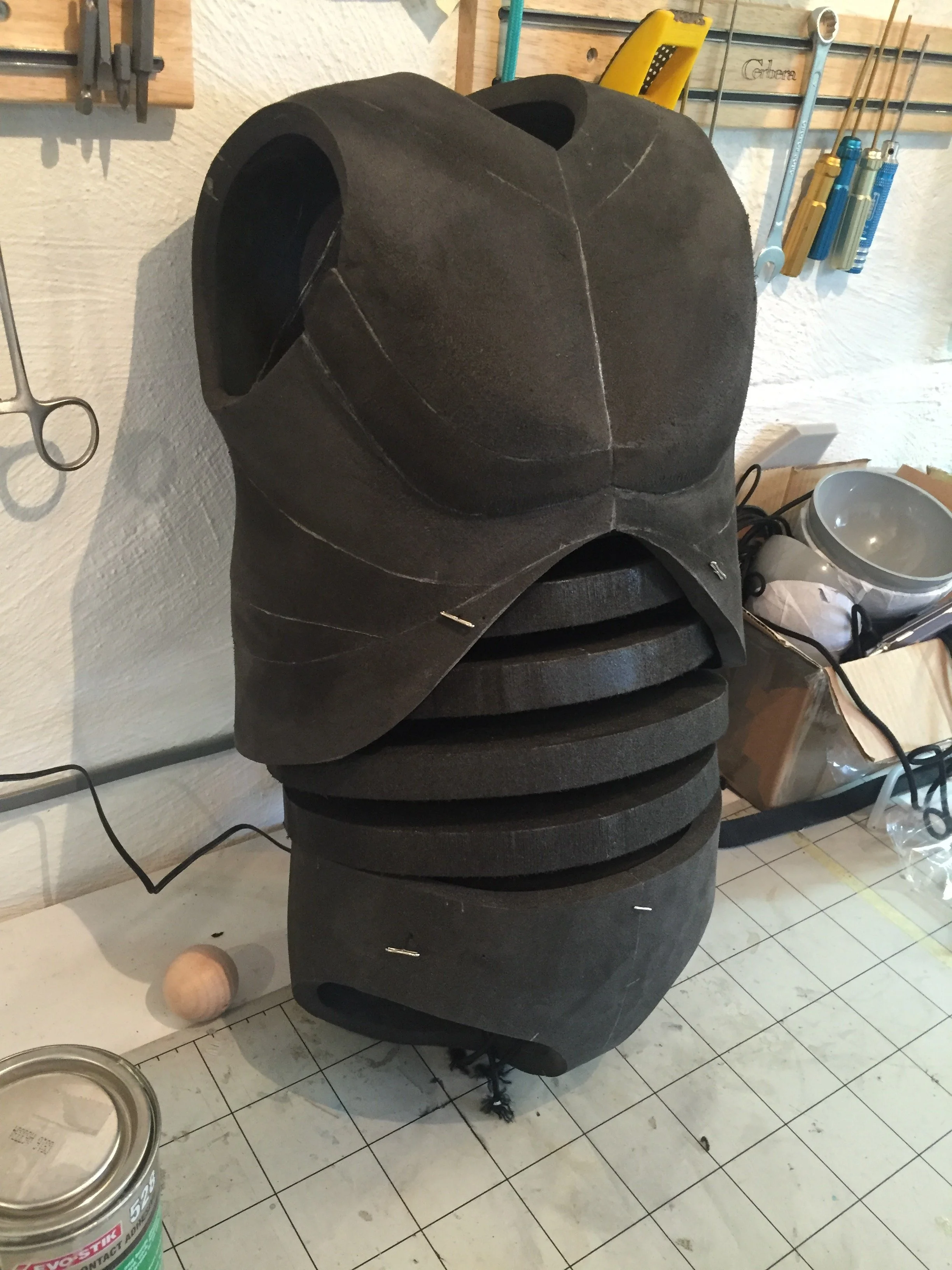
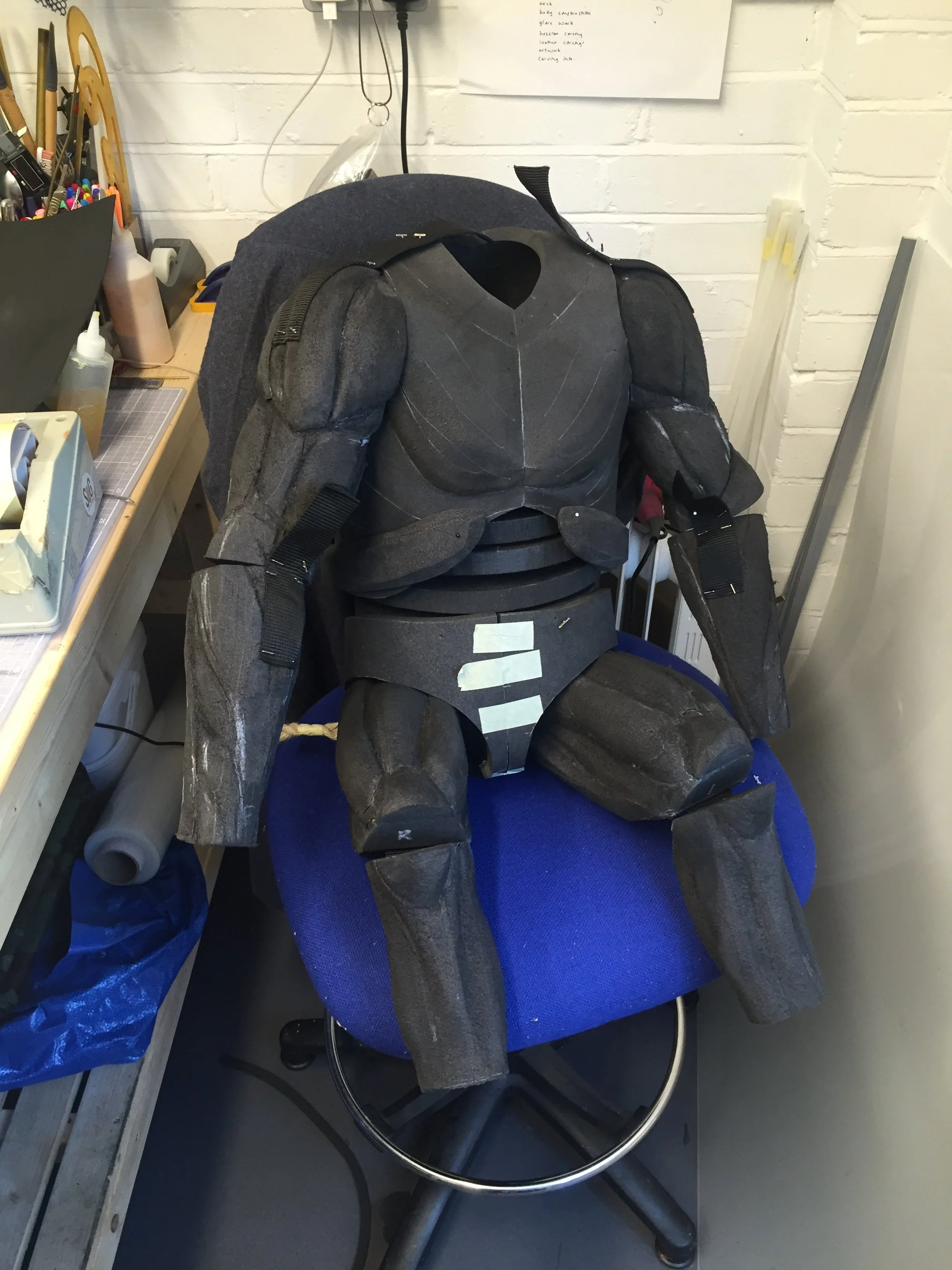
The body was also predominantly constructed in Plastazote.
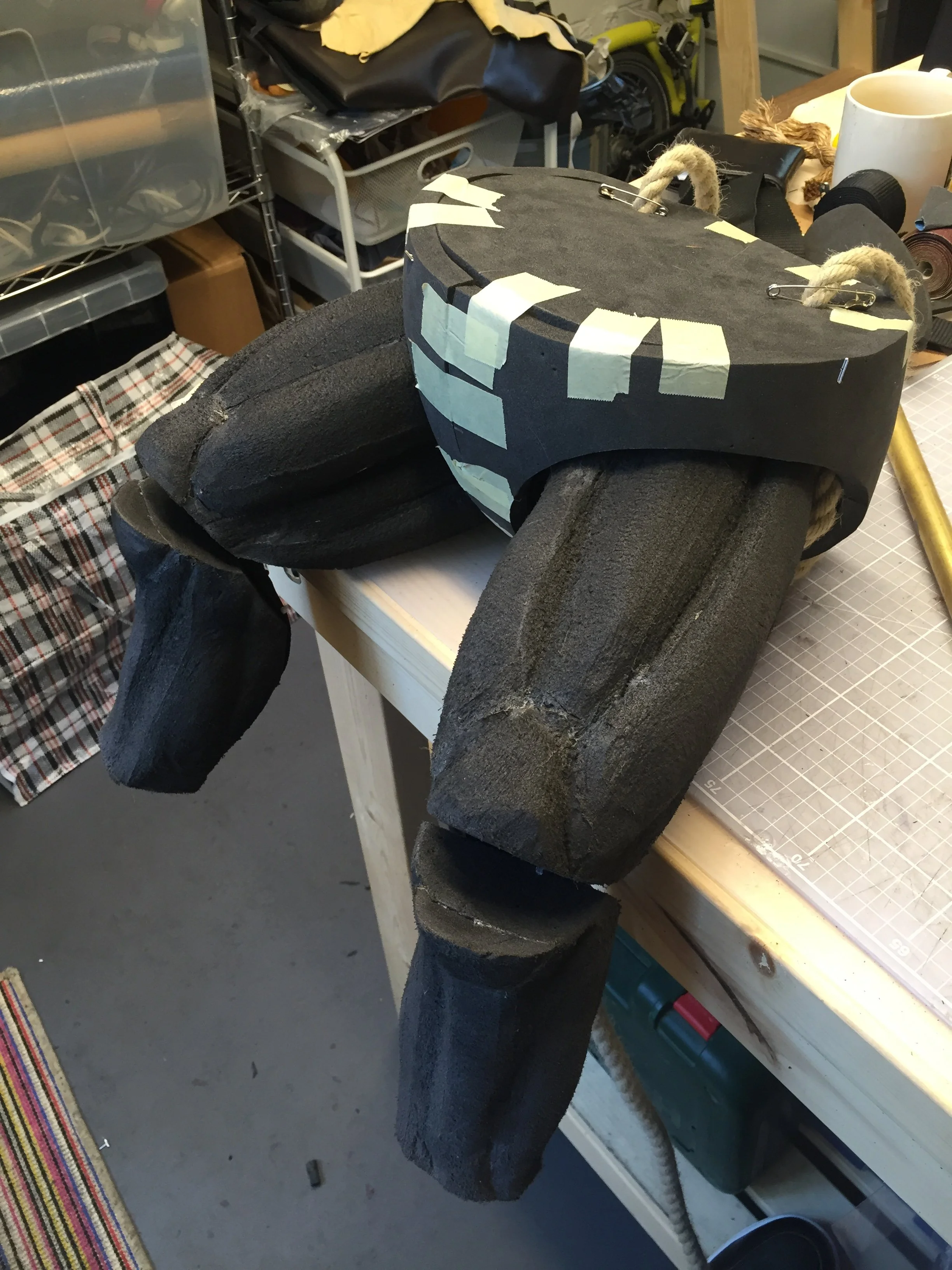
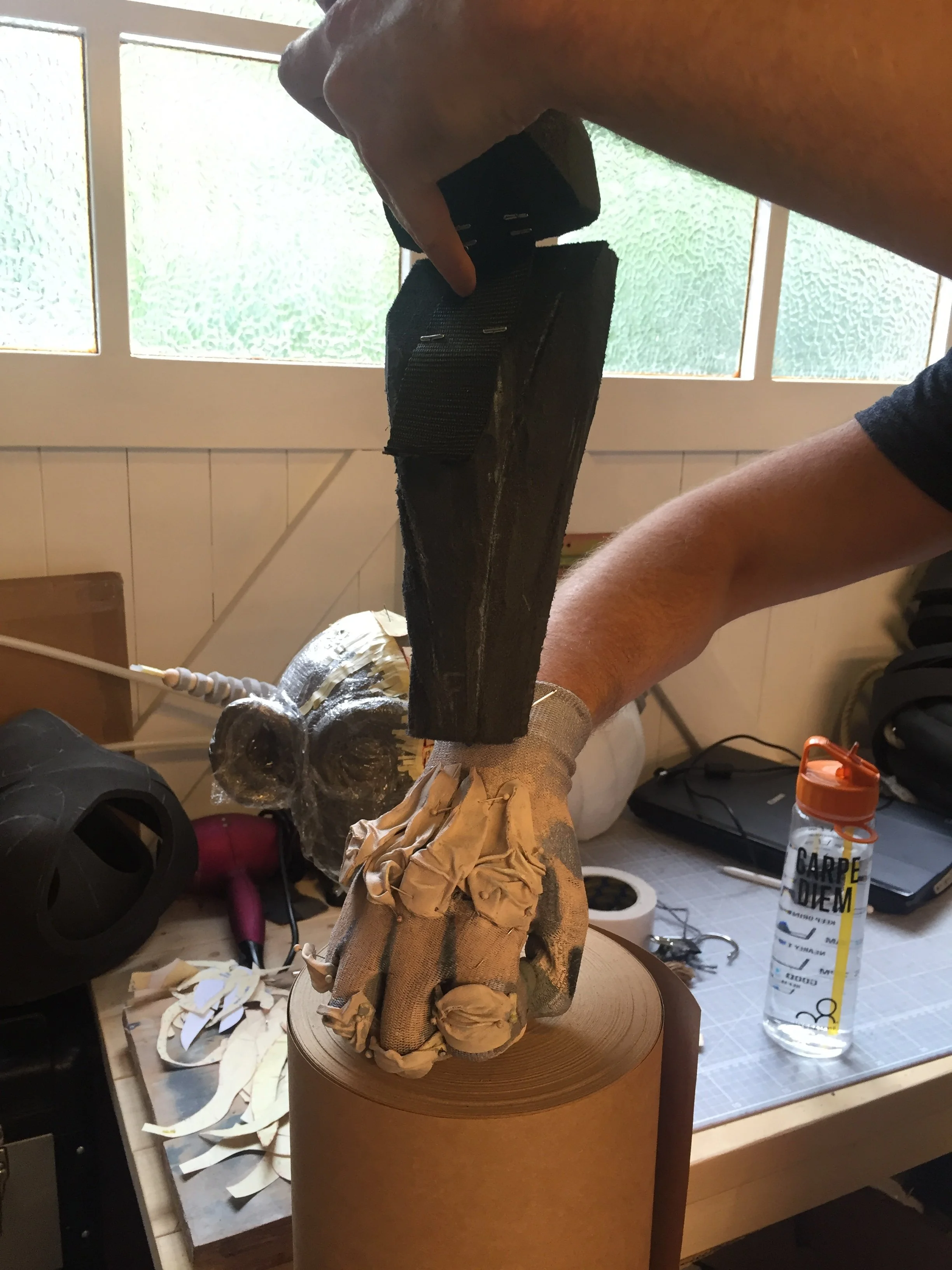
We used pattern-cut foam to build the sculptural forms of the chest and pelvis, creating volume without unnecessarily loading the puppet with weight. The arms and legs were carved and articulated, creating a body that could respond to the puppeteers rather than holding a fixed pose.
And that freedom of movement mattered.
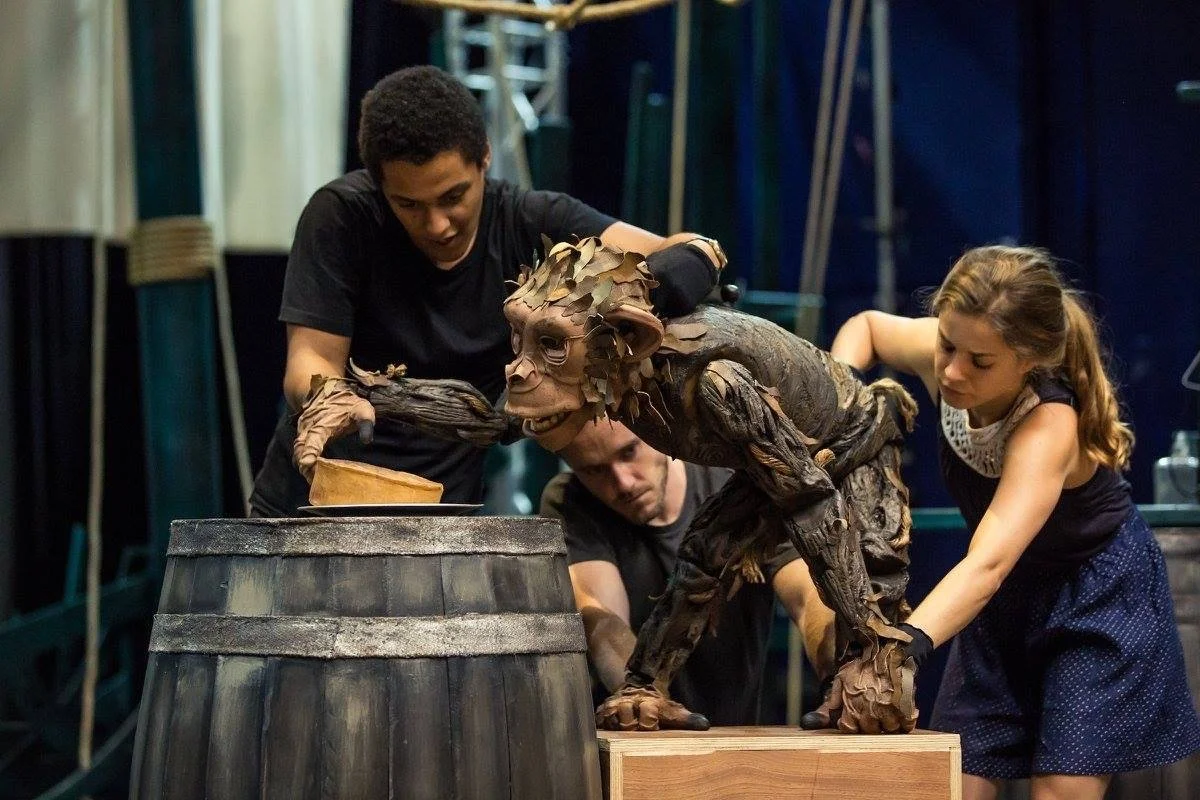
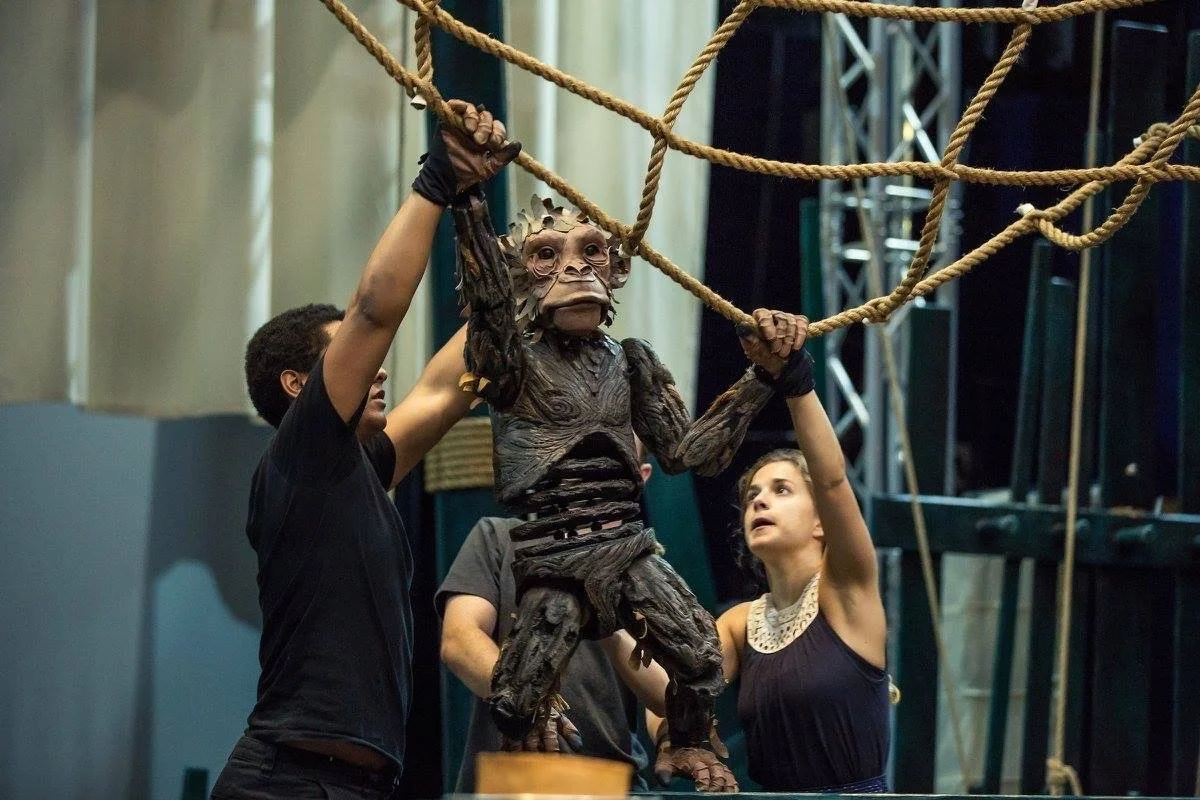
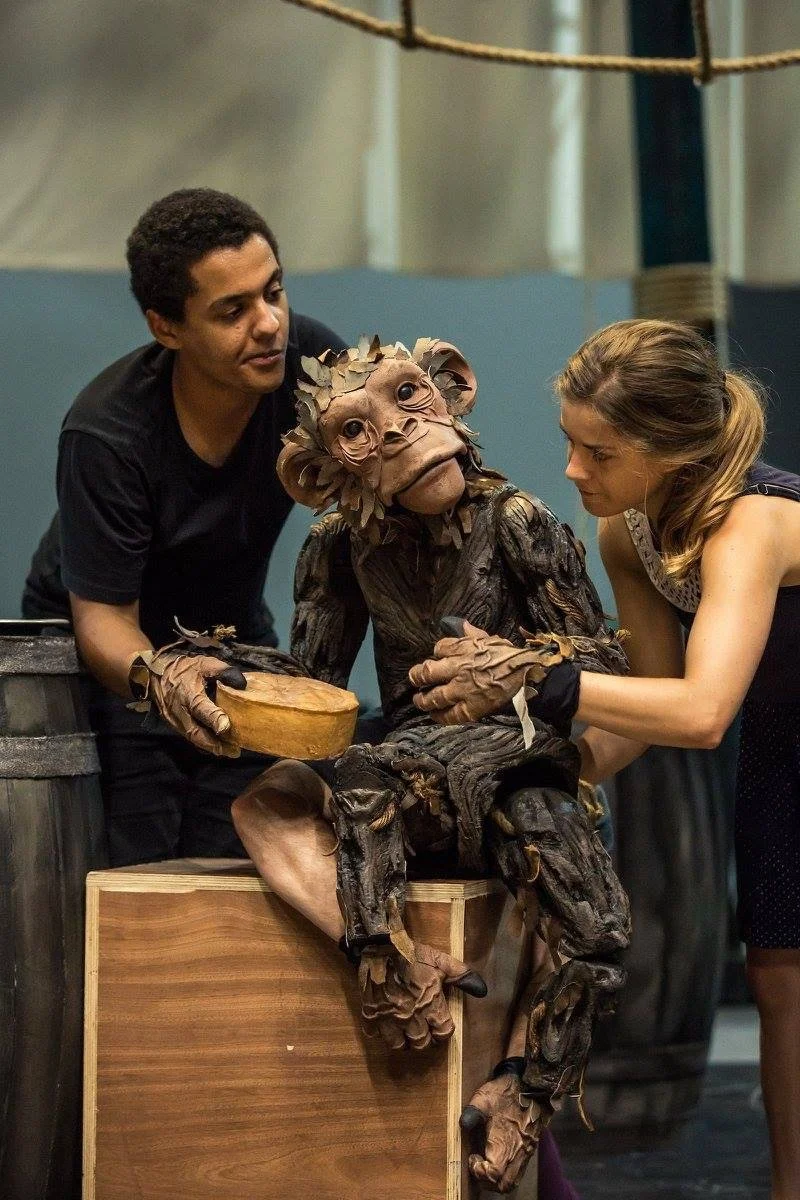
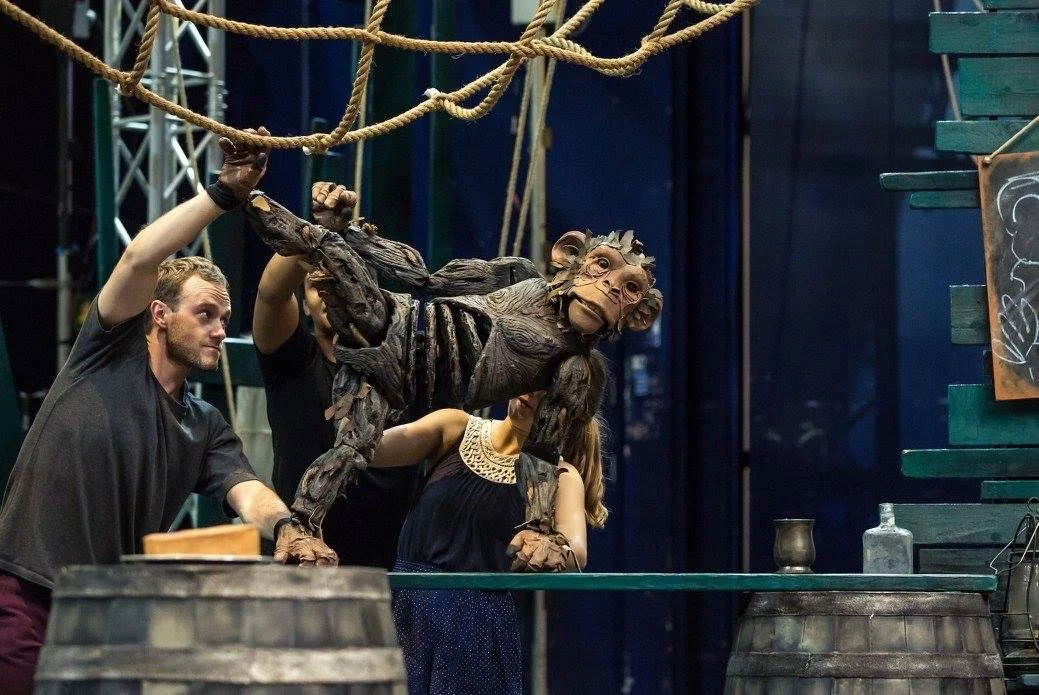
Napoleon wasn't simply required to stand upright and deliver a performance like a human character. The puppeteers needed to be able to explore recognisably simian movement with him - sitting, climbing, reaching, hanging and travelling around the performance space.
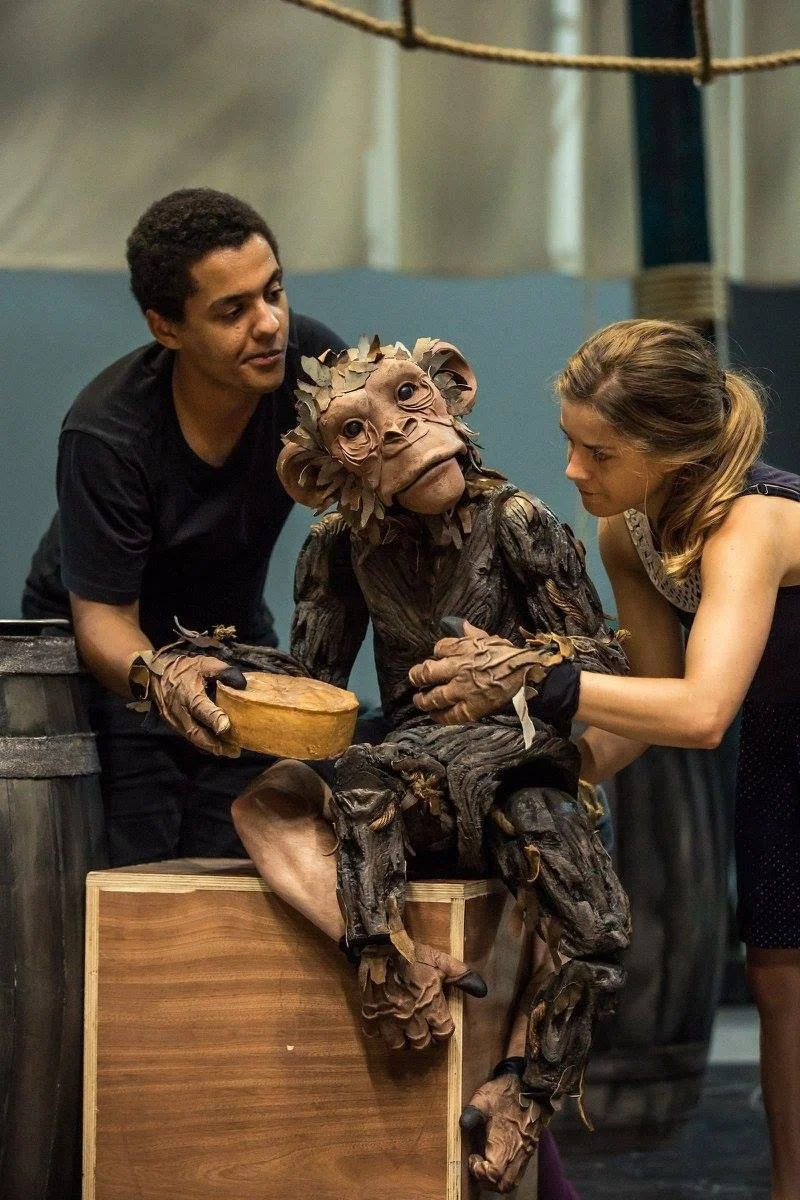
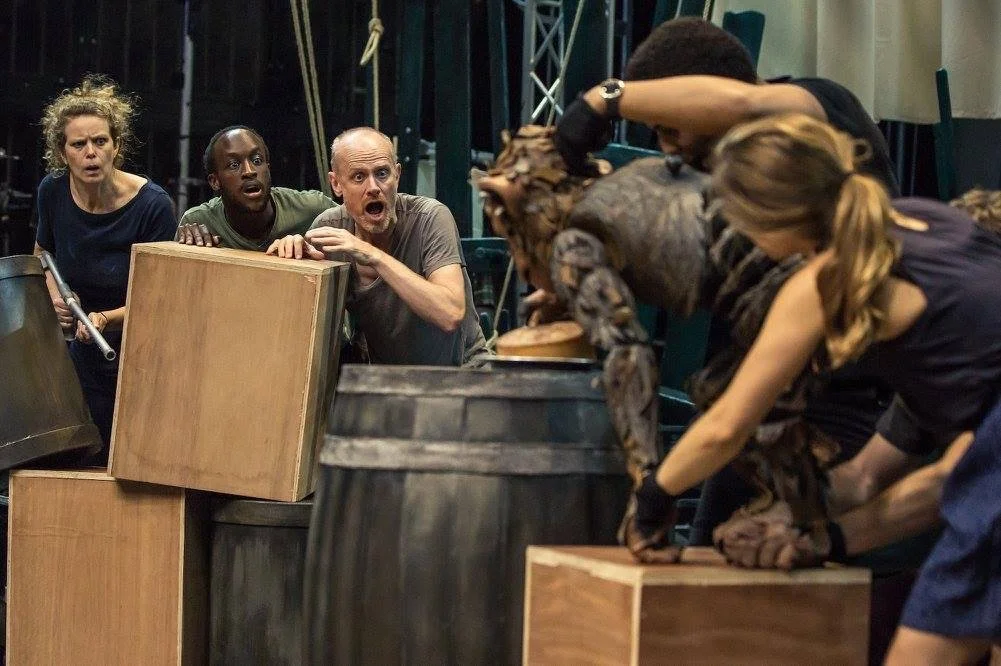
In the finished production, Napoleon was operated by up to three puppeteers and could swing from the stage rigging and bound between platforms.
The fabrication therefore had to support not just what the Monkey looked like, but what the Monkey needed to do.
The bits the audience never sees
Looking through these photographs now, this is probably what we enjoy most. They're full of things that were never intended to be seen by an audience.
Pattern lines. Registration marks. Bare foam. Joints. Mechanisms. Test pieces. Half-finished surfaces. They're the temporary stages between an idea and a character.
As the build progressed, those things gradually disappeared. The black Plastazote became skin. The mechanical head became a face. The articulated structure became a body. And somewhere along the way, the collection of pieces sitting around our workshop became Napoleon.
From workshop to rehearsal room
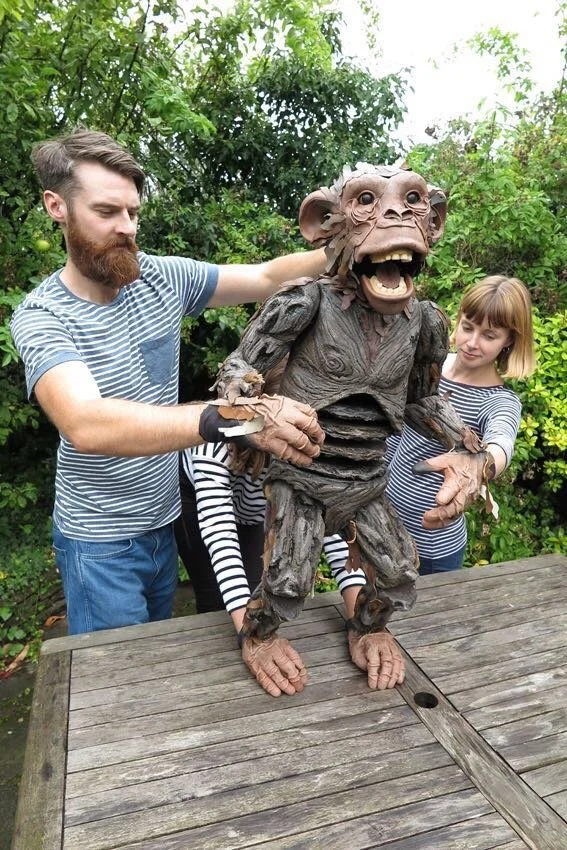
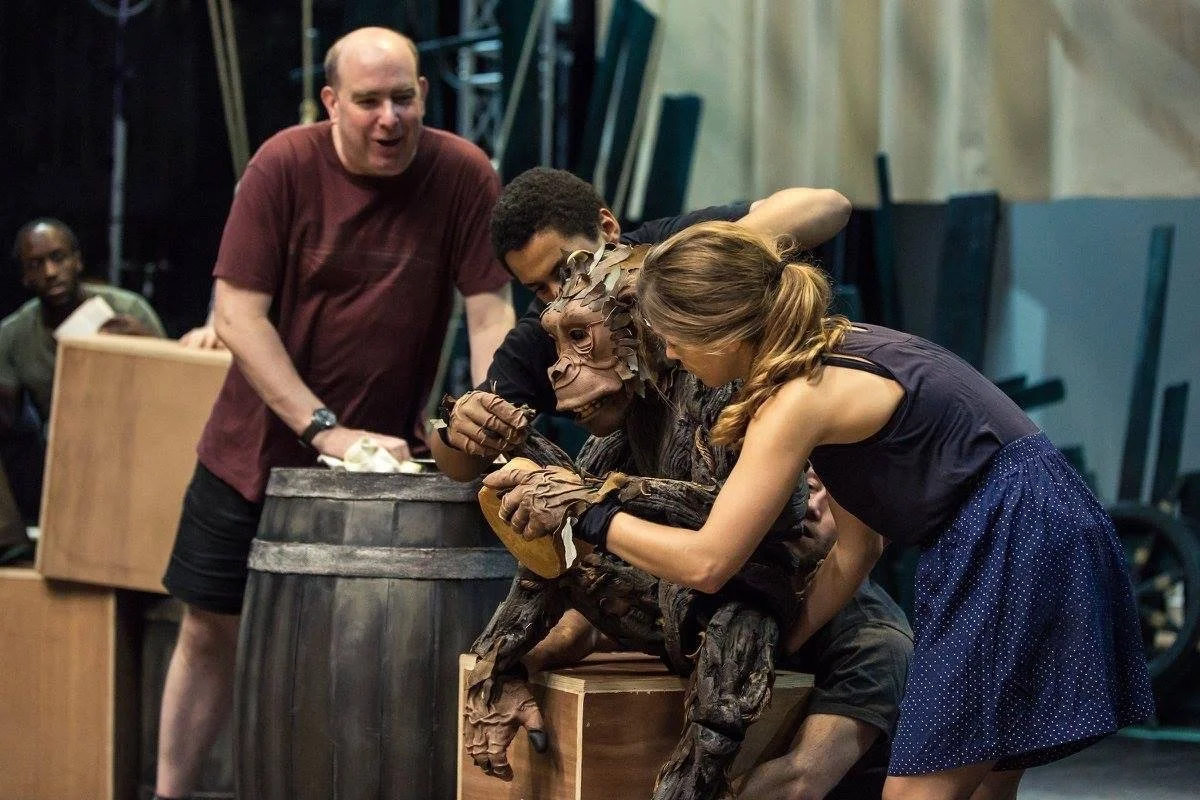
Of course, fabrication only takes a puppet so far. Once Napoleon left our workshop, he became part of the much bigger collaboration between Gyre & Gimble and the puppeteers bringing him to life. And that's where all those decisions about weight, articulation, expression and mechanics had to stop being interesting technical solutions and simply become useful tools for performance.
Contemporary reviews repeatedly singled out the Monkey. Reviewers described him as startlingly lifelike, deeply sympathetic and, in one particularly lovely description, "oddly, heartbreakingly human."
That last description feels particularly appropriate when we think back to the expression we were searching for in the workshop. That earnest vulnerability had made it all the way to the audience.
Back in the archive
Nearly a decade later, it's fascinating to see the whole process laid out again.
Gyre & Gimble's early prototype.
Justin's clay sculpture.
Patterns pinned across its surface.
A black Plastazote head.
The mouth mechanism.
An unfinished body sitting on a workshop chair. And finally…
Napoleon, surrounded by his puppeteers in the rehearsal room.
We remember the patterns, foam, mechanisms and the countless little decisions that went into making him. Hopefully, the audience never thought about any of that.