
Quadruped Studies: Exploring Animal Movement Through Collaborative Puppetry
A glimpse into our first exploratory Movement Lab session at Stitches and Glue, joined by the brilliant puppeteers Edmund Wood, Michael Taibi and Pheobe Hyder.
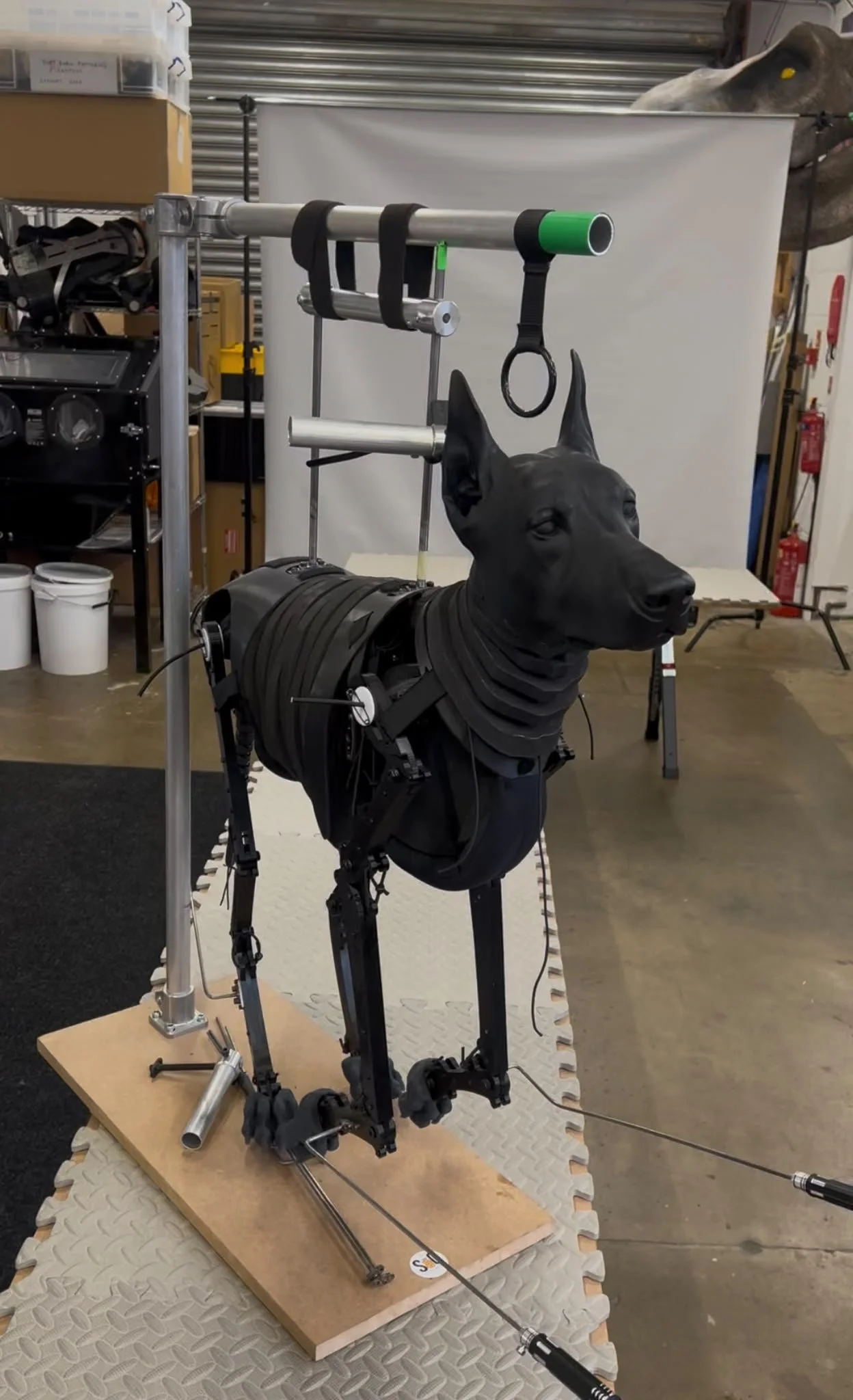
Transforming our workshop into a rehearsal space, we spent time investigating quadruped rod puppetry, studying animal anatomy, locomotion, weight and balance through reference footage, practical experimentation and collaborative play.
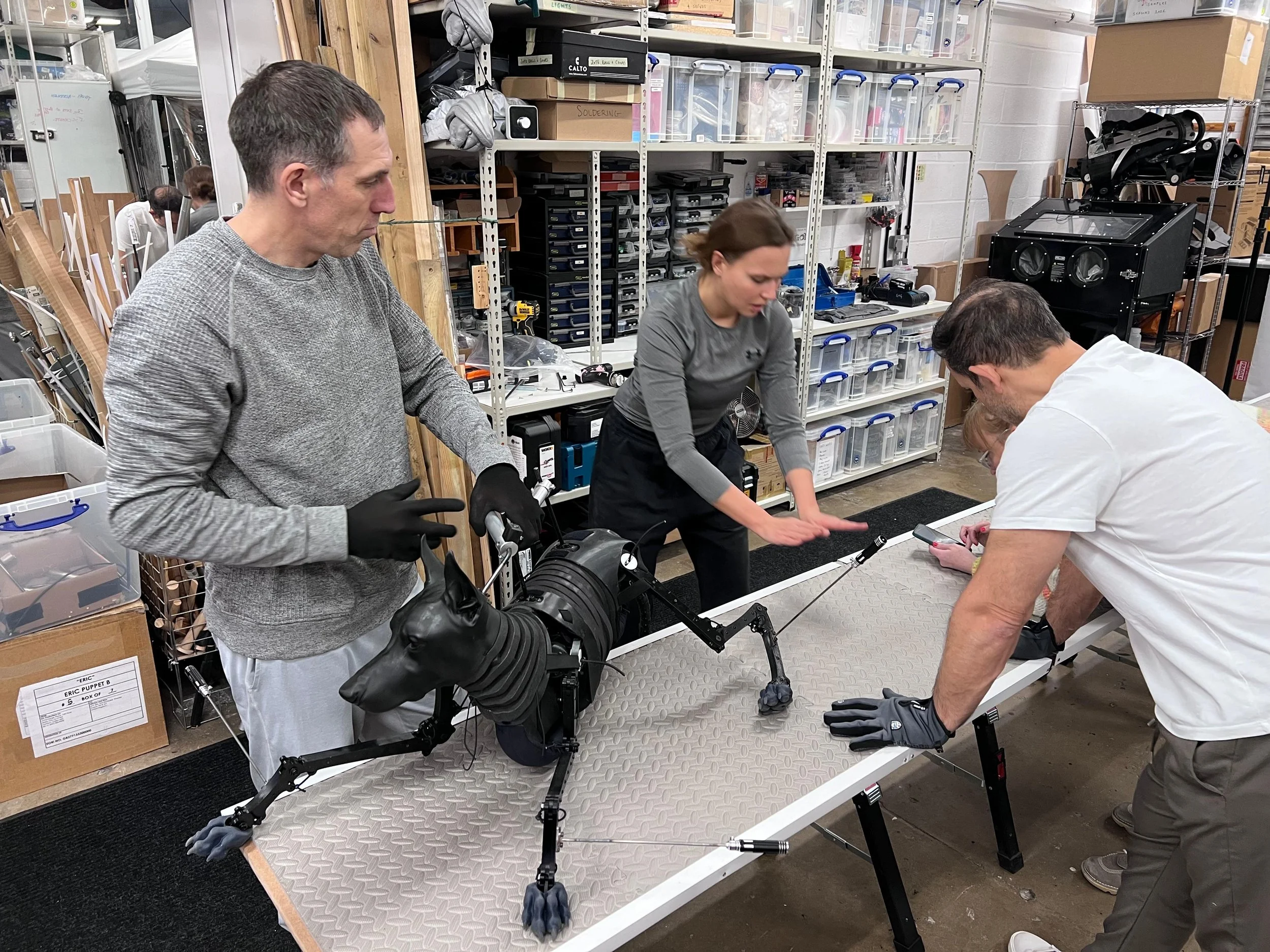
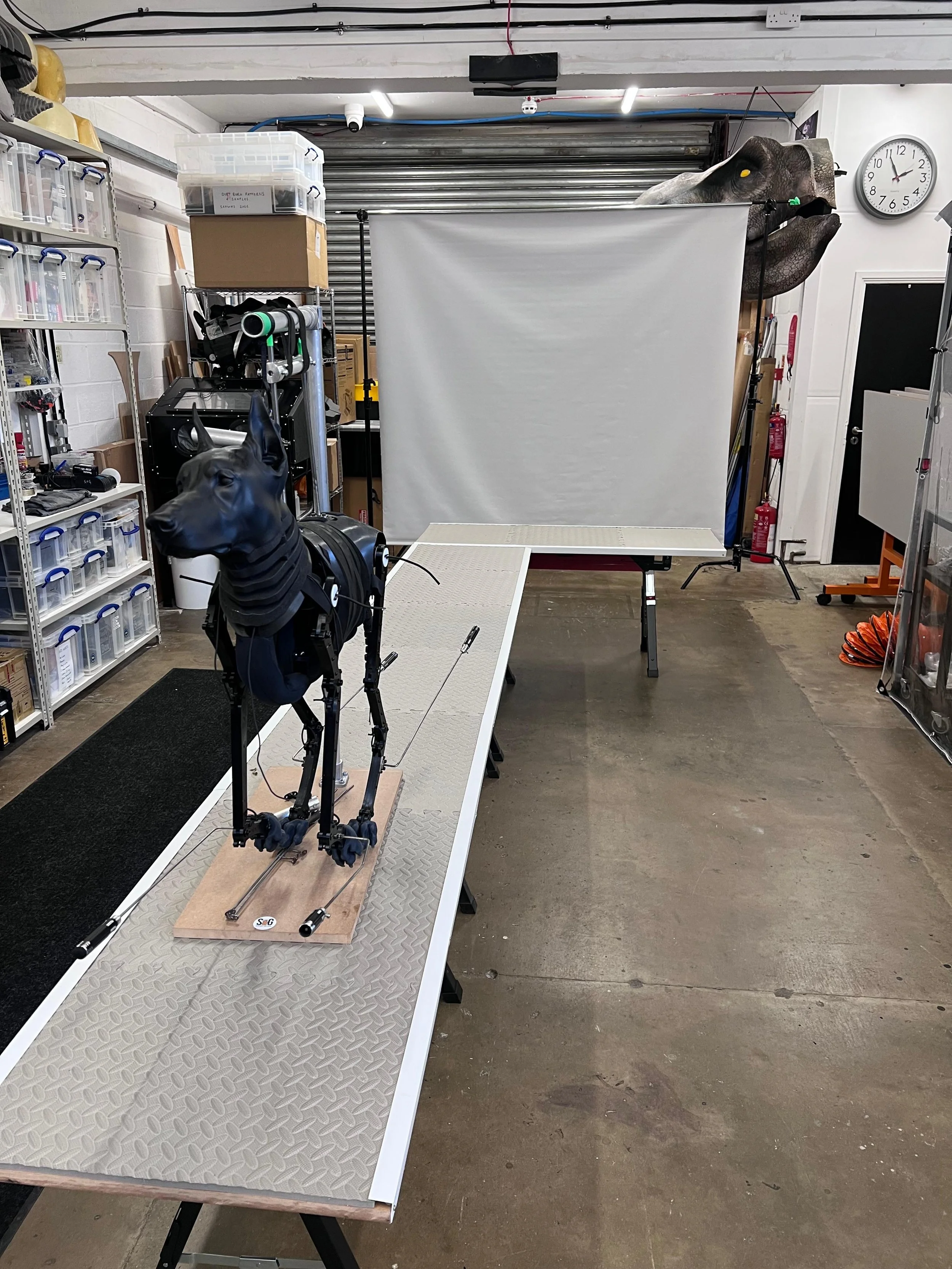
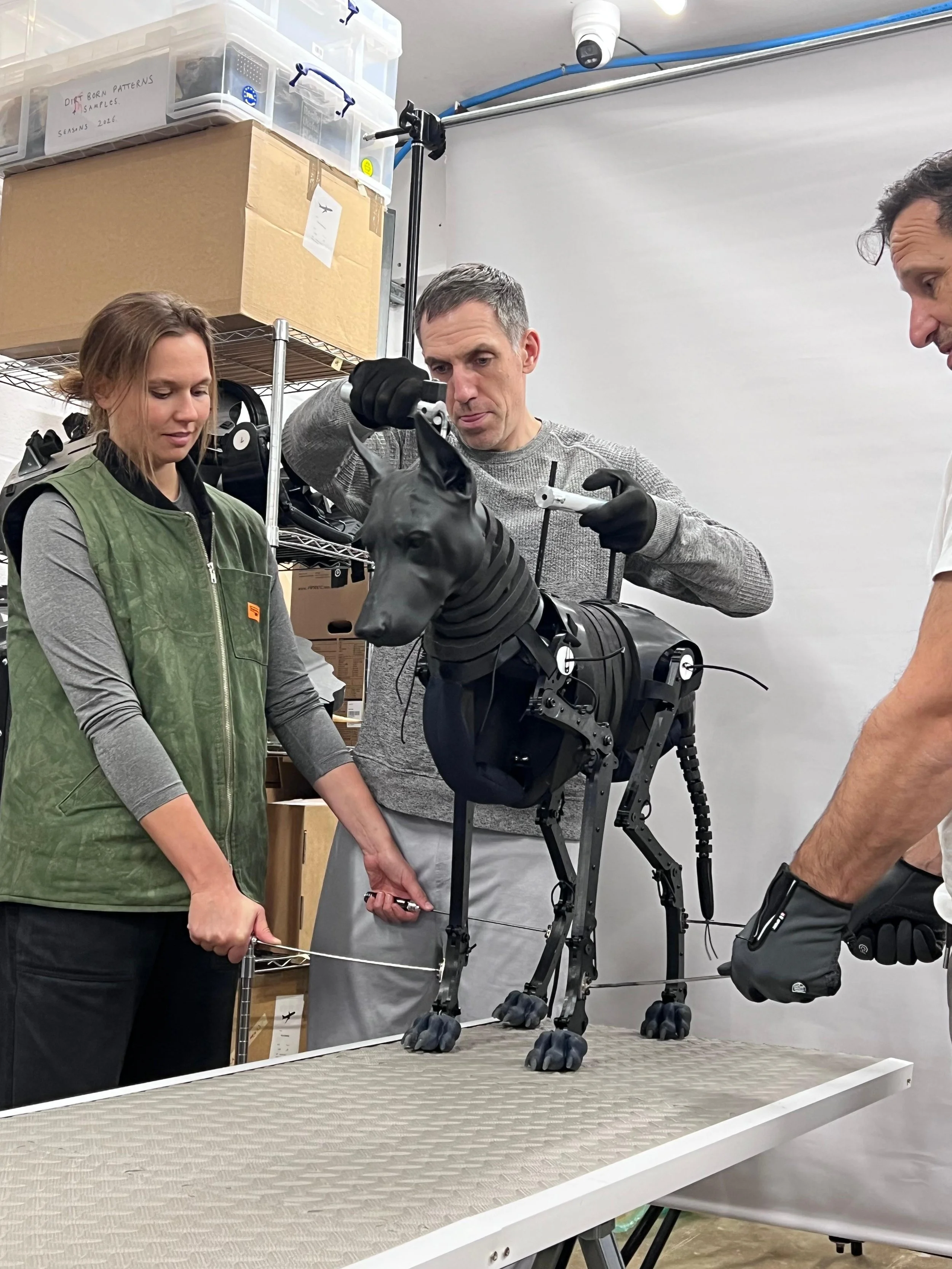
For this initial session, we simplified the puppet’s configuration by locking off the articulated spine and adopting a briefcase-style approach to operation, allowing us to work with three performers.
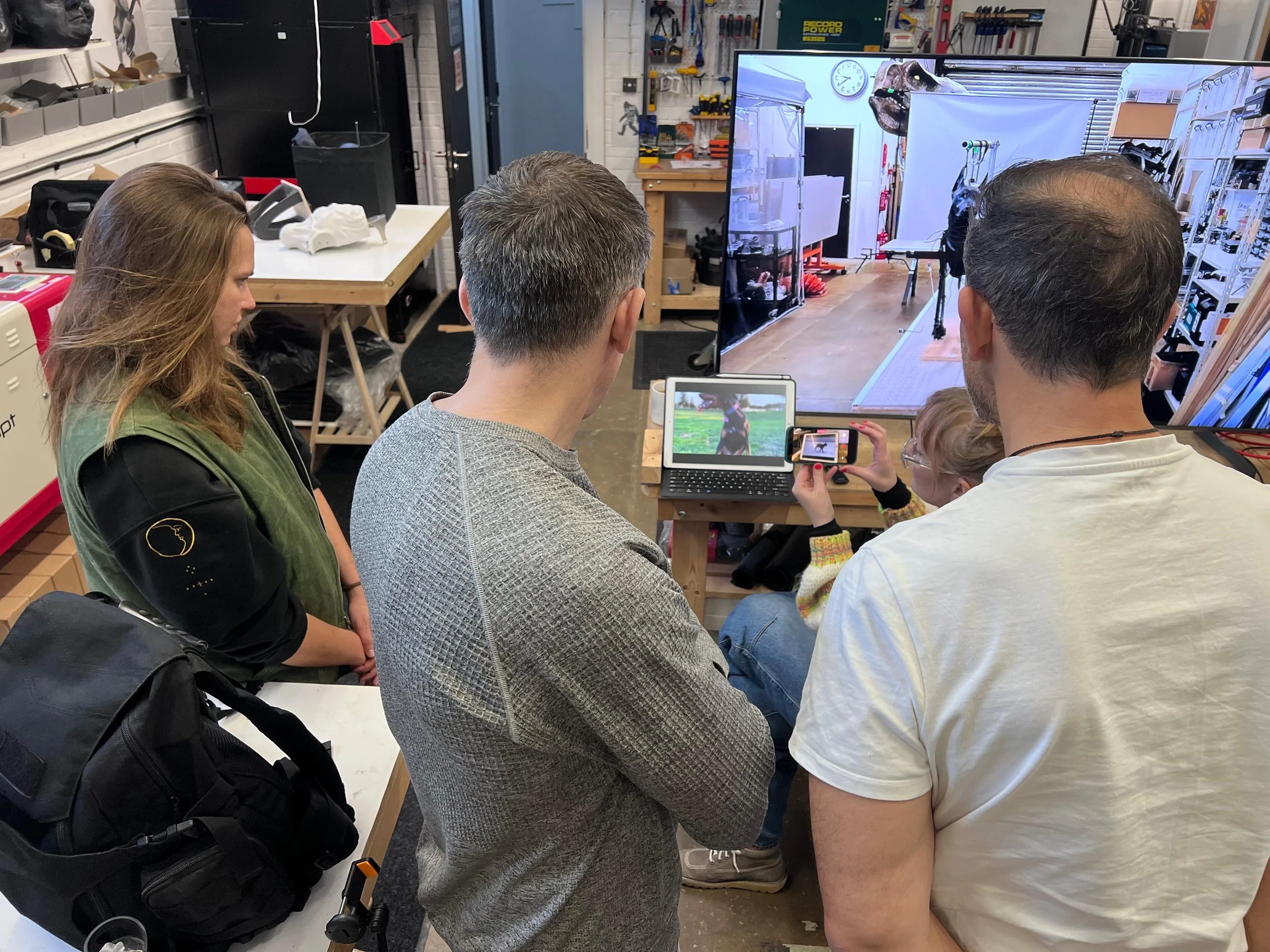
Utilising a raised performance platform and live reverse-scan monitoring, we explored the challenges of multiple puppeteers working together to create the movement and behaviour of a single living creature.
From Observation to Performance
Using reference footage of a real dog, we collectively studied its anatomy and locomotion, discussing the shifting of weight, the engagement of muscles and the relationship between the different parts of the animal’s body during movement.
Throughout the session, we explored a variety of gaits, rhythms and physical expressions, from a relaxed walk and casual trot to a more emotive, energetic slow-motion run. The satisfying sound of the puppet’s paws pounding against the raised platform brought an additional sensory dimension to the performance, reinforcing a sense of weight, rhythm and physical presence.
As the session progressed, the team revisited their initial explorations, gradually shifting their attention towards the finer details of the performance. Through collective observation, discussion and repetition, we explored how subtle adjustments could contribute to a more convincing and expressive sense of life.
Connecting Puppet Design, Mechanics and Performance
Alongside the performers, Stitches & Glue’s Becky and Paul explored practical adjustments to the puppet’s rigging, investigating how the mechanics and methods of operation could better support the puppeteers and their creative intentions. An important aspect of the session was the dialogue between puppet makers and performers. Rather than treating the puppet as a finished object, we approached it as an adaptable performance tool, with its configuration and operation informing the creative process.
The session reinforced the importance of creating dedicated rehearsal space — time to observe, experiment, question, share knowledge and refine our collective understanding of movement.