Puppet Design & Consultancy: From Concept to Construction with Stitches and Glue
What is Puppet Consultancy?
You may have a character, creature or puppet in mind, but how do you turn that idea into something that can actually be made and brought to life?
We help our clients problem-solve from concept to construction. Every job is unique and the process is tailored to each scenario. The consultancy service includes:
developing an existing concept
advising on construction and materials
considering scale and proportions
thinking about mechanisms and articulation
operator requirements
movement and performance
durability
maintenance and repair
practical considerations for manufacture
producing clear design pages and documentation for a production team or fabricator
why do i need design pages?
A good design page is much more than an illustration. It becomes a communication tool between designers, directors, puppeteers, makers, producers and other departments.
Design pages communicate the following:
overall form and proportions
scale
construction approach
materials
articulation
mechanisms
access points
operator positions
movement
removable or replaceable components
finishes and surface treatments
important dimensions
details that aren't obvious from a single hero image
different views answer different questions:
Front / side / rear views – establish form and proportions
Detail drawings – explain construction and mechanisms
Cutaways – show what's happening inside
Scale references – communicate the relationship between puppet and performer
Annotations – explain materials, movement and construction
do you have any examples?
One example of how we use design documentation to develop a puppet project came through our work for the Commonwealth Games in birmingham.
Please see some puppet consultancy and puppet design pages below:
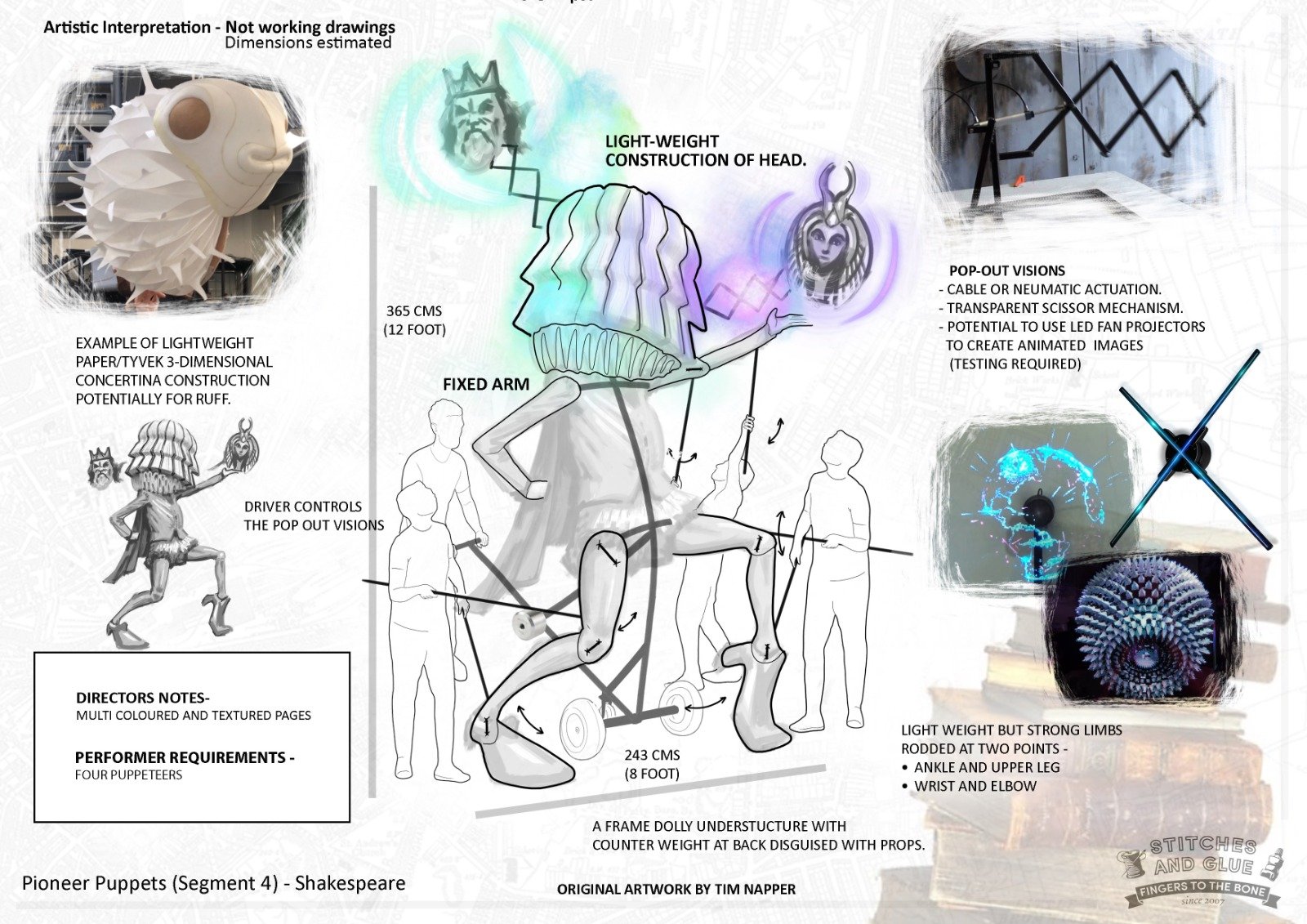
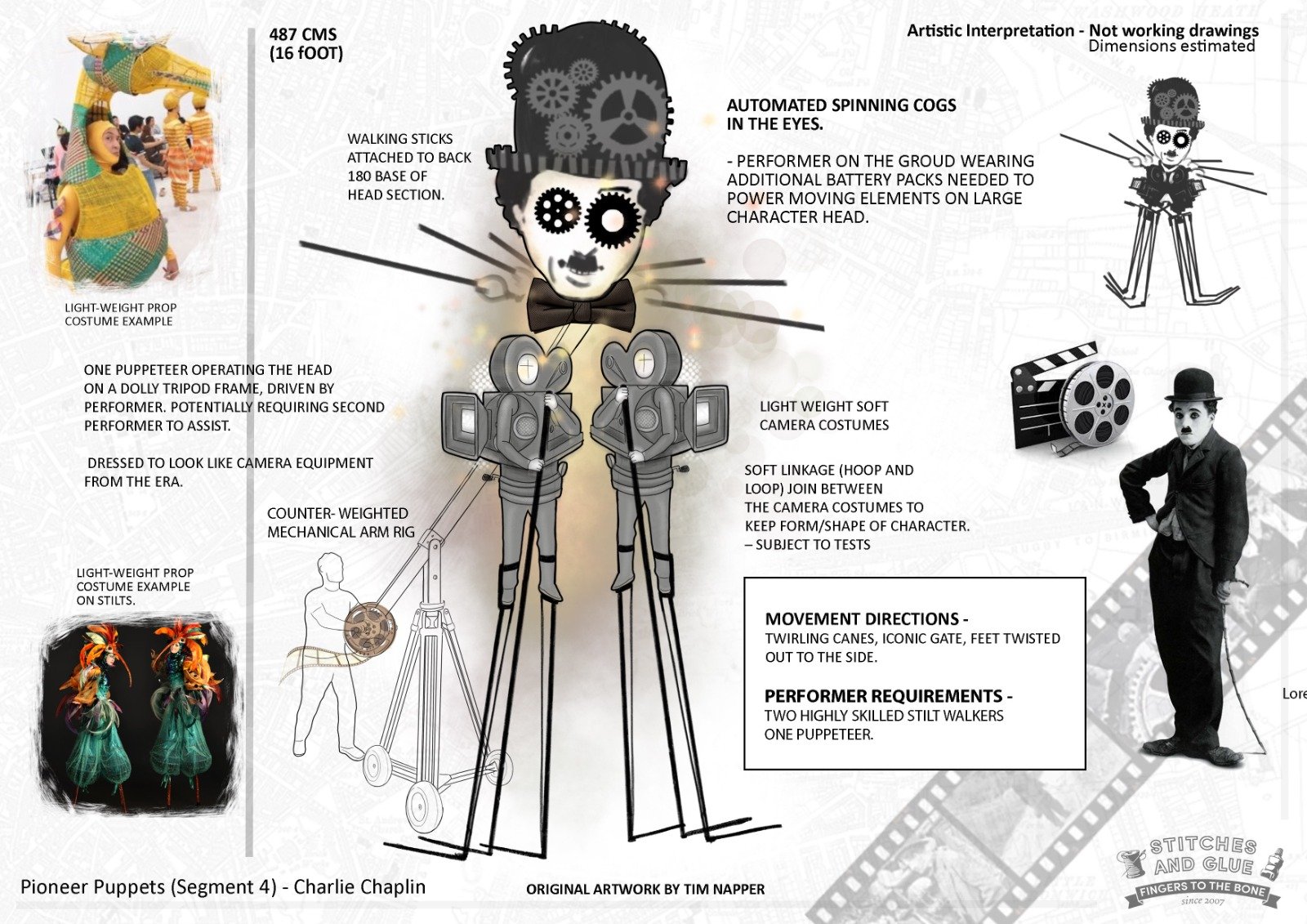
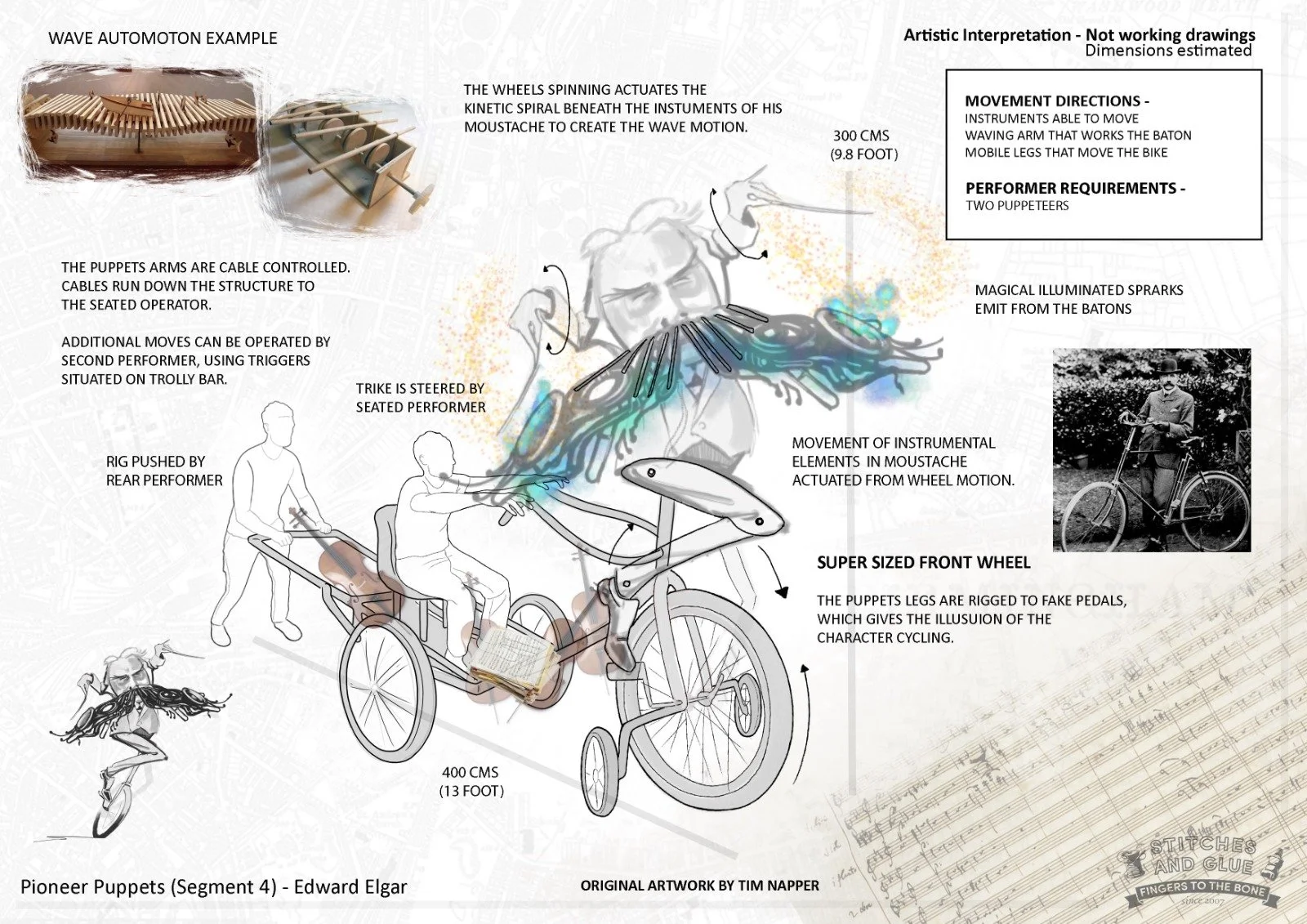
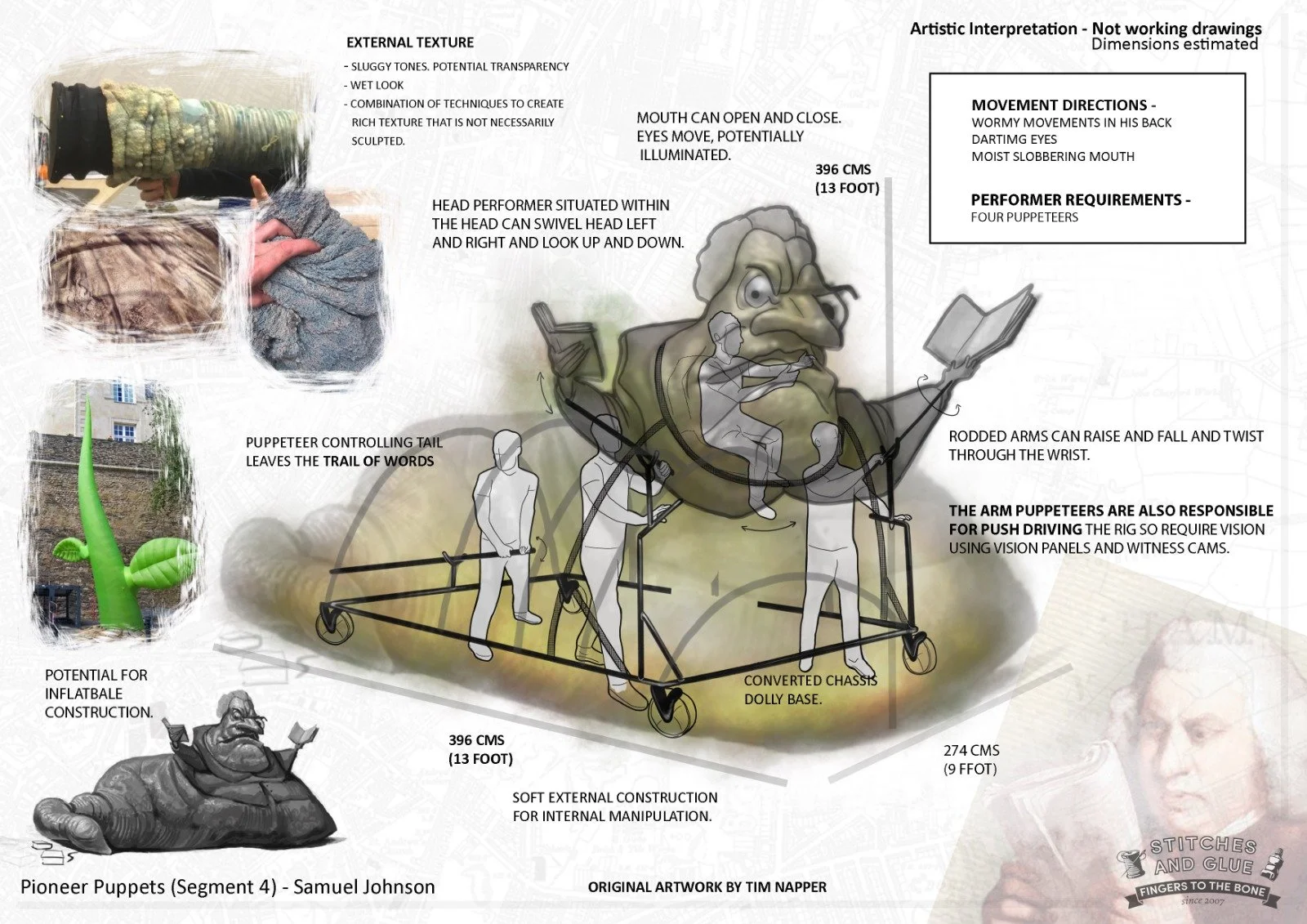
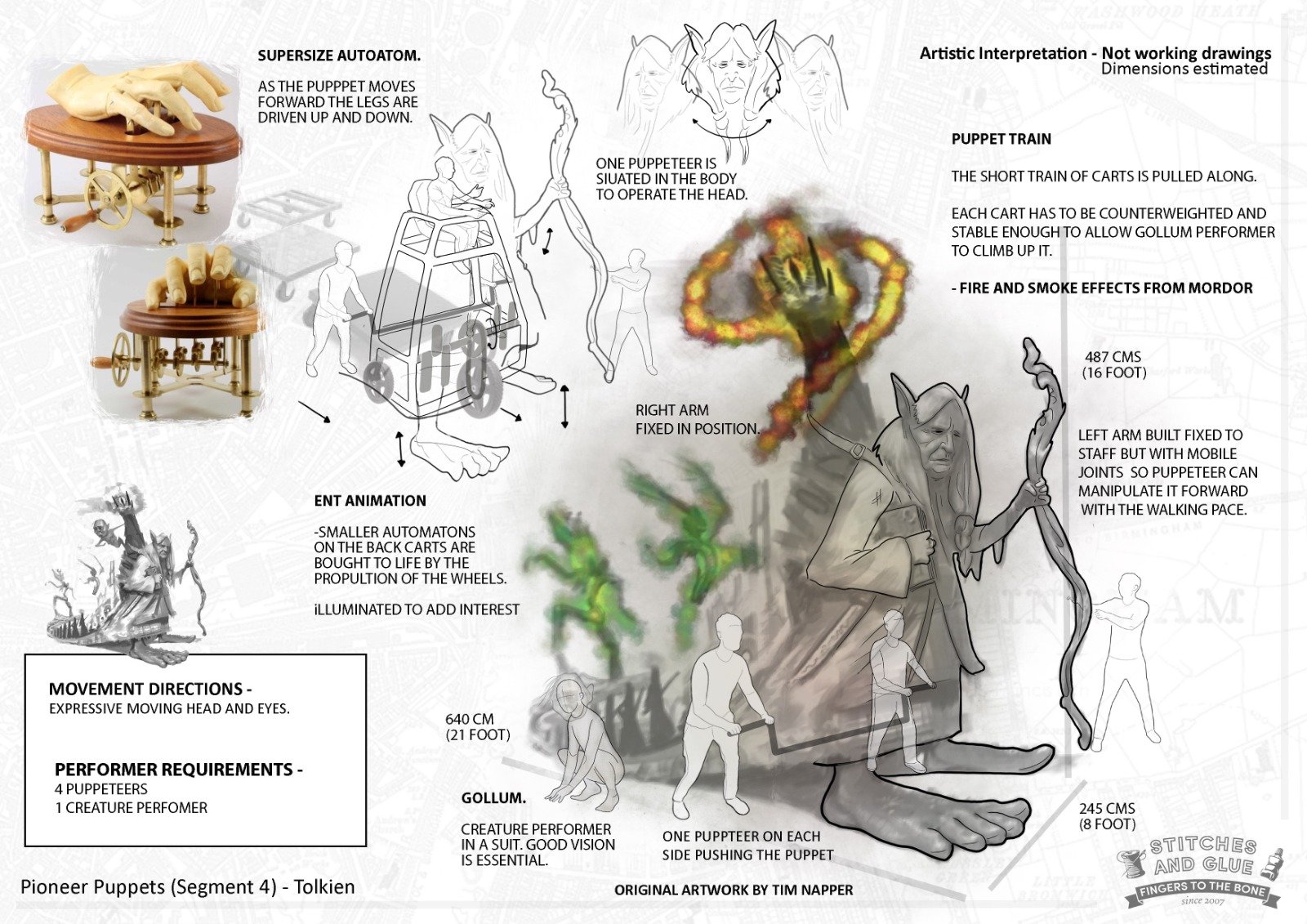
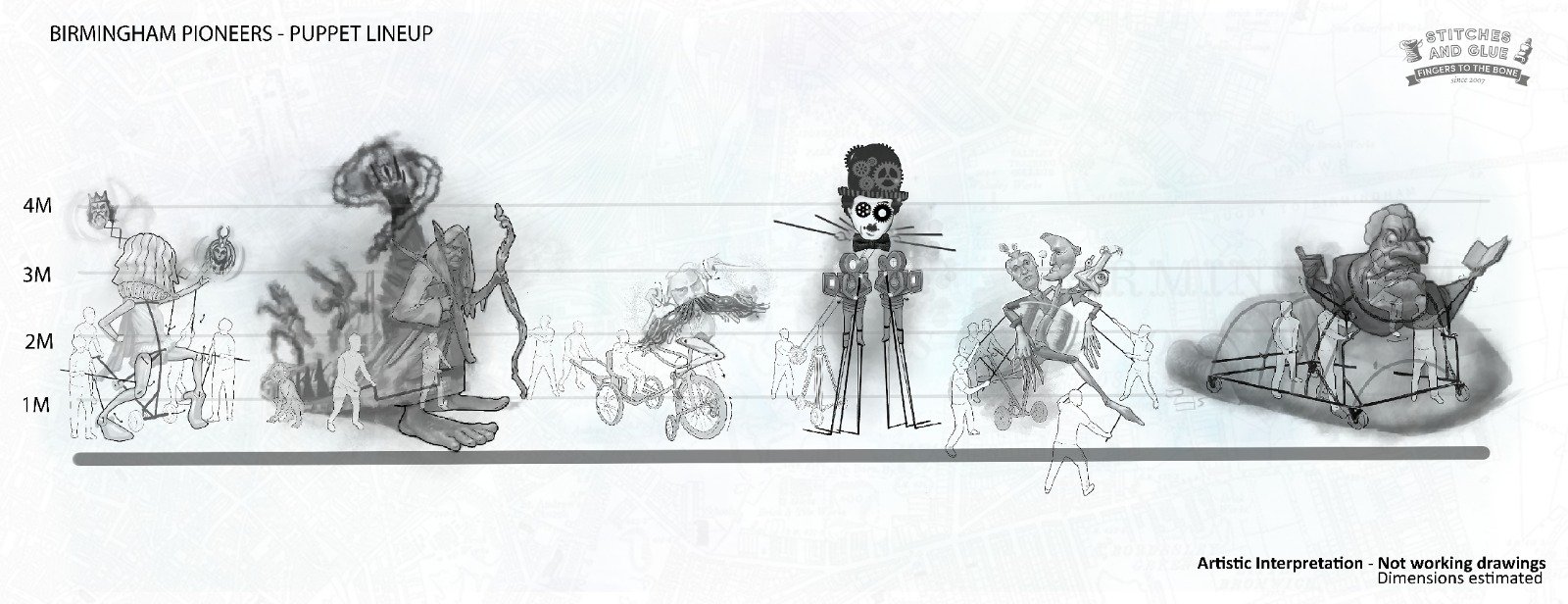
the puppet design process
Establishing the form
Early design work explores the overall silhouette, proportions and relationship between the puppet and its performer.
Thinking beyond the exterior
Once the form is established, the design needs to consider what is happening beneath the surface — how the puppet is constructed, where the operator is and how the character will move.
Designing for performance
A puppet can look fantastic on paper but still fail if the performer cannot operate it comfortably or achieve the required movement. Performance requirements therefore form an important part of the design process.
Designing for manufacture
Our design documentation is intended to bridge the gap between an initial creative idea and something that can actually be fabricated.
Good puppet design isn't just about how a character looks. It's about understanding how that character needs to work.
Questions we can answer for you at Stitches and Glue:
Is my concept achievable?
How could it move?
How many operators would it need?
What materials would work?
How would it be constructed?
How large can it realistically be?
How will the performer access it?
How can it be repaired?
What needs to be considered for filming or live performance?
Recent Feedback from our Puppet Consultancy clients includes: