Tales from the Archives: Puppets in Focus. Flotsam and Jetsam — Disney’s The Little Mermaid, Helsinki, 2018

Flotsam and Jetsam onstage with Ursula the Sea Witch
- Disney’s Little Mermaid.
Project at a Glance
Production: Disney’s The Little Mermaid
Theatre: Helsinki City Theatre (Helsingin Kaupunginteatteri)
Location: Helsinki, Finland
Year: 2018
Director: Samuel Harjanne
Our Role: Puppet Designers & Consultants
Scope: Around 30 puppets and puppet elements
This instalment: Flotsam and Jetsam
In 2018, Stitches and Glue were the official puppet designers and puppet consultants for Disney’s The Little Mermaid at Helsinki City Theatre (Helsingin Kaupunginteatteri), Finland.
Working with director Samuel Harjanne and the theatre’s in-house team, we designed and helped create around 30 puppets and puppet elements for the musical production. These ranged from Sebastian and Ursula’s tentacles to an entire collection of fish and underwater creatures.
“‘The puppetry is amazing, kudos of it to Paul Vincett and Becky Johnson, “Stitches and Glue Ltd”. I didn’t get tired of admiring the many ways of how the colourful fish were brought on stage. They hang, are attached to clothes people wear, they roll around as one rides a minibike slowly at the back of the stage... Very creative and nifty! And what it came to the big ones, the floating milk-cap and the kind looking shark were my favourites.’”
There is far too much from a project like this to explore in a single article. So, over the coming months, our Tales from the Archives: Puppets in Focus series will delve into individual puppets from this production and others in the Stitches and Glue archive — looking at how they were designed, engineered and made, and some of the practical problems we had to solve along the way.
For our first instalment, we’re returning to Helsinki and diving beneath the waves to look at Flotsam and Jetsam, Ursula’s sinister eel sidekicks, and the process of turning their character designs into large-scale puppets capable of swimming across a live stage.
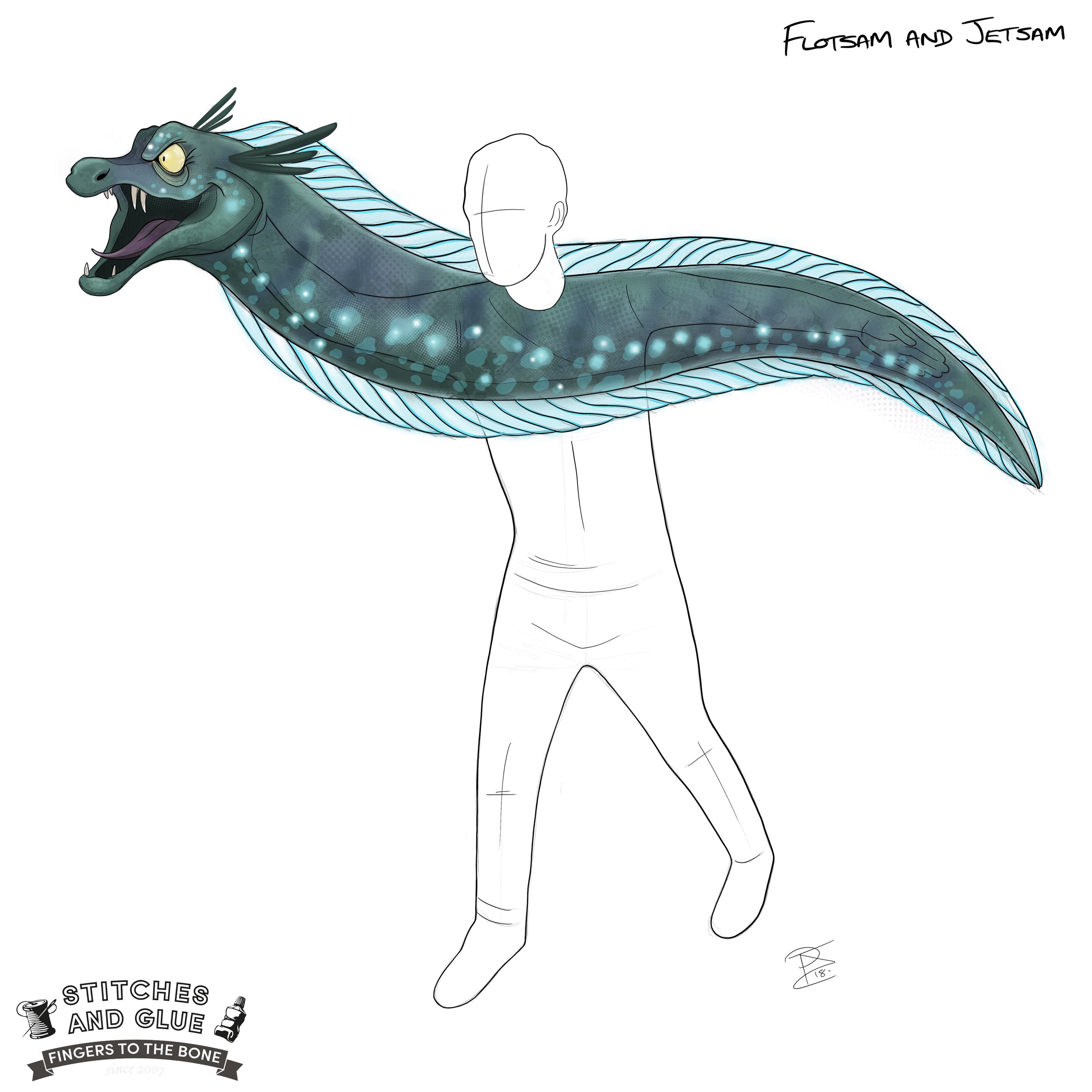
The challenge: how do you make an eel swim on stage?
One of the fundamental challenges of designing puppets for The Little Mermaid was creating the illusion of creatures moving underwater — on a stage where, of course, there is no water.
Flotsam and Jetsam presented a particularly interesting problem.
Their long, sinuous bodies needed to feel fluid and alive rather than rigid or cumbersome. Their movement had to suggest the continuous slithering motion of an eel swimming through water, while still allowing the performer to give each character expression, intention and personality.
There was also the question of scale.
These were large puppets worn and operated by the performers, so weight, balance and freedom of movement were critical. A puppet may appear effortless from the auditorium, but the performer has to carry and manipulate it repeatedly throughout a demanding theatrical performance.
The challenge, therefore, wasn’t simply how should Flotsam and Jetsam look?
How do we give a single performer control of a large eel puppet from head to tail while allowing the whole creature to appear fluid and alive?
That question informed the design from the very beginning. Designing the character and the performance together. The design process began by considering character and performance alongside one another.
Early concept drawings explored the appearance of Flotsam and Jetsam — their expressions, silhouettes, colour and surface treatment — but also their scale and relationship to the performers who would ultimately bring them to life. Thinking about the performer at this early stage is an important part of our approach to theatrical puppet design. A character can look wonderful on paper, but if its proportions, weight or construction prevent a performer from moving naturally, it isn’t yet a successful puppet.
The concept development therefore needed to establish both who these characters were and how they might exist physically on stage. From the drawings, we moved into three dimensions.
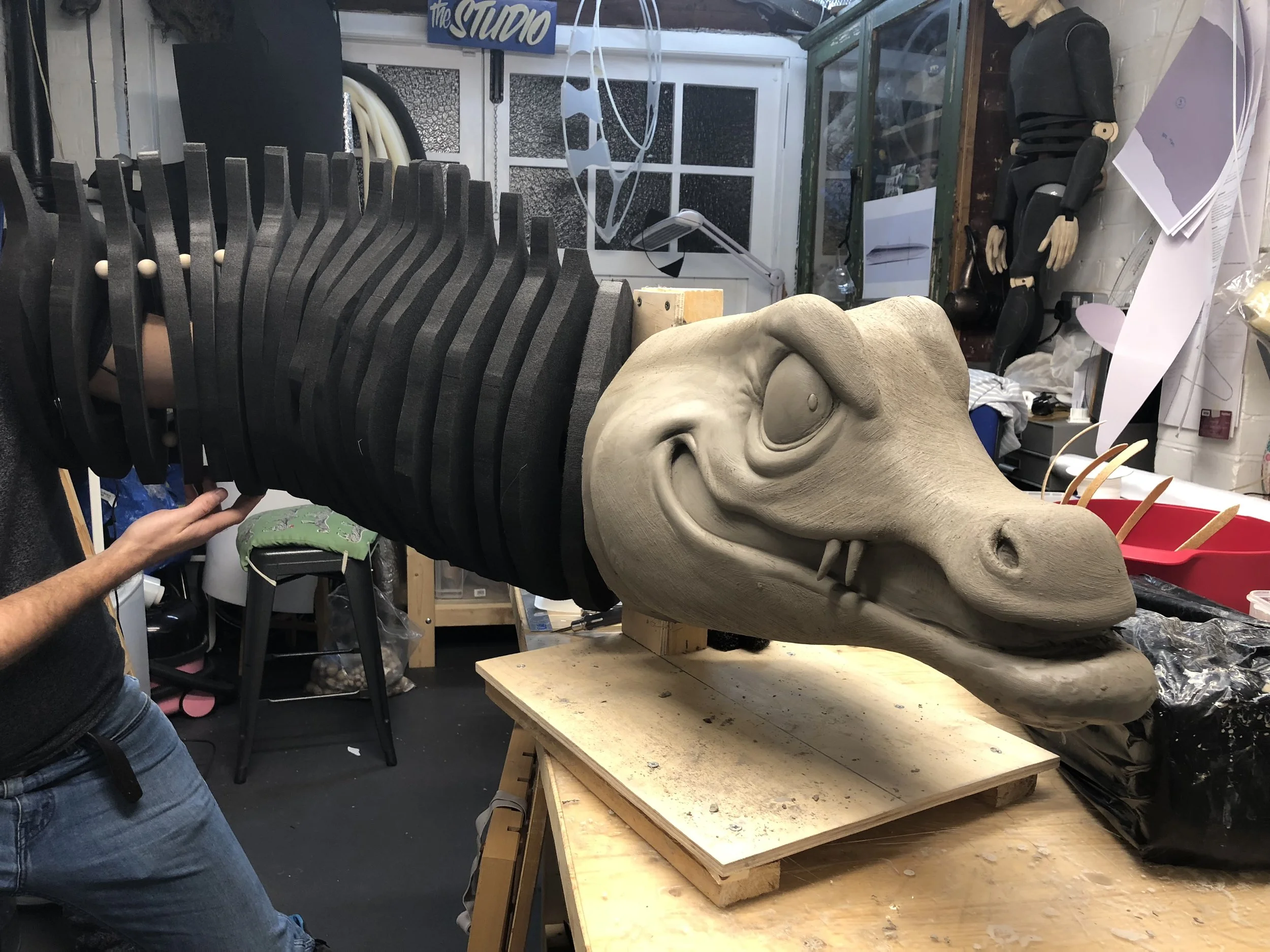
From drawing to sculpture
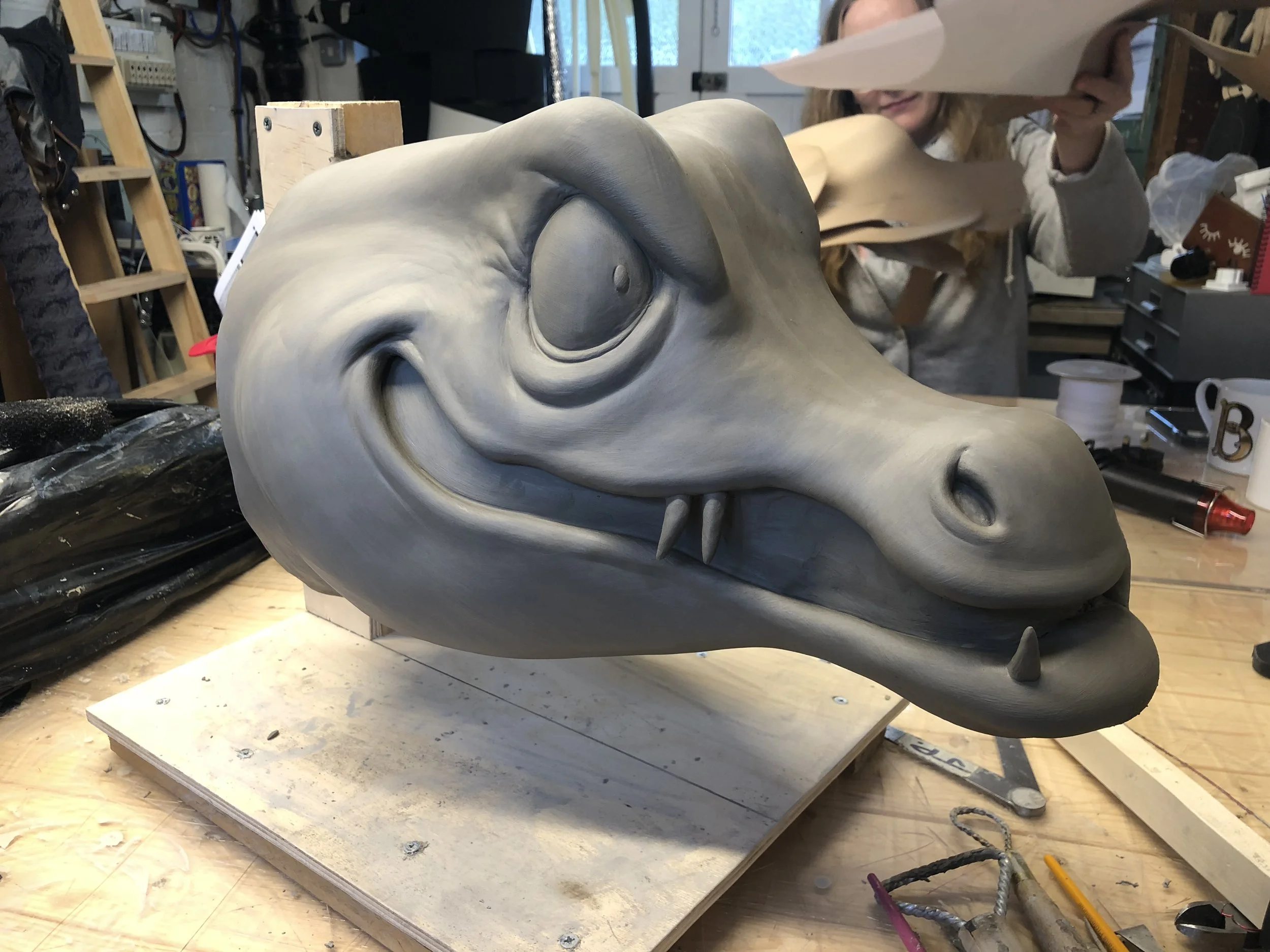
Detailed physical sculptures were created for the eels’ heads, allowing us to explore their character, proportions and expressions at full scale.
Working sculpturally meant we could assess the forms from every angle and begin translating a two-dimensional character design into something that could ultimately surround a working puppet mechanism.
This stage is also where character design and practical puppet making begin to meet.
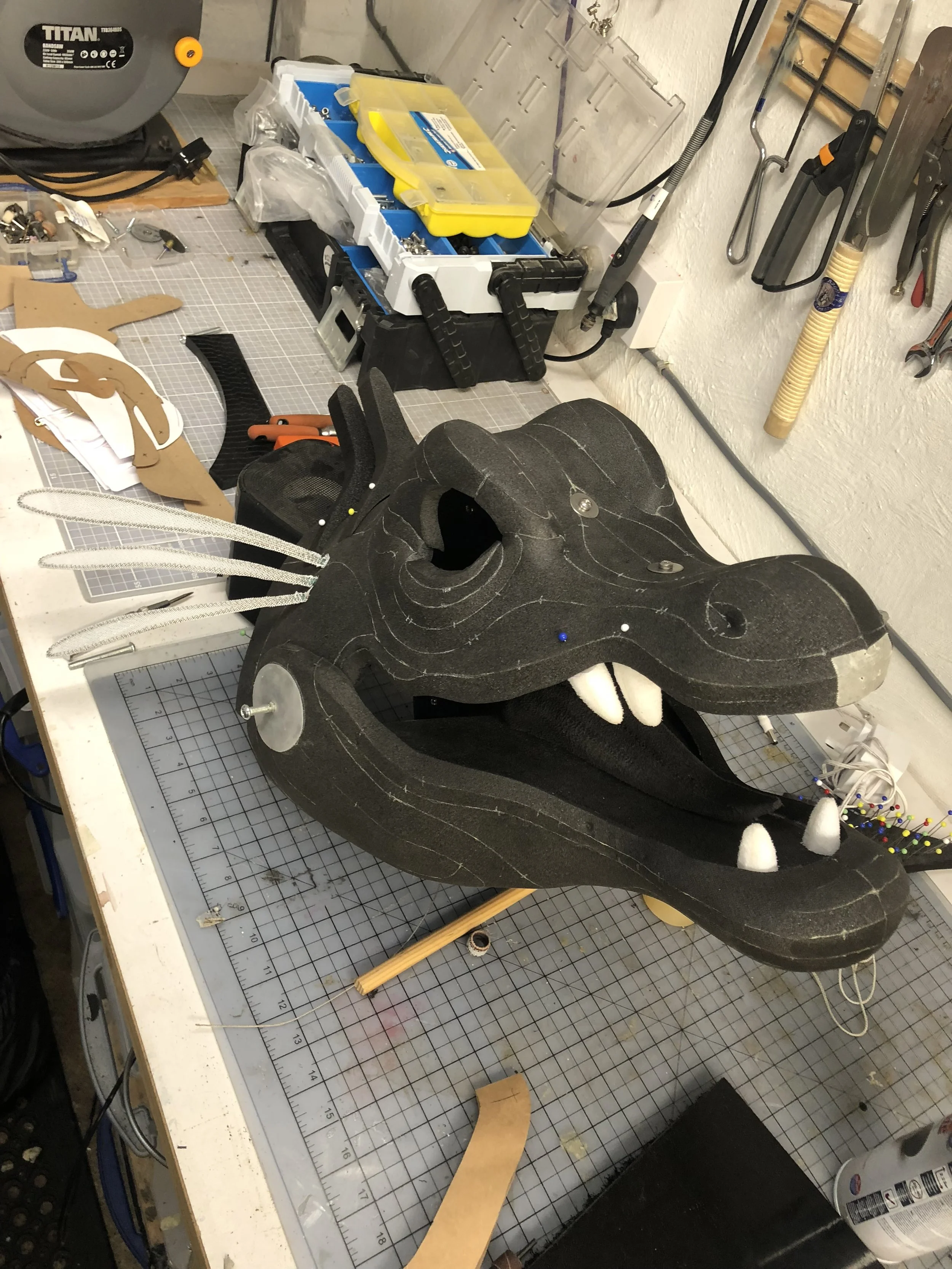
The finished head needed to retain the personality established in the artwork, but behind that sculpted exterior there also needed to be space for structure, controls and an articulated mouth.
The sculpture therefore wasn’t simply a model of what the puppet should look like.
It became part of the process of working out how the character could actually be built and performed.
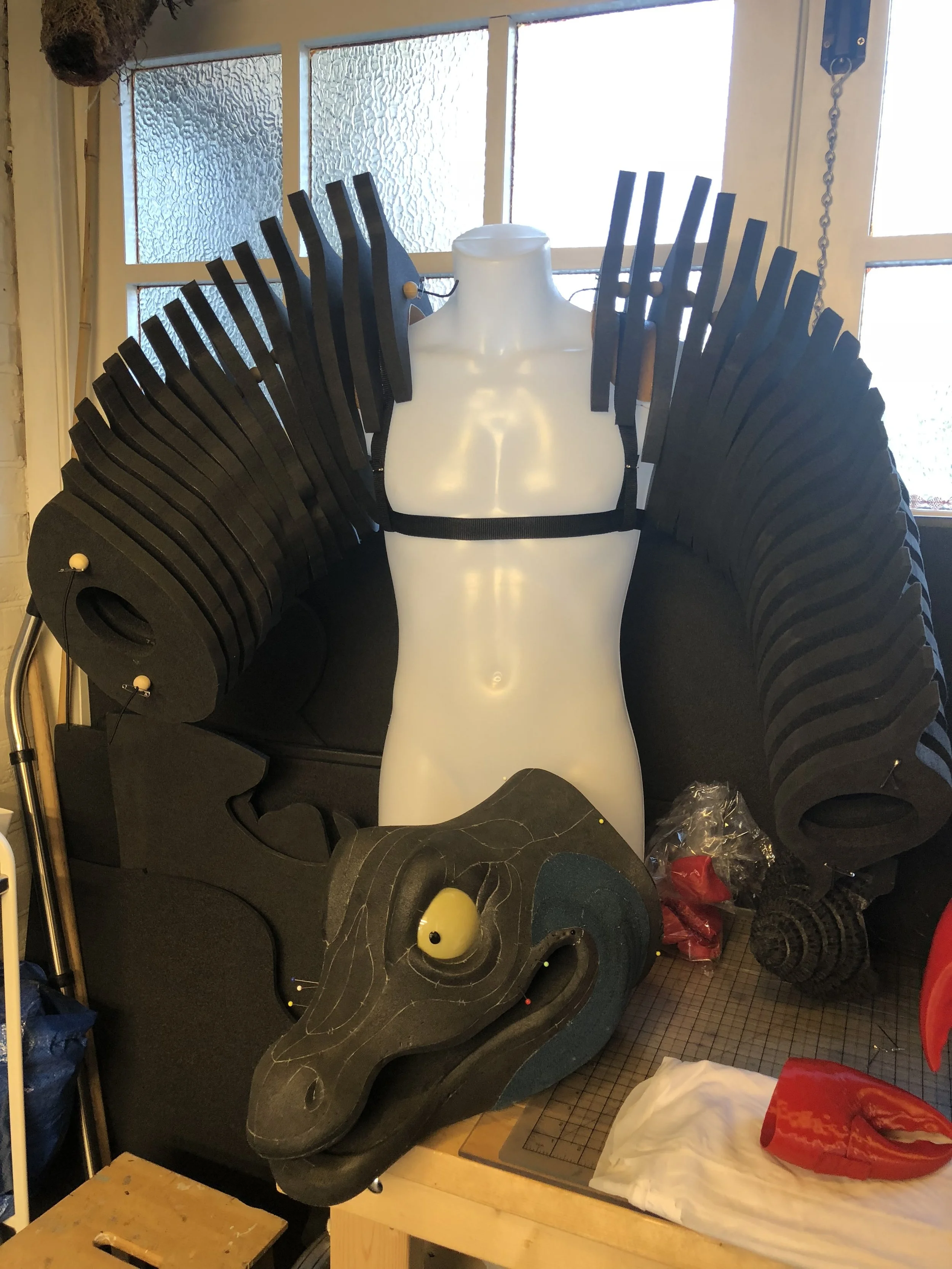
Once the character and scale had been established, the next challenge was developing the internal structure. Each eel was designed to be operated by a single performer. The performer wore the puppet using a body-mounted support system, effectively placing themselves at the center of the character.
At the front, we developed a lightweight mechanical head structure incorporating an articulated jaw. The performer could open and close the mouth during the performance, allowing Flotsam or Jetsam to react, speak and interact with the other characters on stage. But the mouth was only one part of the performance system.
The performer’s own body and arms were used to articulate the eel’s long body, generating the sweeping, side-to-side movement that gave the impression of swimming. The tail was also controlled by the same performer, allowing them to introduce a flicking action at the rear and continue the movement through the full length of the puppet. This meant that one performer was responsible for the entire character — mouth, body, tail and locomotion — while simultaneously performing on stage. That requirement had a major influence on how the puppet needed to be constructed.
Building flexibility into the body
A solid body would have been too heavy and too rigid to produce the movement we wanted. Instead, we developed the eel’s body as a sequence of lightweight, flexible sections.
The rib-like construction created the overall volume and silhouette of the creature without filling that volume with unnecessary material. More importantly, the spaces between the sections allowed the body to flex as the performer manipulated it. This created an important balance between structure and flexibility. There needed to be enough structure for the eel to maintain a recognizable shape, but enough flexibility for movement generated by the performer to travel along its length. Too rigid and the puppet would simply look like a large object being carried across the stage. Too flexible and the performer would lose control of its form. The solution lay somewhere between the two.
By using the performer’s body and arms as part of the animation system, the puppet could bend and flow rather than simply being moved from one position to another.
In the rehearsal Room - First impressions with the cast of Little Mermaid Helsinki.
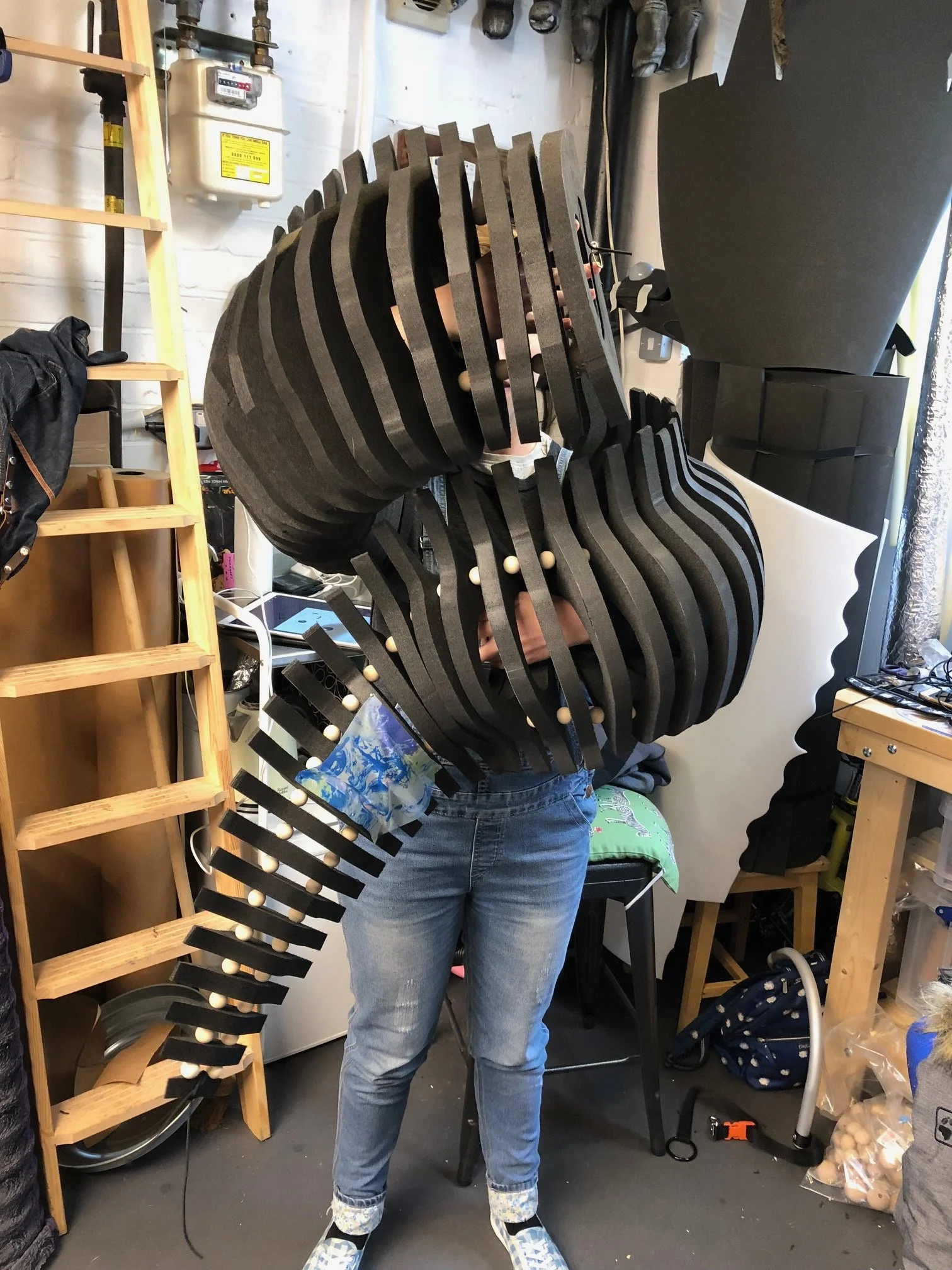
Designing movement, not just mechanisms
This is an important distinction in our approach to puppet engineering. A successful puppet doesn’t necessarily need more mechanisms.
It needs the right methods of control in the right places.
With Flotsam and Jetsam, some of the animation came from mechanical articulation, such as the opening and closing mouth. Other movement came directly from the physical performance of the puppeteer.
The puppet was designed to bring those two things together. The performer wasn’t simply carrying an eel-shaped object. Their body became an integral part of the puppet’s animation — initiating movement, articulating the body, controlling the character’s mouth and completing the action through the tail. When all of those elements worked together, a very large physical object could begin to appear fluid, responsive and alive.
The objective wasn’t simply to make a puppet that could move. It was to give the performer the tools to make an eel swim.
From structure to finished character
Once the internal structure and movement had been resolved, the skeletal body could begin to transform into the finished character.
Lightweight materials were used throughout the build to create volume without adding unnecessary weight. The flexible body structure was covered to establish the eel’s continuous form while retaining the movement engineered underneath. The surface treatment then brought the puppet back towards the original character artwork. Fabric, colour, pattern, fins and other finishing details helped disguise the underlying structure and create the impression of a single continuous underwater creature.
This is one of the interesting transformations in puppet making. The audience sees the finished skin, silhouette and character. Underneath is an engineered object designed around weight, balance, articulation, flexibility and the physical capabilities of the performer. Both have to work together.
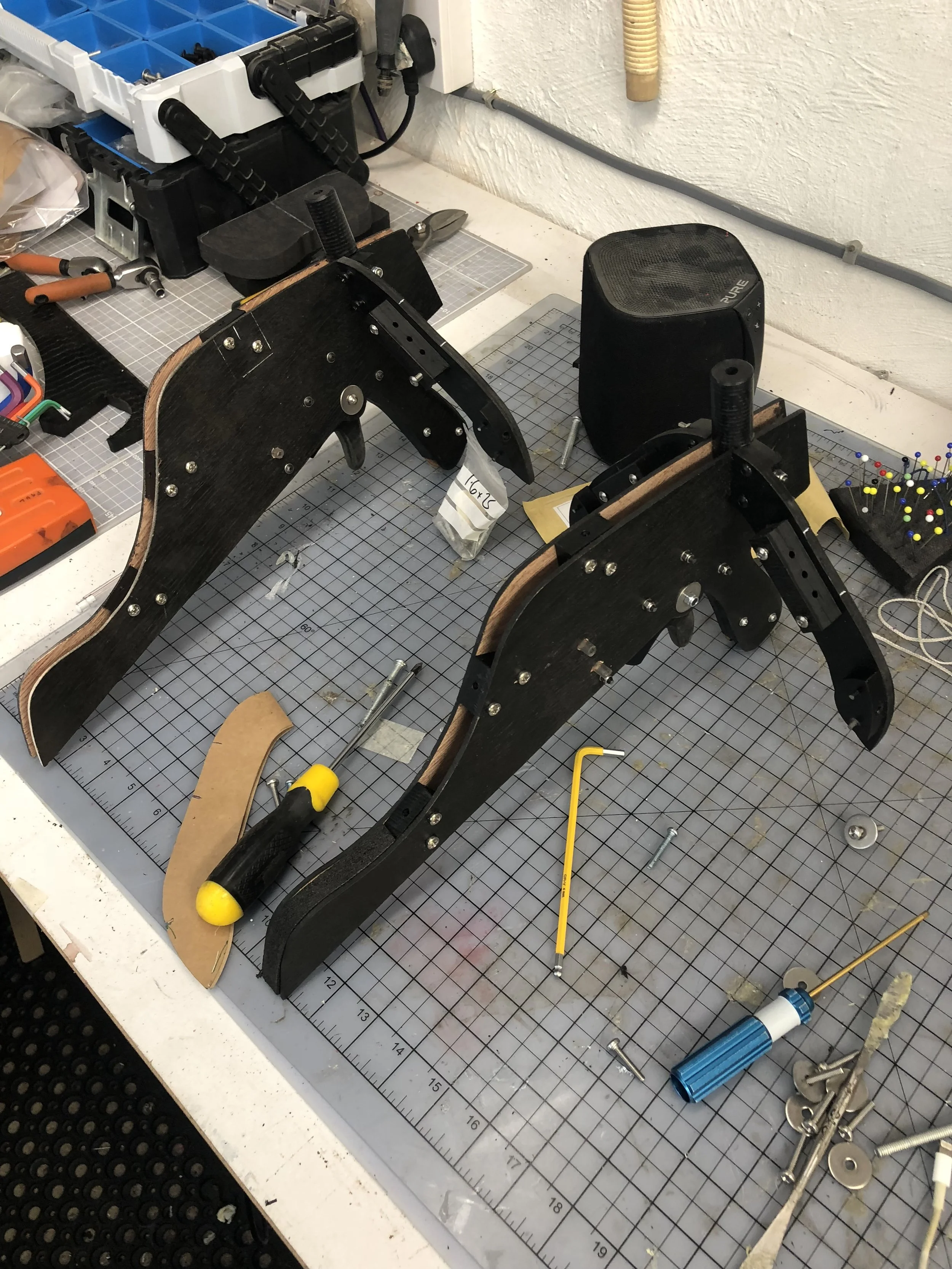
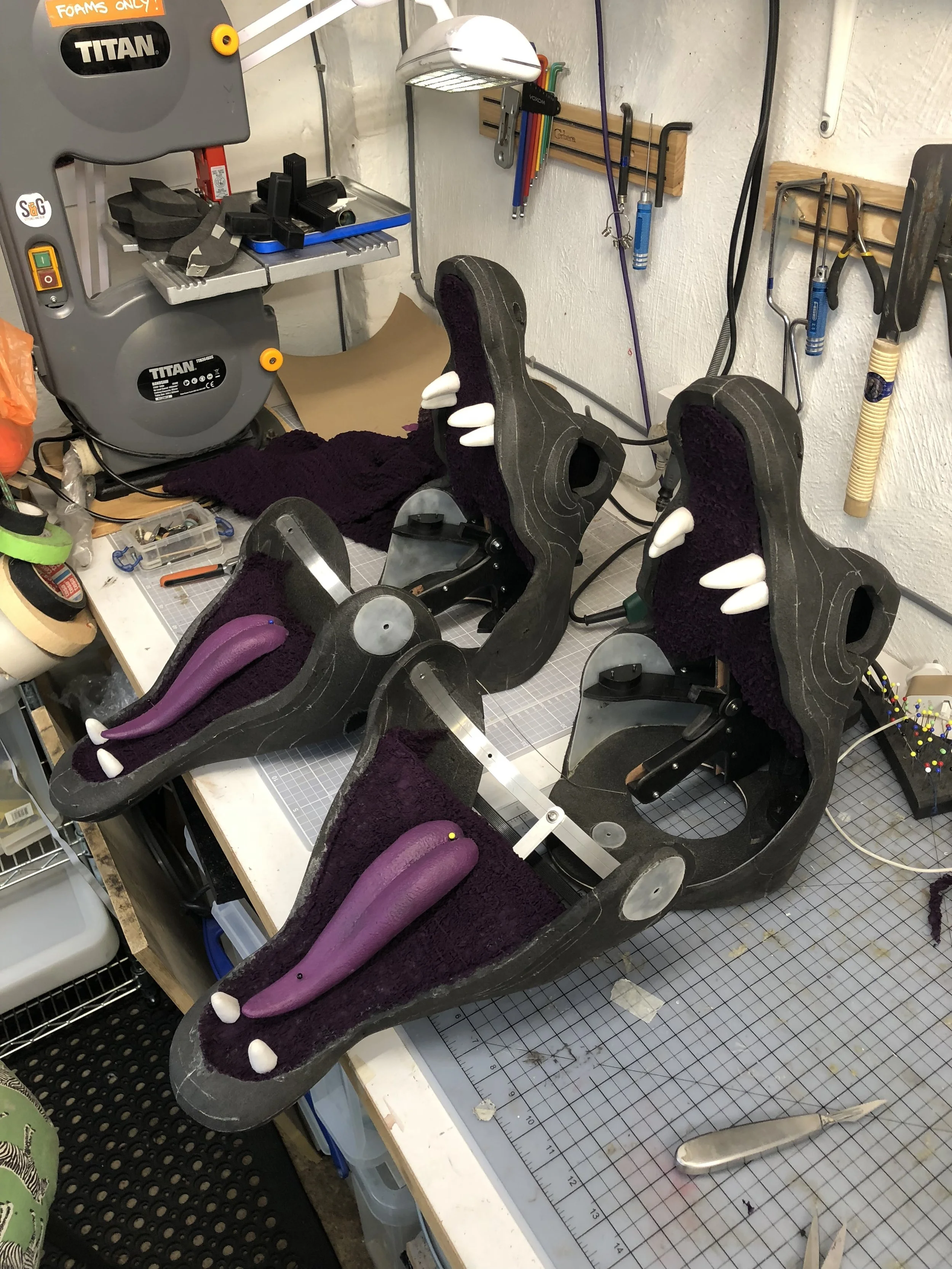
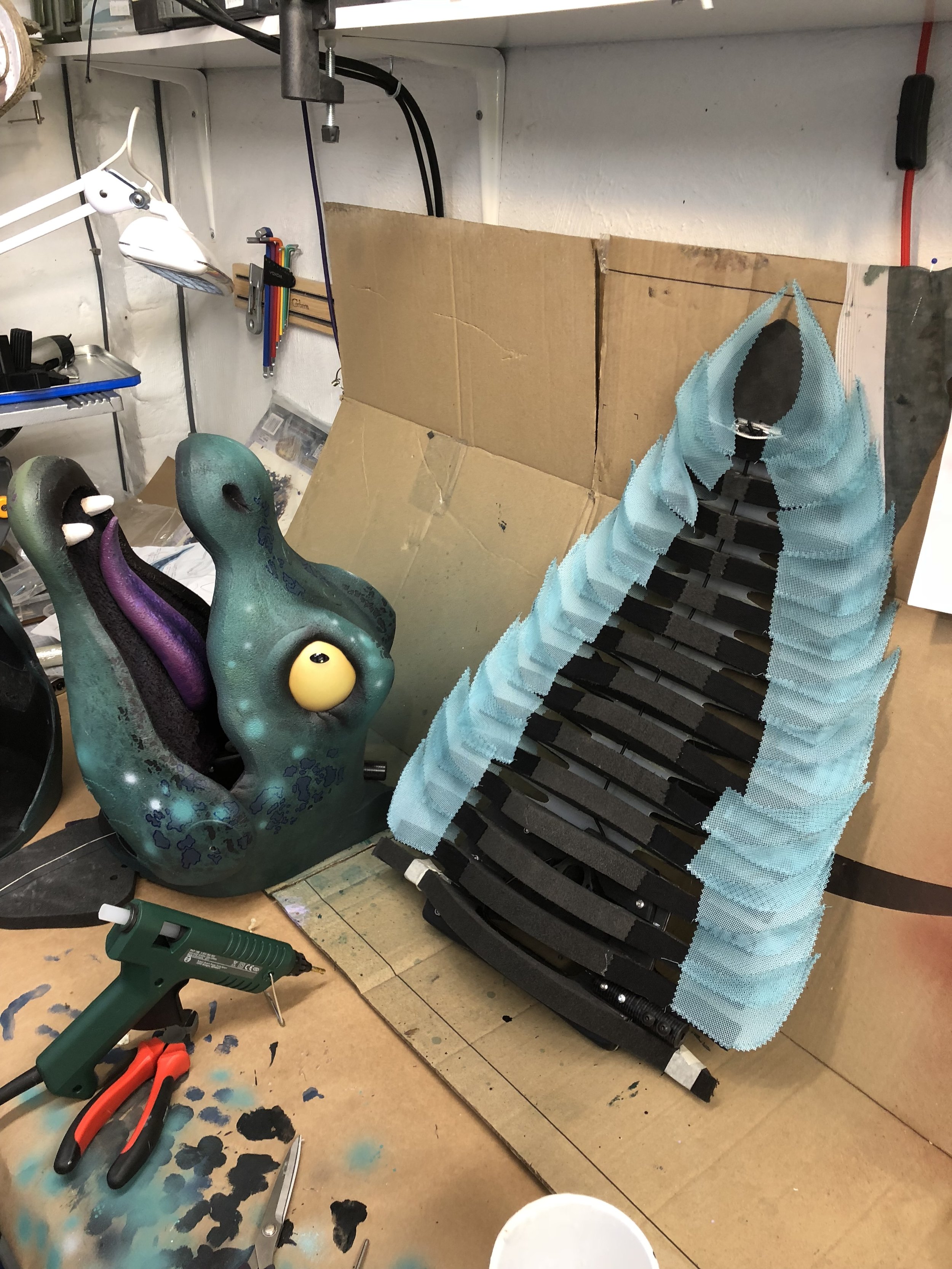
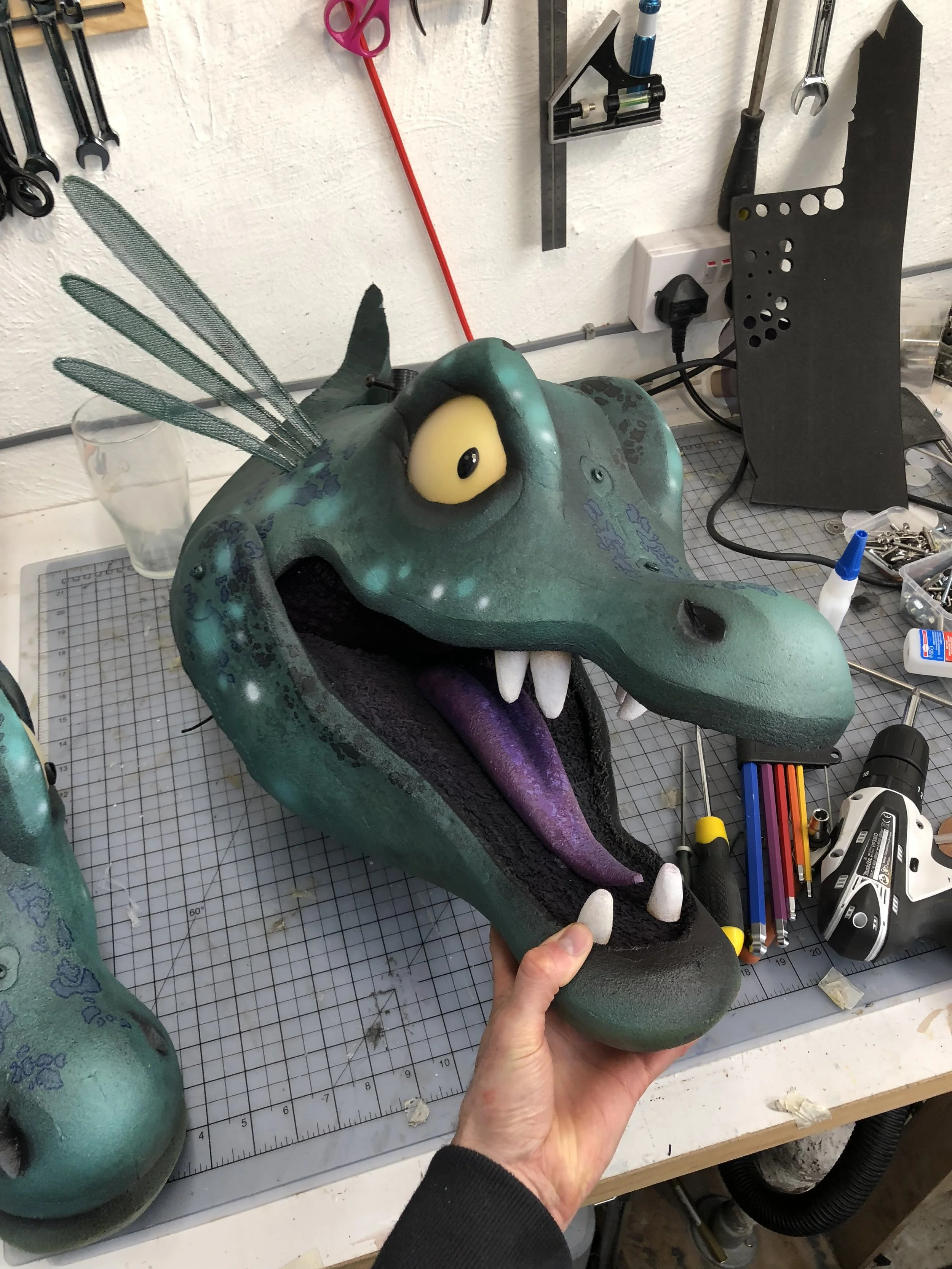
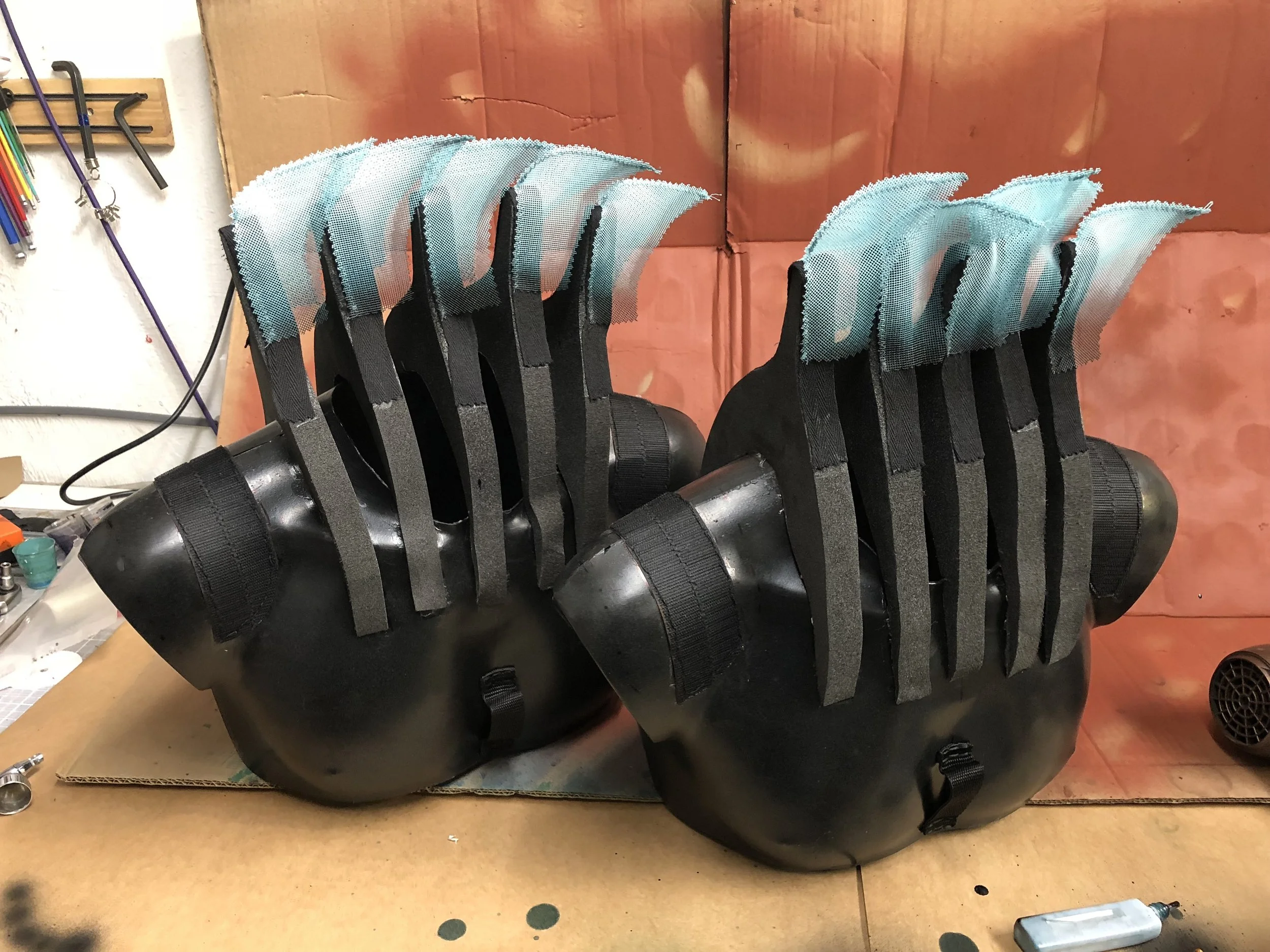
Exploring character and mouth manipulation with Flotsam and Jetsam in the workshop.

A collaborative build between the UK and Finland
Flotsam and Jetsam were only two characters within a much larger puppet design project.
With around 30 puppets and puppet elements required for the production, collaboration became an important part of how the project was delivered.
Stitches and Glue developed key designs, sculptures, prototypes, fabrication methods and mechanical solutions in our UK workshop.
We then worked closely with Helsinki City Theatre’s in-house props and costume teams, providing the physical prototypes alongside coaching, technical guidance and ongoing consultation.
The theatre’s makers were able to continue the fabrication and finishing process locally, adding fabrics, surface treatments, painted finishes and final details to bring the creatures into the visual world of the production.
This approach meant that our role extended beyond simply designing and making individual puppets.
We were also providing puppet consultancy and knowledge transfer — developing practical fabrication solutions and helping an in-house team understand how those designs could be reproduced, finished and maintained for a major theatrical production.
Designing puppets for performance
Looking back at Flotsam and Jetsam, they demonstrate something that sits at the heart of the way we approach puppet design at Stitches and Glue.
Its appearance, materials, weight, balance, mechanisms and movement all have to contribute towards the same objective: allowing a performer to communicate character to an audience.
For Flotsam and Jetsam, that meant starting with two sinister underwater characters and asking how their distinctive eel-like movement could be recreated physically on stage. The eventual solution combined character design, sculpture, lightweight fabrication, mechanical articulation and the movement of the performer themselves. From the auditorium, the aim was for all of that thinking and engineering to disappear.
What remained was an eel swimming across the stage. And Flotsam and Jetsam were only two inhabitants of this particular underwater world.
In future Tales from the Archives: Puppets in Focus instalments, we’ll delve into more of the characters, mechanisms and making processes hidden away in the Stitches and Glue archive.