Tales from the Archives: Buttons the Mouse Cinderella: Sky TV’s After Ever After — 2019
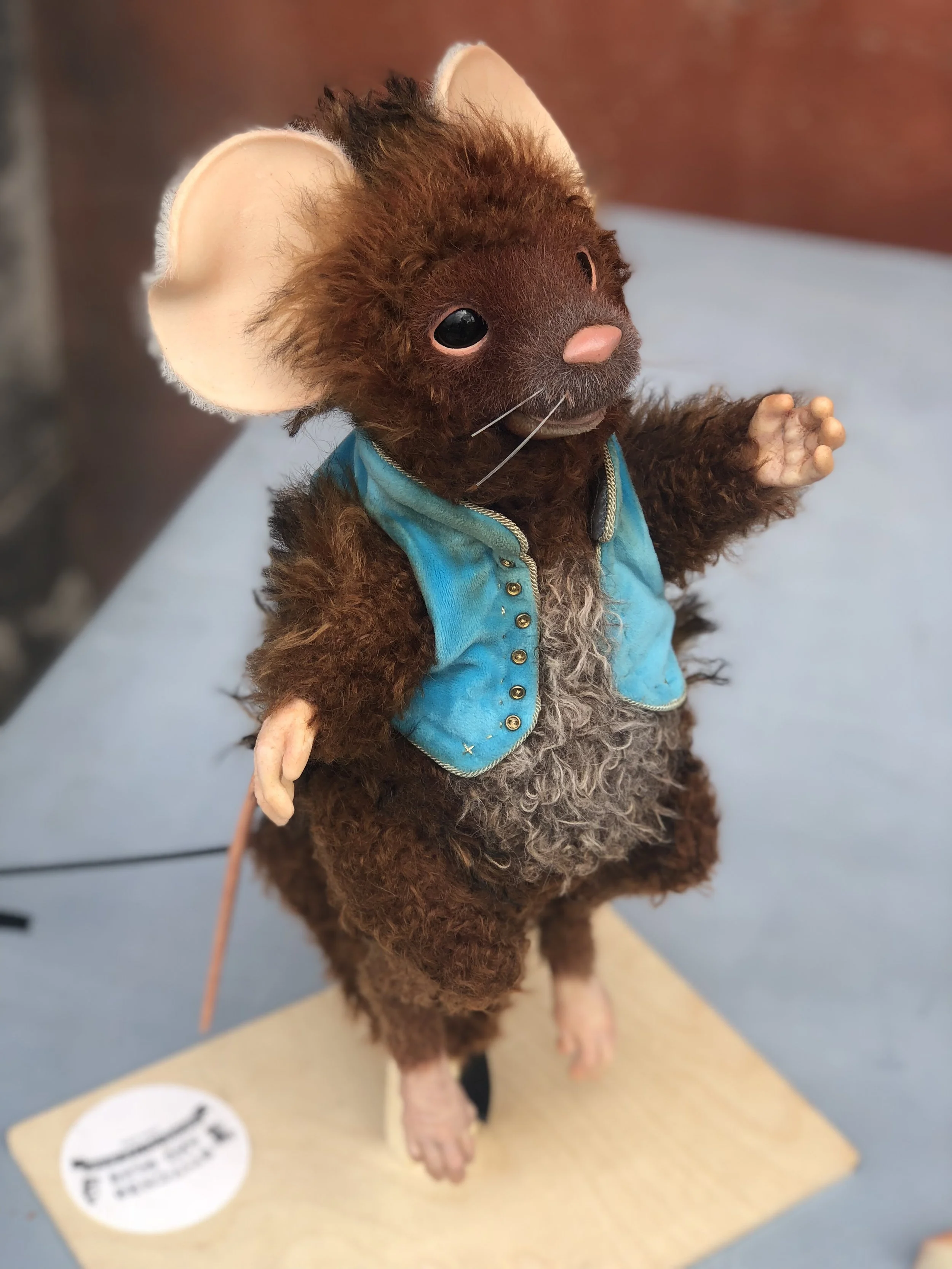
Cinderella: After Ever After — 2019
Summer 2019 saw the Stitches and Glue squad creating a couple of super-cute rodents for Sky One’s Christmas special, Cinderella: After Ever After, aired on SKY TV starring David Walliams, Sian Gibson, Celia Imrie and Tom Courtenay.
The After Ever After series takes a playful look at what happens once our traditional fairy tales have supposedly finished. In this retelling, Cinderella discovers that married life with Prince Charming isn’t quite the happily-ever-after she had imagined.
And, of course, you can’t revisit Cinderella without a few mice…
Meet Buttons
Our main mouse was Buttons.
The director and producers wanted a character who would appeal to a family audience, but Buttons also had to be capable of a surprisingly ambitious range of action sequences.
He needed to walk, climb, converse with the cast and even burst through walls.
As with every build, there was plenty of ambition, but the available budget helped dictate our approach. Instead of attempting to engineer one complicated puppet capable of doing absolutely everything, we looked at the individual actions and developed a series of simple, adaptable solutions.
The result was a deceptively straightforward little mouse with quite a lot going on underneath his fur.
Designing Buttons - from the Inside Out
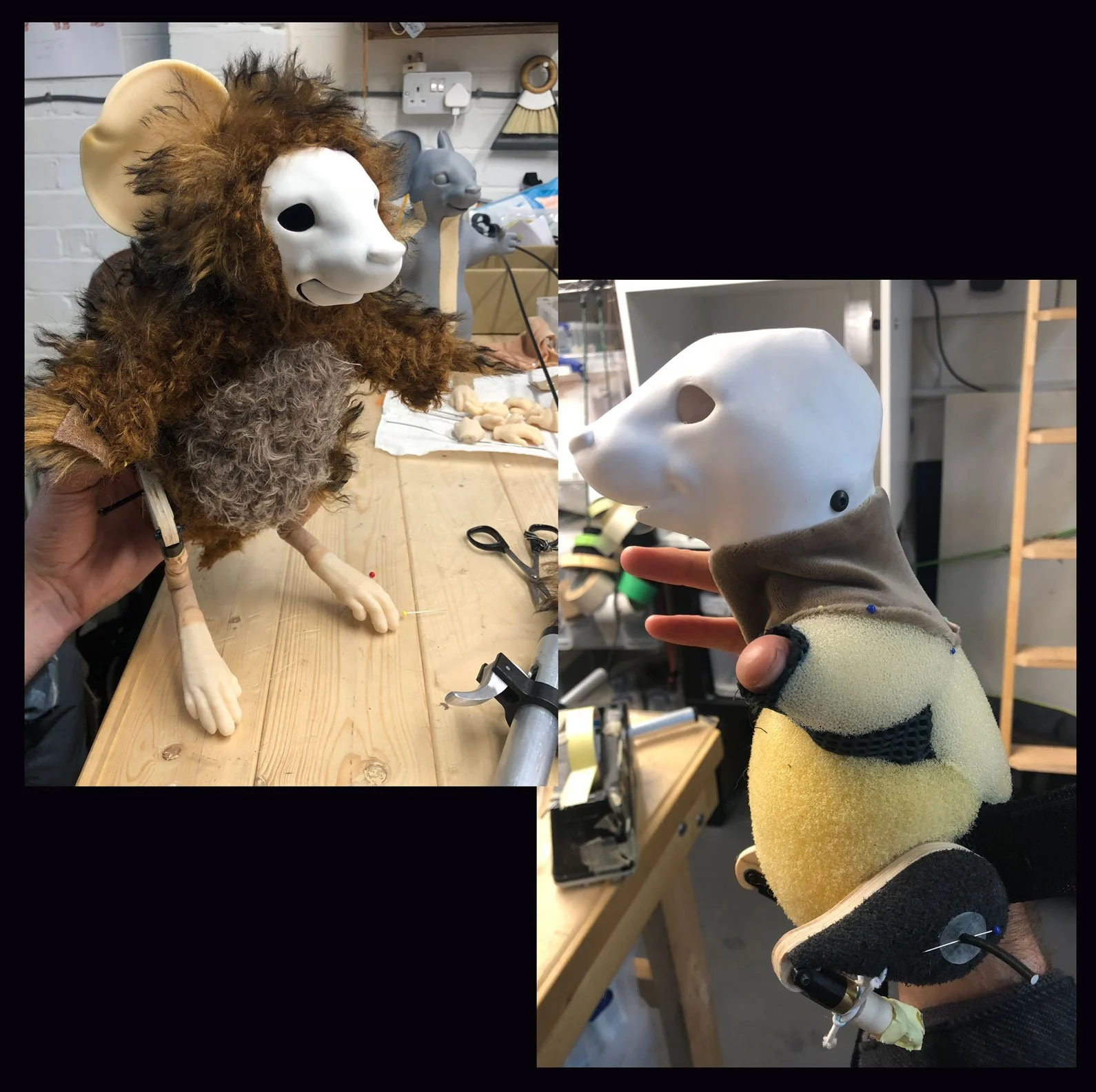
Buttons during construction, showing the bespoke glove, padded body and internal operating arrangement.
Buttons was built around a bespoke glove, with lightweight padding used to even out the body and create the mass and proportions of the character.
The operating principle was actually a wonderfully traditional one, similar in its basic arrangement to classic hand puppets such as Sooty and Sweep.
The puppeteer’s index and middle fingers formed the internal core of the neck, connecting to a pivot within the head. This allowed Buttons to rotate his head as well as look up and down.
It was a relatively simple mechanism, but one that gave the character a surprising amount of expression.
One Mouse, Several Pairs of Legs
The legs required a slightly different approach. Buttons needed to perform several very different actions, so rather than asking one pair of legs to do everything, we made multiple interchangeable sets for different setups.
For general performance, a pair of sprung legs hung freely from the body. These reacted to the movement of the puppet, giving Buttons a natural little bounce and helping create the impression that his legs were moving along with him.
But when Buttons needed to climb, we needed considerably more control.
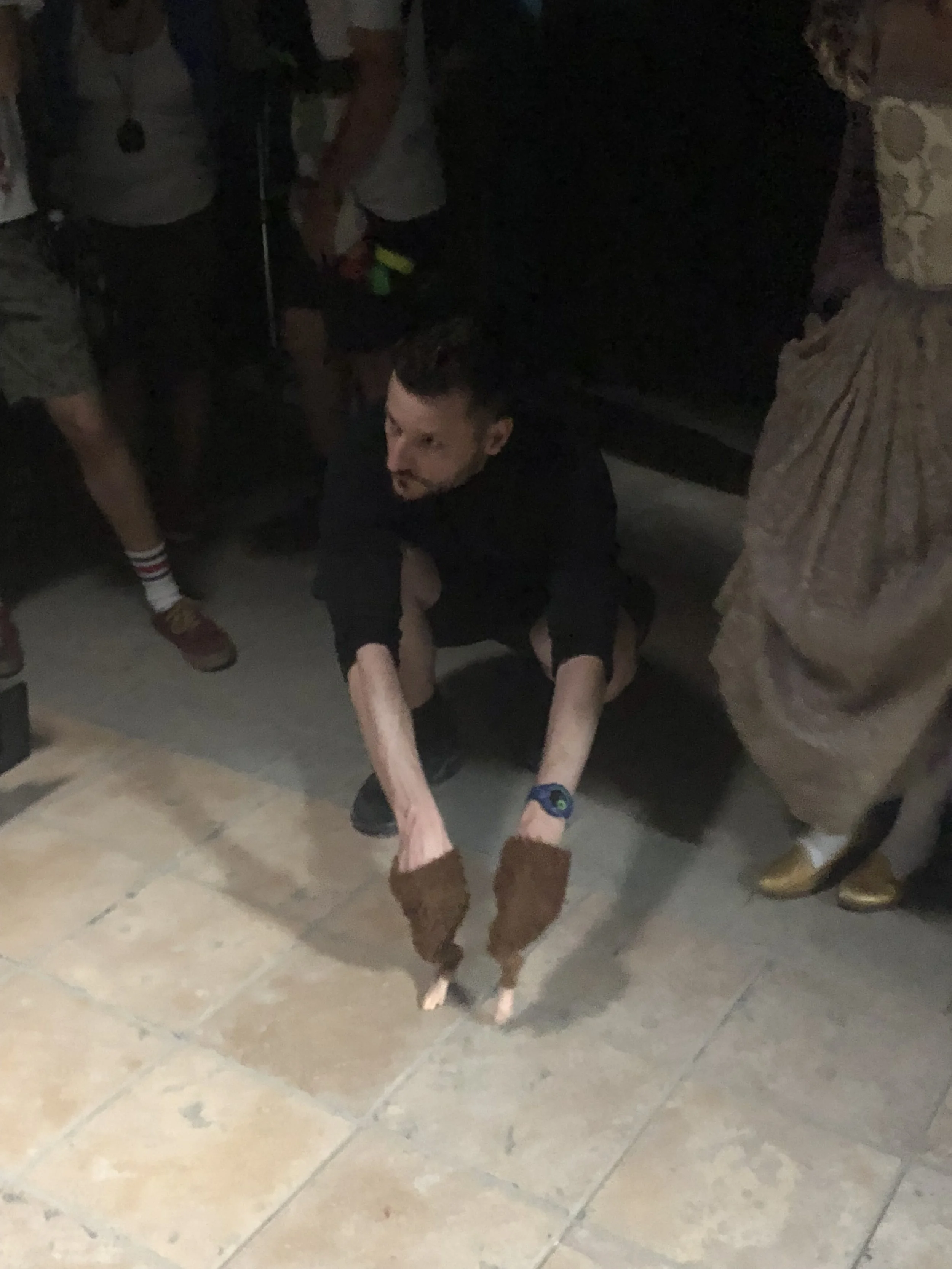
For these sequences we created a separate pair of legs with individual rod points, allowing each leg to be puppeteered independently.
This meant his feet could be deliberately positioned as he climbed, rather than simply dangling beneath the body.
It was a good example ofthe thinking behind the whole build: rather than over-engineering the puppet, change the setup to suit the shot.
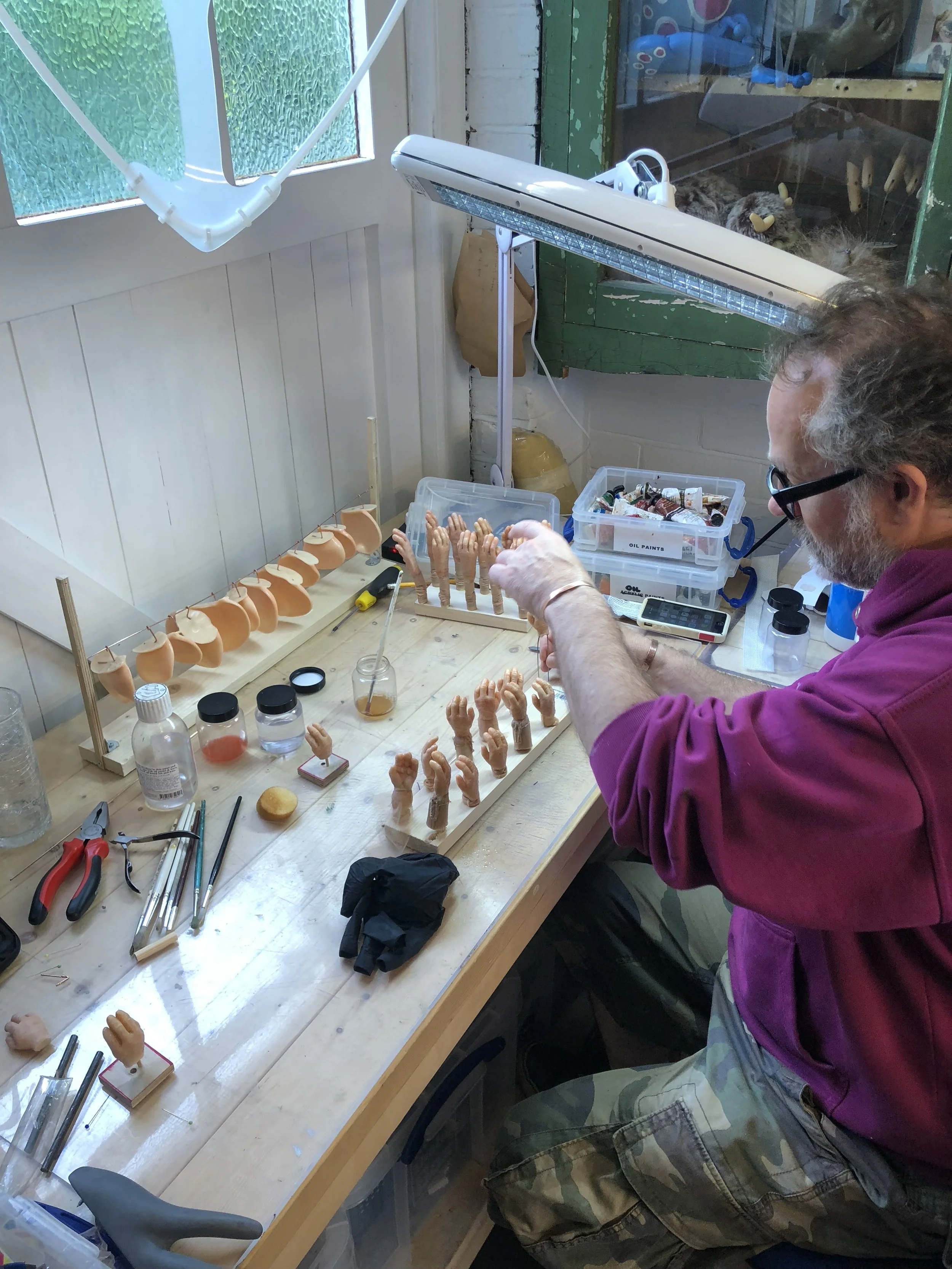

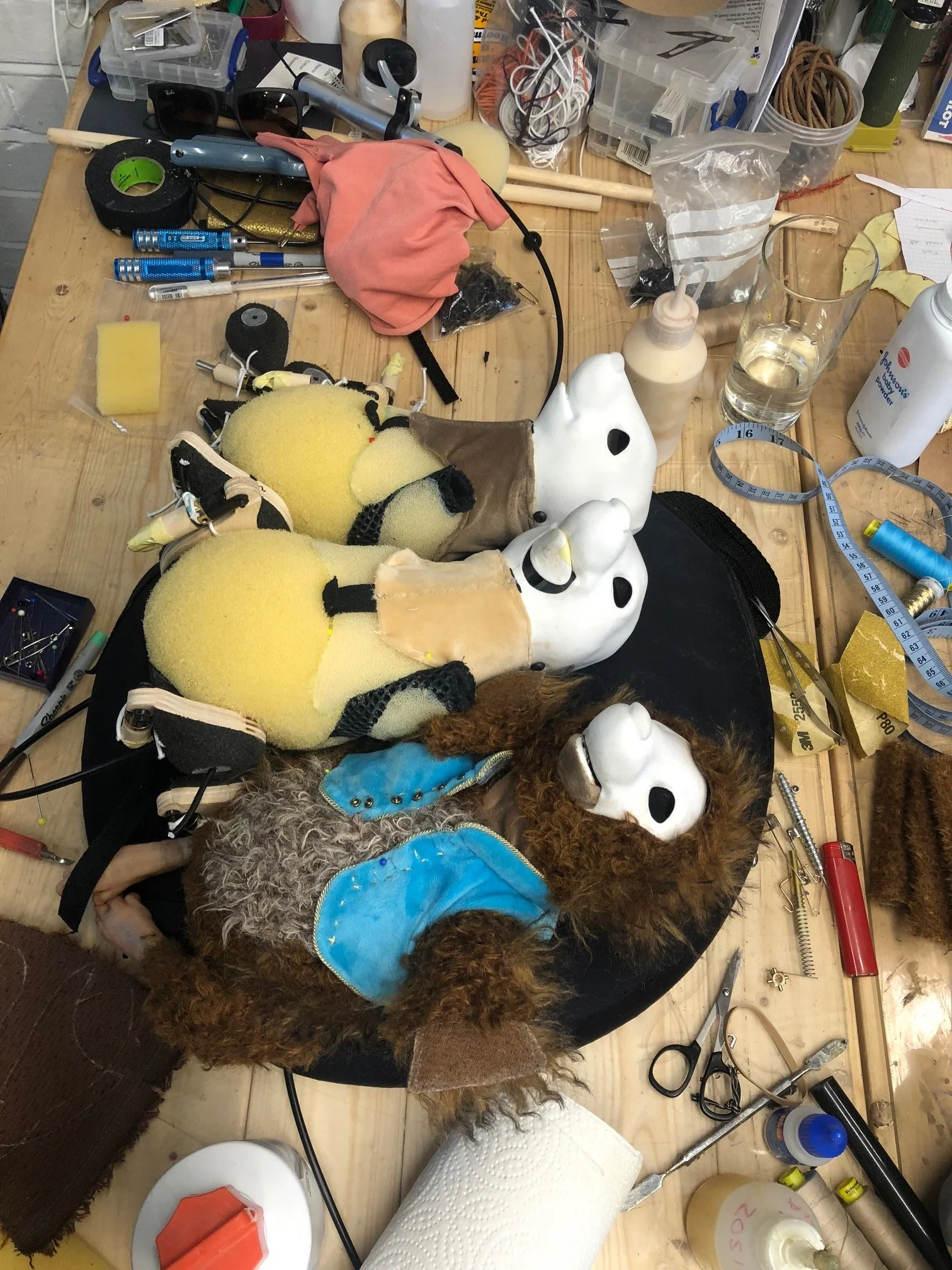
In the rehearsal room - climbing rehearsals.
Testing the Climbing Setup
Before heading to set, we could test these ideas in the workshop.
The climbing rehearsals allowed us to experiment with the individually rodded legs and see how much movement was needed to create the impression of this tiny mouse scrambling around a much larger human world.
An early workshop rehearsal testing Buttons’ individually puppeteered climbing legs.
These tests are always an important part of the process. Something can work perfectly well mechanically, but it isn’t until somebody starts actually puppeteering it that you discover whether the movement feels believable.
Giving Buttons His Character
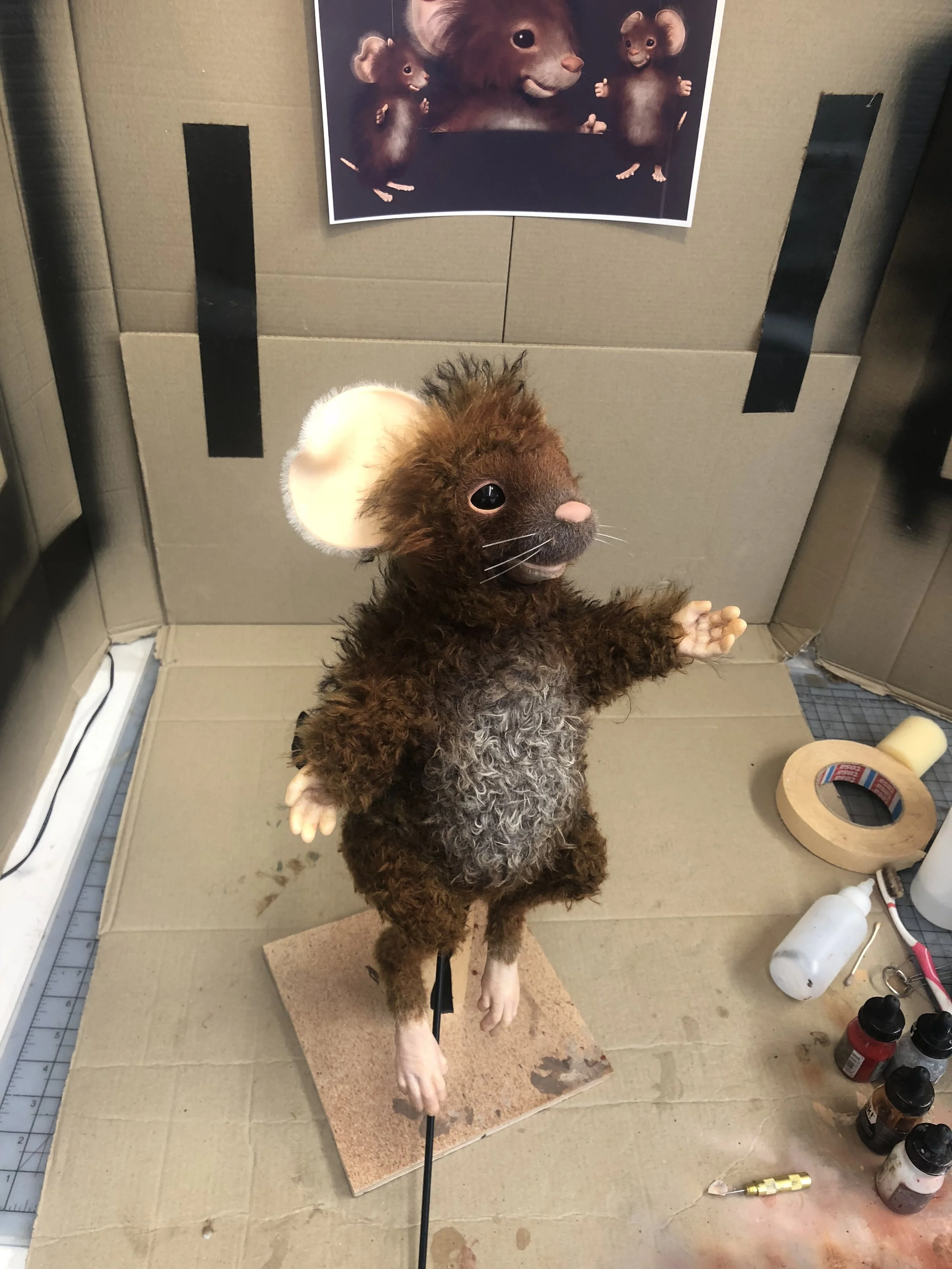
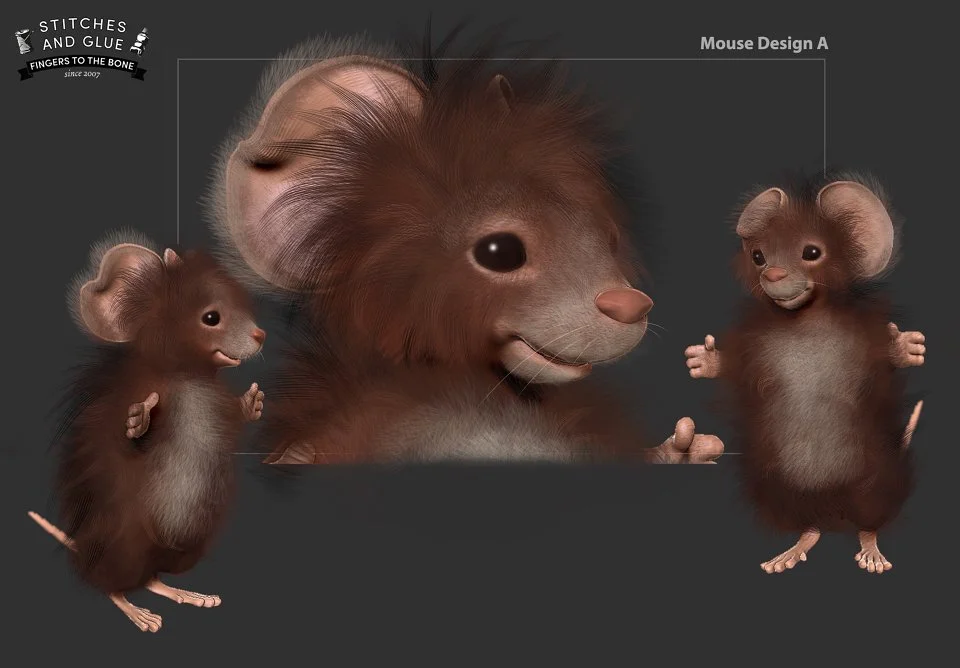
Once we were happy with the mechanics, proportions and movement, we could start transforming our slightly strange-looking foam-and-glove construction into a mouse.
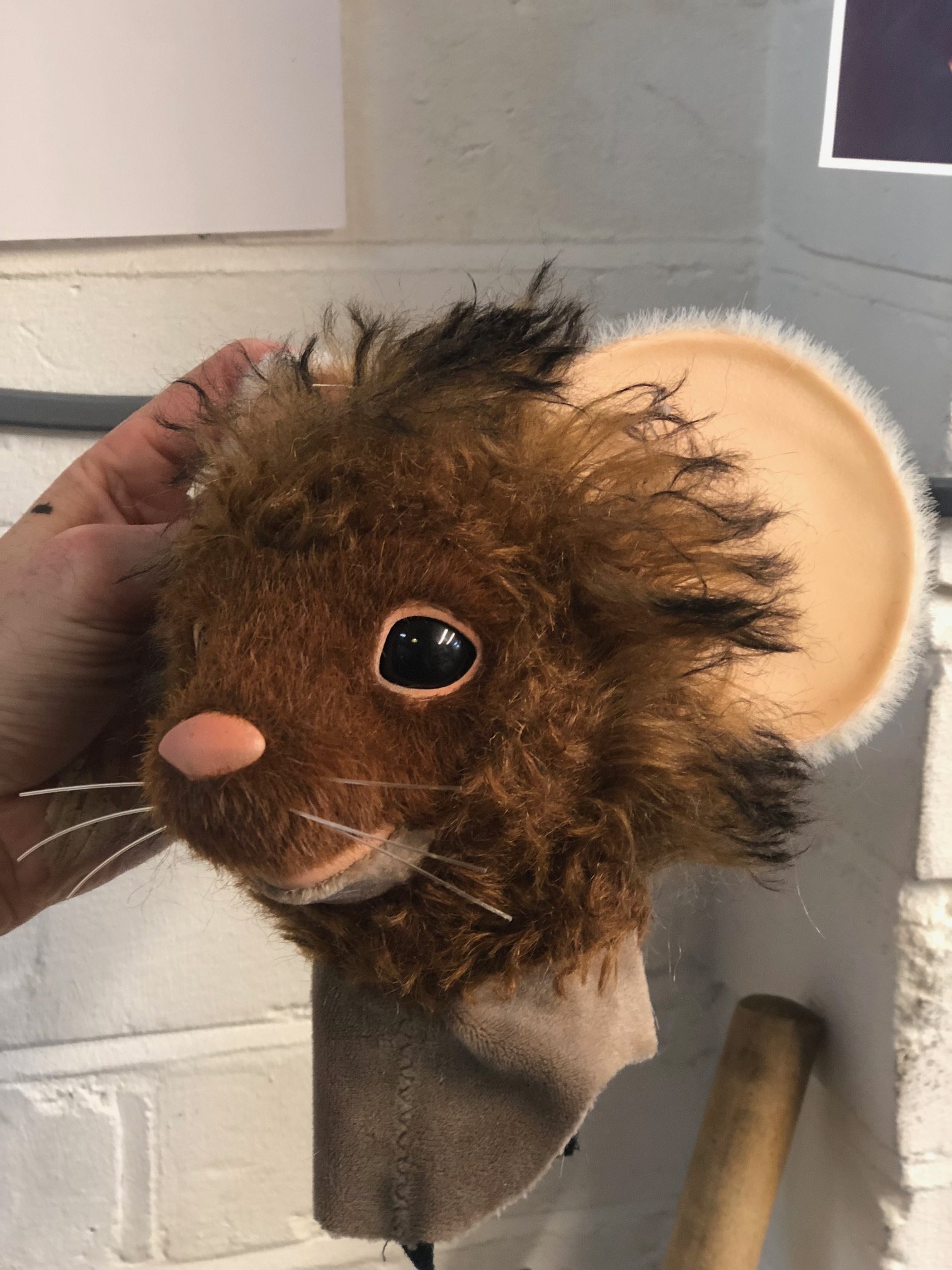
Buttons’ face was artworked and flocked, giving the sculpted head its soft, velvety finish while retaining the forms and facial detail underneath.
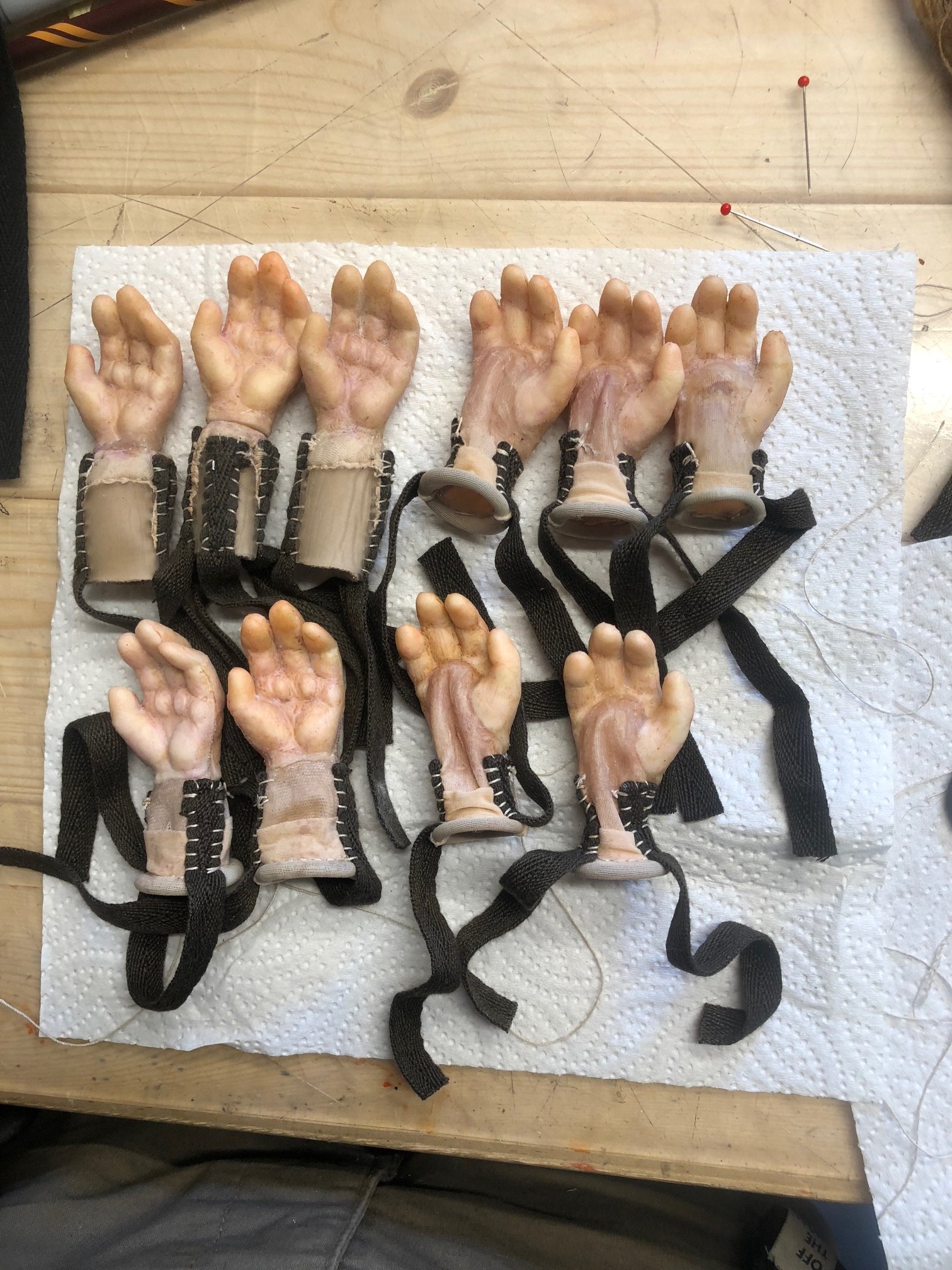
His padded body was covered in fur and the mechanisms disappeared beneath the finished character and costume.
Buttons was also given an animated, trigger-operated mouth, giving the puppeteer another level of expression and allowing him to converse and react alongside the live-action cast.
By the time everything was assembled, most of the engineering we’d spent so much time developing had completely disappeared. Which is generally exactly what you want.

One Buttons Wasn’t Enough
With the number of different actions required for filming, it quickly became apparent that a single puppet wasn’t going to cover every eventuality.
We produced two main Buttons puppets, which could accommodate the different rod and performance setups needed for the shoot.
We also made a softer, armatured “stuffy” version of the character. This could be positioned and manipulated for particular shots where the fully operational hand puppet wasn’t necessary.
Having several versions gave us and the production much more flexibility. Instead of trying to make the hero puppet perform every possible action, we could choose the simplest puppet and setup for whatever the camera needed to see.
And Then There Was Cinderella…
Buttons wasn’t the only mouse leaving the Stitches and Glue workshop that Summer.
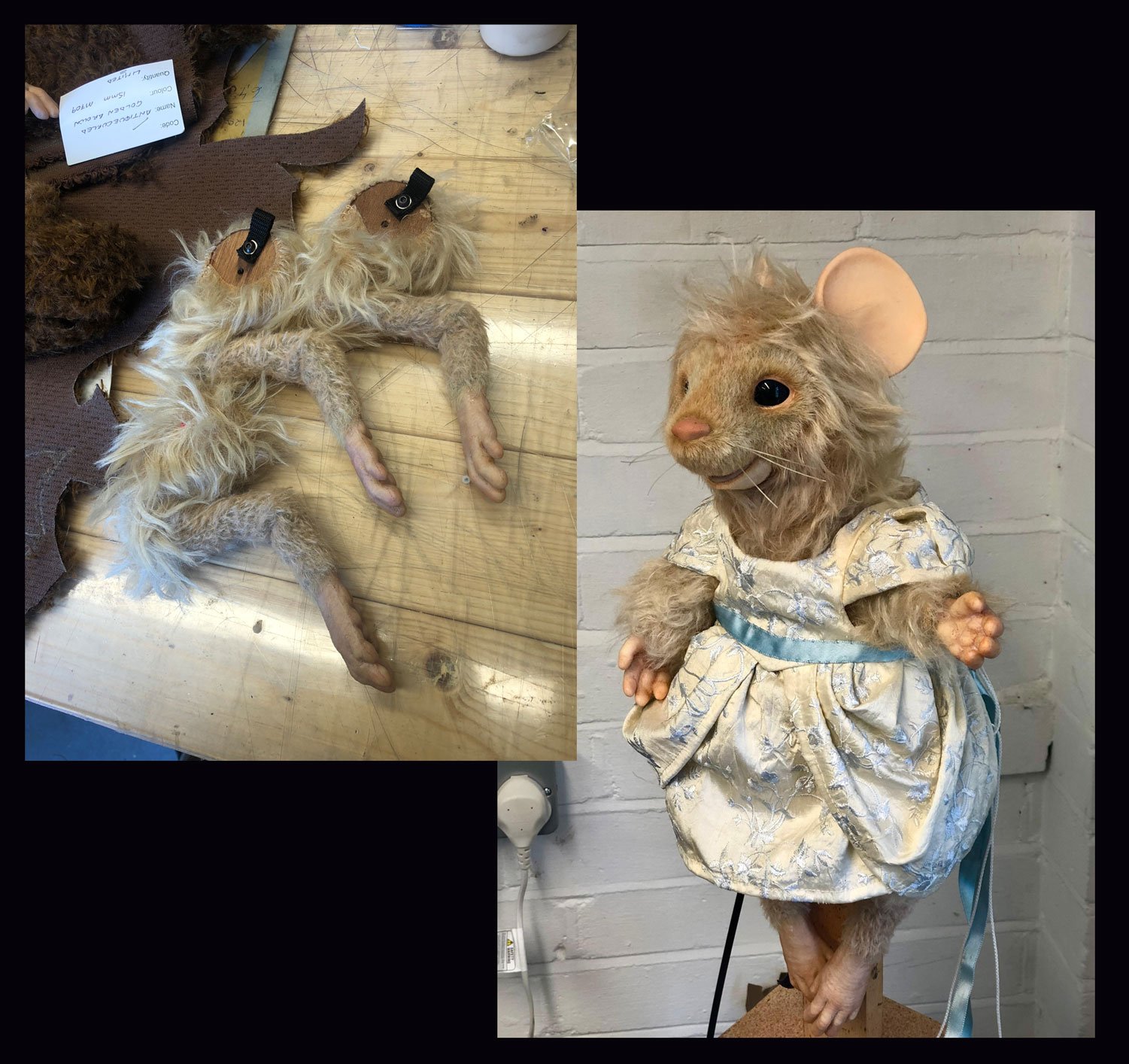
We also produced a Cinderella mouse, complete with her own miniature version of the dress worn by Sian Gibson in the production.
Like Buttons, Cinderella had an animated trigger-operated mouth.
Recreating the actress’s costume at mouse scale was a particularly lovely detail. It immediately connected our miniature Cinderella with Sian’s character while still allowing the puppet to have a personality of her own.
From the Workshop to Bulgaria
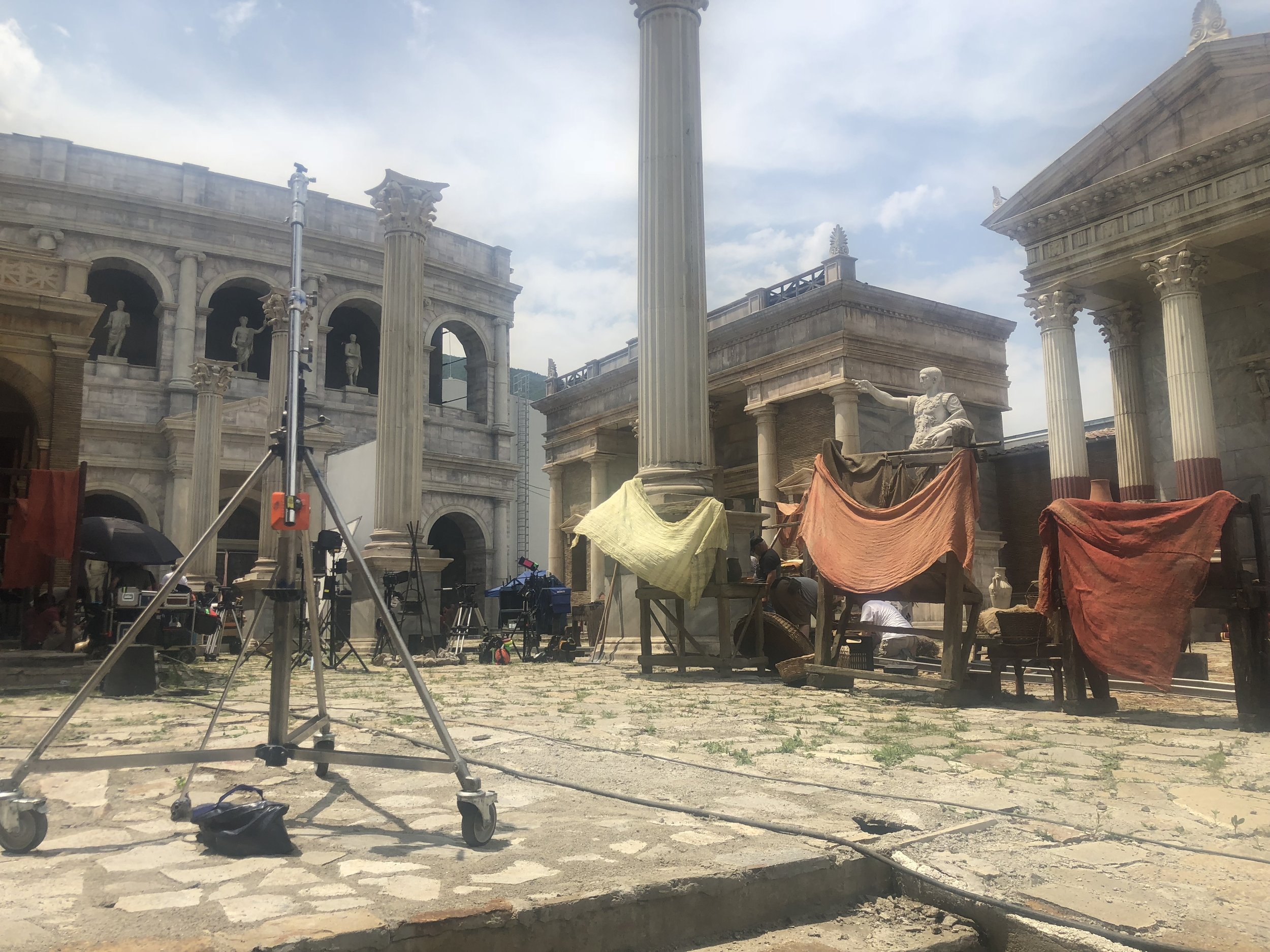
With the mice finished and our various setups tested, it was time to take them to Nu Boyana Film Studios in Bulgaria, where the production was being shot.
And this is where all those decisions made back in the workshop had to prove themselves in front of the camera.
Every setup presented a slightly different problem.
Where could the puppeteer hide? Where could the rods enter the puppet? Which version of Buttons would work best? How much of the set could be used to conceal the mechanics? And, most importantly, what could the camera actually see?
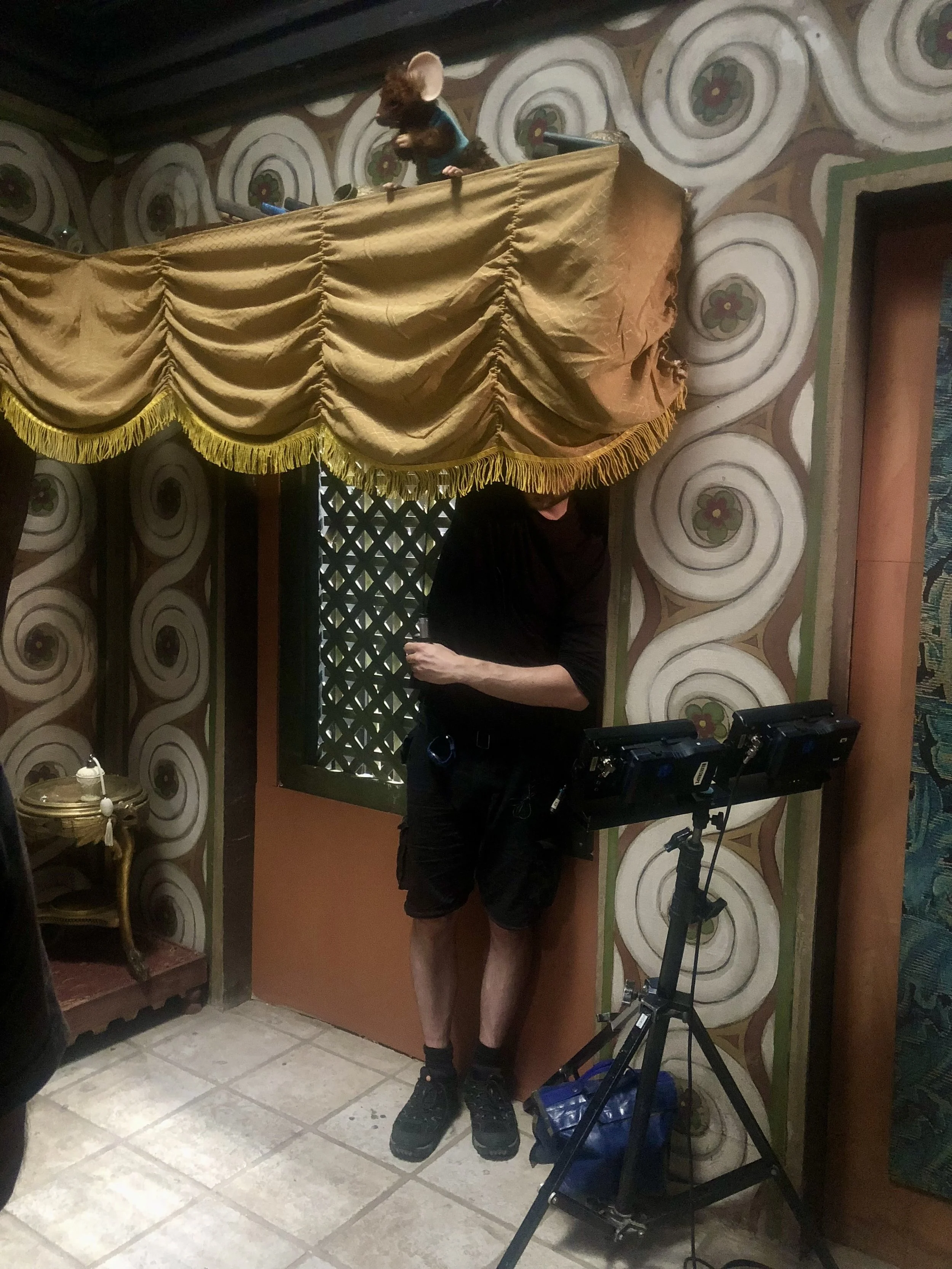
Puppeteer Olly Taylor was tasked with bringing Buttons to life.
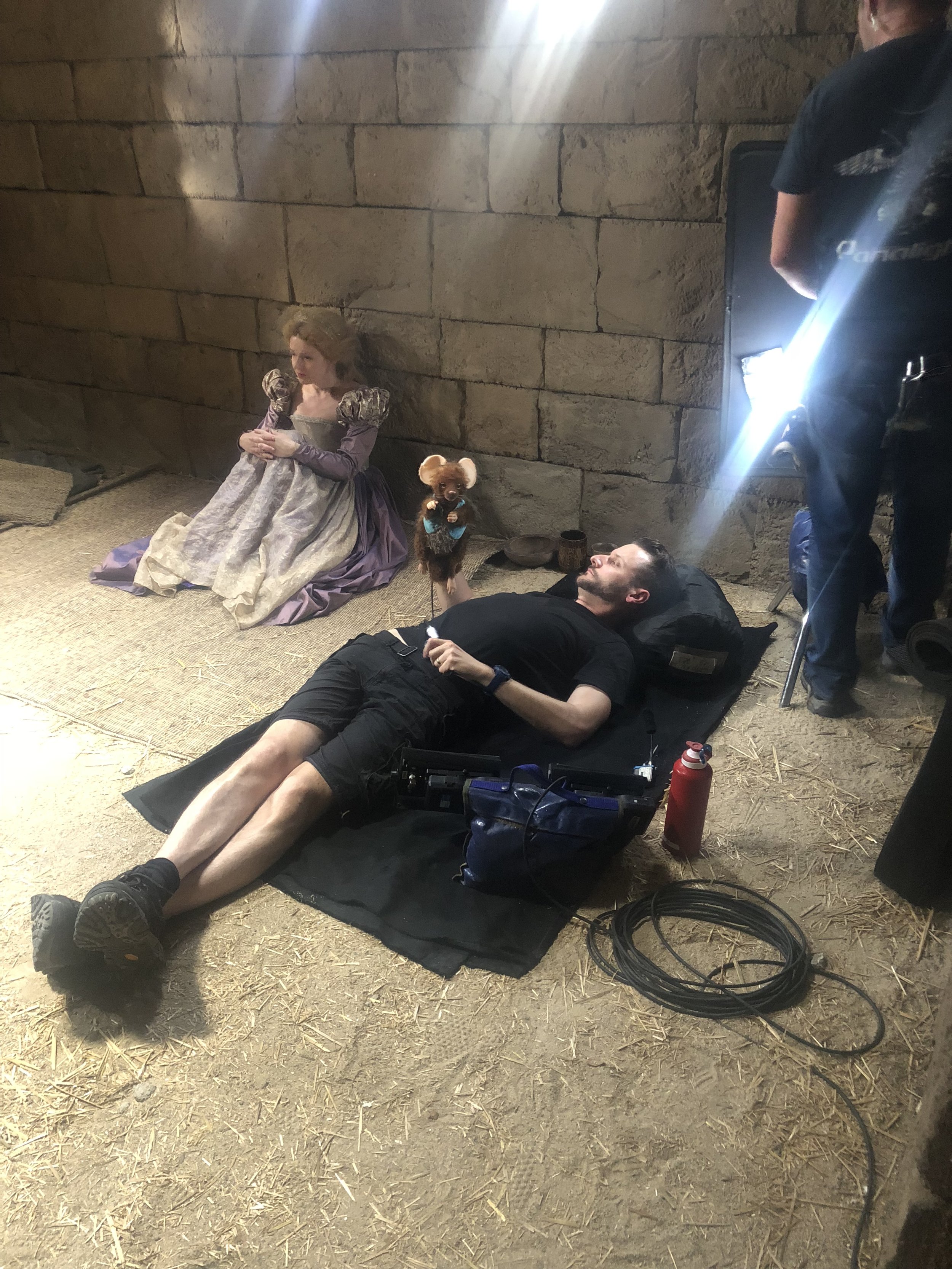
That meant not only operating the puppet but fitting himself into some fairly unlikely positions to do it. Depending on the shot, Olly had to squeeze into tight spaces, conceal himself behind or inside props and scenery, and occasionally perform lying down just outside the camera frame. It’s one of the aspects of practical puppetry that the audience rarely gets to see.
Puppeteer Olly Taylor Onset.
Getting the Shot
The climbing sequence was a particularly good example of the relationship between the build, the puppeteer and the camera.
Back in the workshop we’d developed and rehearsed Buttons’ individually rodded climbing legs. Now, on set, that additional control allowed his feet to be placed and moved independently as Olly performed the character through the sequence.
What appears on screen as a tiny mouse scrambling around a full-sized environment is the result of the puppet, rods, performer, scenery and camera all working together.
That’s part of what we love about practical puppetry.
A finished shot might simply show a little mouse walking, talking or climbing across the screen. Just outside the frame there may be a puppeteer contorted into an improbable position, several rods, an alternative pair of legs and a crew carefully composing the shot so none of it can be seen.
If everybody has done their job properly, the audience doesn’t need to know any of that.
They just see the mouse.
Small Mouse, Big Ambitions
-
Small Mouse, Big Ambitions -
Looking back at Buttons, what we particularly like is how relatively simple the underlying puppet was.
There wasn’t one elaborate mechanism responsible for everything he did. Instead, we combined traditional hand-puppetry techniques with some carefully considered engineering and a series of interchangeable solutions.
A bespoke glove gave the performer direct control.
A simple neck pivot created expression.
Sprung legs provided passive movement.
Individually rodded legs gave us precise control for climbing.
Different versions of the puppet dealt with different shots.
And then flocking, fur, costume — and a talented puppeteer — made all of that disappear.
We had a lot of fun making these little guys, and hopefully that shows in the finished characters.
Another small creature with a surprisingly big story from the Stitches and Glue archives.


Cinderella: After Ever After
Director: Elliot Hegarty
Producer: Catherine Gosling Fuller
Executive Producer: Jo Sargent
Writers: David Walliams and The Dawson Bros.
First aired on Christmas Eve, 2019 on Sky One.